
Vandaag of morgen in huis

Kwaliteit gegarandeerd

Welkomstaanbiedingen ontgrendelen: GRATIS bezorging | Tot 80% korting | Gratis 30 dagen JoyPlus-proefperiode
Download de app
A frying pan may seem like a straightforward purchase, until you have to choose between aluminium, stainless steel, ceramic coating, cast iron or a complete cookware set. Marketing terms such as “extra durable”, “non-stick” and “suitable for all hobs” do not always tell you enough about everyday use.
The right choice depends on three things: the material, hob compatibility and how much maintenance you are prepared to do. The checks below will help you avoid choosing a pan that is too small, performs poorly on induction or becomes difficult to clean after a short time.
A pan for gas is not automatically an induction pan. Induction hobs require a magnetic base. Always check whether induction is explicitly mentioned in the product specifications. For example, a steel wok may be suitable for gas, ceramic and electric cooking, but according to the product information, the 5Five Steel Wok Pan is not suitable for induction.
Also check whether the pan is oven-safe. The temperature limit varies by model and may apply to the pan, the lid or just the handles.
A non-stick pan usually requires careful use. Metal spatulas, abrasive sponges and high temperatures can damage a coating more quickly. A ceramic pan is not automatically scratch-resistant, and a dishwasher cycle can affect the coating’s lifespan.
According to the product information for various models, coatings are described as PFAS-free or ceramic. Treat this as a product specification from the brand, not as a general guarantee of performance or lifespan. When in doubt, use wooden or silicone utensils and follow the care instructions.
A 28 cm frying pan offers a generous cooking surface, but it may be heavy and take up a lot of cupboard space. A 20 cm pan is useful for a single portion, but less practical for a family. So also consider:
A deep sauté pan is better suited to sauces and dishes containing liquid. A wok generally has higher sides and is designed for stir-frying. A saucepan is practical for milk, soup, porridge and small portions.
An aluminium frying pan is often lightweight and responds quickly to changes in temperature. This makes aluminium useful for eggs, pancakes and everyday frying. A non-stick coating can make it easier to release food, but it requires appropriate care.
A stainless steel pan is generally resistant to corrosion and suitable for high temperatures. Uncoated stainless steel does require the pan to be preheated correctly and enough cooking fat to help prevent food from sticking. A multi-layer construction, such as stainless steel-aluminium-stainless steel, is designed to distribute heat more evenly across the base. The PURECOOK 28 cm pan specifies a 304 stainless steel inner and outer layer with an aluminium core.
A cast-iron frying pan retains heat for a long time and is suitable for searing and browning. The trade-off is that cast iron is heavy and should be heated gradually. Enameled cast iron has a protective enamel coating, but remains relatively heavy.
Always check the list of suitable heat sources. Many models are suitable for gas, electric and ceramic cooking, but induction requires a magnetic base. A flat base is important for contact with a ceramic or induction hob.
Oven compatibility should be considered separately. A metal pan may be oven-safe, while a plastic or wooden handle may impose limitations. The product information for the PURECOOK Tri-Ply 28 cm frying pan states that it can be used in the oven up to 220 °F, equivalent to approximately 104 °C. Always check the exact limit before placing the pan in the oven.
For one person or small portions, 16 to 20 cm is often sufficient. A 24 cm pan is suitable for many everyday meals for one or two people. For larger portions, 28 to 30 cm is more practical, provided your hob is large enough.
A frying pan with a lid is useful for simmering, reducing sauces and dishes where moisture needs to be retained. A transparent glass lid lets you monitor the cooking process without constantly losing heat. For dry frying or crisp searing, a lid is less essential.
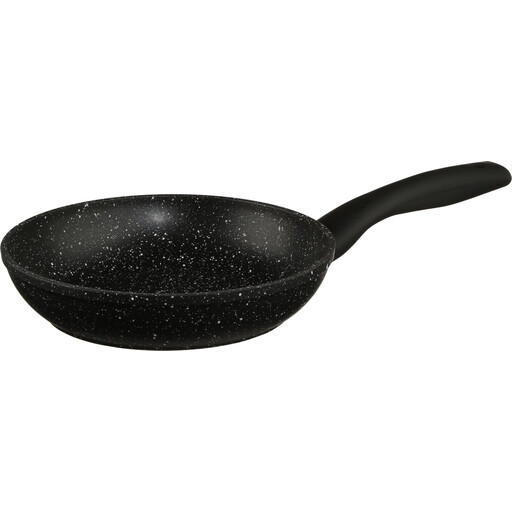
Why it suits this profile: The compact size and weight of 490 grams make it practical as a first pan, for a small kitchen or for meals for one person.
The specifications state that it is suitable for gas, induction, ceramic and electric cooking. The coating has two non-stick layers; hand washing is recommended to help protect them.
20 cm diameter, aluminium body, 1.9-litre usable capacity and a stainless steel induction disc.

Why it suits this profile: This spacious stainless steel pan is ideal for households that regularly fry, stir-fry and prepare dishes with sauce.
The product listing mentions a three-layer 304 stainless steel-aluminium construction, compatibility with all the listed hobs and a glass lid. Check the oven limit before use.
28 cm cooking surface, lid included, dishwasher-safe according to the product information and suitable for induction.
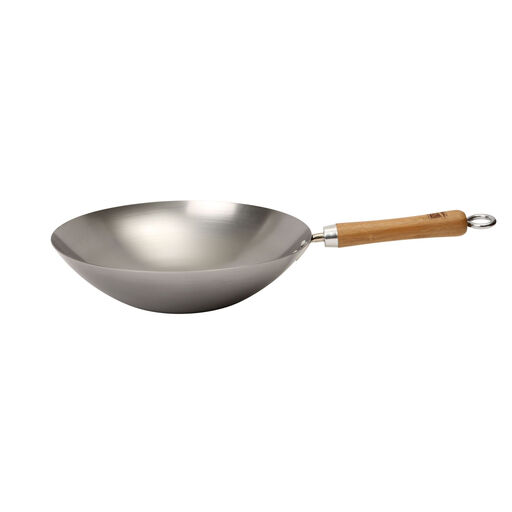
Why it suits this profile: Ideal for anyone who stir-fries regularly and is prepared to season a carbon steel pan and dry it carefully after use.
There is no factory-applied non-stick coating that can peel away, but the pan does require seasoning and thorough drying to help prevent rust.
30 cm size, quick temperature response according to the product description, bamboo handle and suitable for approximately two to three people.
We have put together a complete, up-to-date list of products that fully meet these strict selection criteria and the applicable European safety regulations.
A pan’s lifespan depends on more than just its material. Use a diameter that matches the cooking zone and avoid heating an empty non-stick pan on a high setting for longer than necessary. Allow a hot pan to cool before rinsing it with cold water; sudden temperature changes can damage the material and glass.
Also bear these habits in mind:
A cookware set may seem like good value, but only buy several sizes if you will genuinely use them. A separate frying pan, wok or saucepan may suit your cooking routine better and take up less space.
Choose a model whose manufacturer explicitly states that it is suitable for induction. A magnetic, flat base is essential. Also check the diameter of the base, as this determines how much contact the pan makes with the induction zone.
This varies depending on the coating, use and care. Frequent use of metal utensils, high temperatures and abrasive cleaning can accelerate wear. Replace a pan when the coating is visibly damaged or food consistently sticks to it.
A stainless steel pan can develop stuck-on food if it has not been preheated sufficiently or if the temperature is not right for the dish. Soak baked-on residue first and use a soft sponge. A smooth stainless steel interior and a multi-layer base can make everyday use more convenient, but stainless steel behaves differently from a non-stick pan.
