
Vandaag of morgen in huis

Kwaliteit gegarandeerd

Welkomstaanbiedingen ontgrendelen: GRATIS bezorging | Tot 80% korting | Gratis 30 dagen JoyPlus-proefperiode
Download de app
A frying pan may seem like a simple product, but differences in material, coating and size can make a big difference to how enjoyable it is to use every day. A pan described on the packaging as versatile may not actually be suitable for the oven, for example, or may be difficult to clean. Even a non-stick coating that requires little oil still needs to be used correctly.
So look out for these three common pitfalls:
A 20 or 24 cm frying pan is practical for one or two portions, an omelette or a couple of pieces of fish. A 28 cm frying pan gives you more room to cook a family meal, vegetables or several pieces of meat. If you have an induction hob, check the diameter of the magnetic base too. A large pan on a small cooking zone may heat unevenly.
A pan set can be good value if you cook different portion sizes. Just check whether the set really includes several frying pans or is a combination of pans, lids and accessories. The Tefal Ingenio So Light set, for example, includes several sizes, including 22, 24 and 28 cm frying pans, as well as saucepans and a lid.
A non-stick frying pan is handy for eggs, pancakes and dishes that need little oil. Use wooden, silicone or plastic utensils with it. Metal utensils can damage the coating, depending on the type of coating and the care instructions.
With a ceramic frying pan, it’s important not to preheat it empty at a high temperature. Product information may state that ceramic coatings are PFAS-free, but their lifespan also depends on temperature, cleaning and the utensils you use.
When you see terms such as “healthy”, “non-toxic” or “safe”, check where the claim comes from. According to its own product information, Brabantia’s Onyx frying pan has a 100% PFAS-free ceramic coating. Other models may state that no PFOA, or no intentionally added PFOA, has been used. This is a more specific claim and shouldn’t be interpreted more broadly than stated.
An oven-safe frying pan is useful for dishes that you start on the hob and finish in the oven. Always check the maximum temperature and whether the handle is oven-safe. Bakelite or plastic handles may have limitations.
A dishwasher-safe frying pan saves time, but the manufacturer may still recommend hand-washing to help the non-stick coating last longer. Let a hot pan cool down before washing it. A sudden change in temperature can cause it to warp.
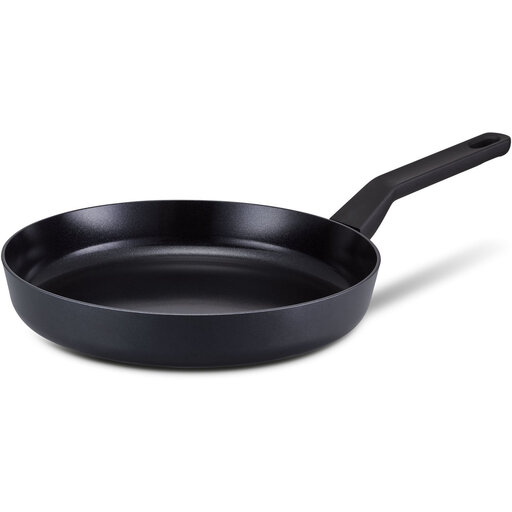
Why it suits this profile: A practical size for everyday cooking, with induction compatibility and a ceramic coating according to the product information.
The product information explicitly states that it is suitable for induction, gas, electric, ceramic and halogen hobs. It also includes the manufacturer’s claim that it is 100% PFAS-free.
24 cm, recycled aluminium, double-layer ceramic non-stick coating and dishwasher-safe; hand-washing is recommended to help it last longer.
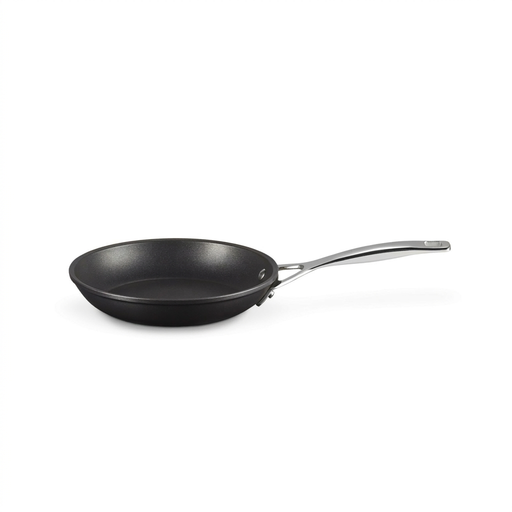
Why it suits this profile: Its generous size and combination of aluminium, a stainless steel handle and induction compatibility make it well suited to intensive everyday cooking.
The product description specifically lists all hob types, including induction, oven-safety and a PFOA-free coating. Check the current temperature instructions before use.
28 cm diameter, reinforced non-stick coating, stainless steel handle and suitable for the oven and dishwasher according to the product information.
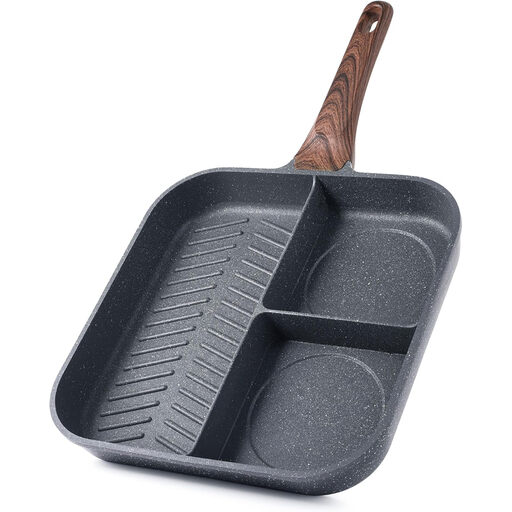
Why it suits this profile: This grill pan is designed for breakfast, burgers, meat and vegetables when you want to cook several ingredients at once.
The specifications list a magnetic stainless steel base for induction, but also state that the pan is not oven- or dishwasher-safe. This makes its limitations clear.
Three separate cooking compartments, raised grill ridges and an aluminium construction; hand-washing is required.
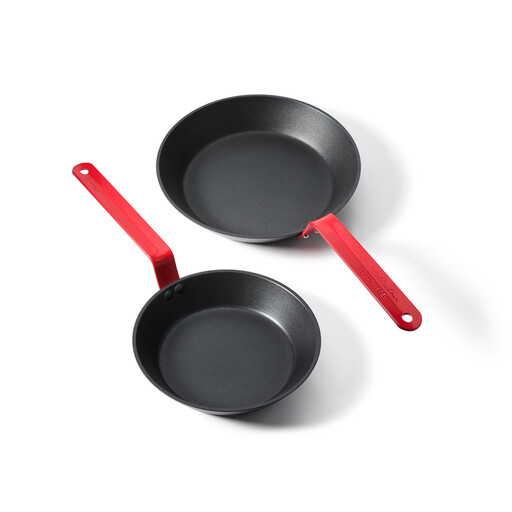
Why it suits this profile: The combination of 8 and 10 inch pans gives you flexibility for small portions and family meals on different cooking zones.
The set is listed as having a magnetic stainless steel base for all hob types, being oven-safe up to 450 °F and dishwasher-safe. Hand-washing is still recommended to protect the coating.
Two sizes, induction compatibility, oven use and a coating made without added PFOA or PFOS according to the product information.
We’ve put together a complete, up-to-date list of products that meet these strict selection criteria and current European safety regulations.
For one person or small portions, 20 to 24 cm is usually practical. For two to four people, 28 cm gives you more room to cook. If you have an induction hob, check that the base fits the cooking zone.
No. Ceramic describes the type of coating, while PFAS-free is a separate material claim. Check the manufacturer’s product information and don’t draw a broader conclusion than what it explicitly states.
That depends on how you use and care for it, as well as the temperature. Hand-washing, moderate heat and suitable utensils can help keep the coating in good condition for longer. If you can see damage, replacing the pan is a sensible choice.
