
Vandaag of morgen in huis

Kwaliteit gegarandeerd

Welkomstaanbiedingen ontgrendelen: GRATIS bezorging | Tot 80% korting | Gratis 30 dagen JoyPlus-proefperiode
Download de app
A new frying pan might seem like a simple purchase, but the difference between a pan that works well and one you regret buying often comes down to the details. For example, a pan might be suitable for induction but still not sit properly on a small cooking zone. A non-stick coating can be convenient, but poor care can shorten its lifespan. And a large diameter doesn’t necessarily mean you can fry lots of ingredients at once.
Use this practical guide to compare materials, sizes, care requirements and cooking needs. That way, you can find a frying pan that suits your household and cooking routine.
A 28 cm frying pan offers more space than a 20 cm model, but the base may be smaller than the rim. The diameter of the magnetic cooking surface is especially important on an induction hob. A pan that’s larger than the cooking zone may not heat evenly across its surface.
Use this rule of thumb:
As well as the diameter, check the base dimensions and the recommended hob type.
A non-stick frying pan usually needs less oil and is handy for delicate ingredients. However, high temperatures, leaving an empty pan on the hob and using metal utensils can damage the coating. Even a dishwasher-safe frying pan may wear out faster with repeated washing than it would with hand-washing using a soft sponge.
Follow the care instructions:
A PFAS-free frying pan isn’t necessarily a pan without non-stick properties. The product specifications should clearly state the type of coating used. According to the product description, the Brabantia Onyx models have a ceramic coating that’s free from PFAS. Other models may be described as PFOA-free, which is a different claim and should be assessed separately.
Terms such as “fast heating”, “durable” or “suitable for all hobs” are only meaningful when you know more about the construction and compatibility. For example, an RVS frying pan doesn’t have a traditional non-stick coating. A multi-layer base with an aluminium core can improve heat distribution, but cooking results also depend on your hob, the temperature and how you cook.
Look for details you can verify:
An RVS frying pan without a coating is a good choice if you value a durable cooking surface and high heat resistance. To prevent food sticking, preheating the pan and using the right amount of fat matter more than they do with a coated pan. According to the product description, a three-layer construction with a heat-conducting inner layer can help distribute heat more evenly.
Aluminium usually heats up quickly and is relatively lightweight. If you choose a coated aluminium pan, protect the coating from overheating and scratches. A ceramic non-stick coating can be appealing if you want to cook with little oil, but hand-washing is often the gentlest way to care for it.
For induction, you need a magnetic base. Always check that the product page explicitly says frying pan for induction or “all hobs”. Place the pan as centrally as possible on the cooking zone. A base that’s too small or too large can affect heat distribution.
The models in the selection below are listed as induction-compatible in their product specifications. That doesn’t mean every pan will perform identically on every cooking zone; the dimensions of your hob still matter.
A frying pan with a lid is handy for simmering, reducing sauces, cooking vegetables and keeping splashes to a minimum. A glass lid lets you keep an eye on your food without lifting it. A lid is less essential if you’ll mainly be making pancakes or frying food quickly.
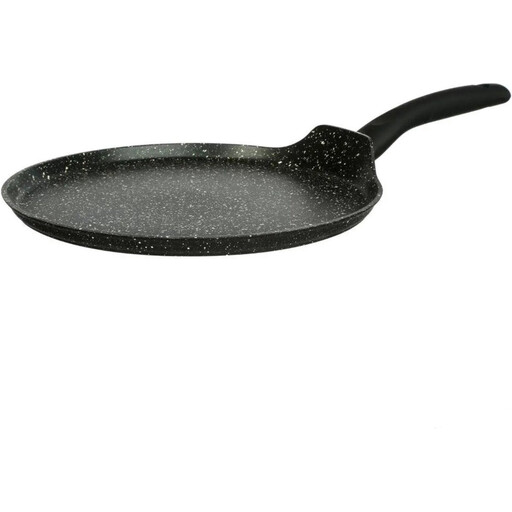
Why it suits this type of cook: A wide aluminium pan for everyday frying, weighing 780 grams and suitable for gas, induction, ceramic and electric hobs.
The product specifications list two non-stick layers and compatibility with several heat sources. Be sure to check the base size against your induction zone.
28 cm diameter, 1.5-litre capacity and dishwasher-safe according to the product information. Hand-washing is recommended to help preserve the pan.
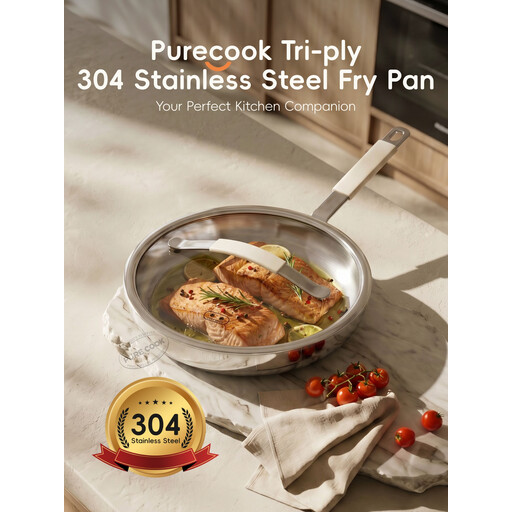
Why it suits this type of cook: This stainless steel frying pan has a three-layer construction, a heat-insulating silicone sleeve and a glass lid. It’s designed for everyday cooking for three to four people.
The specifications list 304 stainless steel, a three-layer base and suitability for induction and gas. No traditional non-stick coating is listed.
26 cm cooking surface, glass lid and raised sides for frying, stir-frying, searing and simmering.
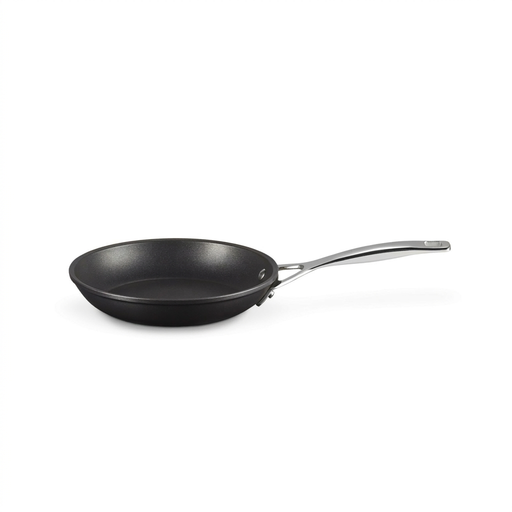
Why it suits this type of cook: This spacious, shallow pan is designed for frying, sautéing and browning. The manufacturer lists a reinforced non-stick coating and suitability for all hobs, including induction.
The product information lists the coating type, PFOA-free material, induction compatibility and oven use. Use soft utensils to protect the coating.
28 cm diameter, oven-safe and, according to the product description, suitable for cleaning in the dishwasher.
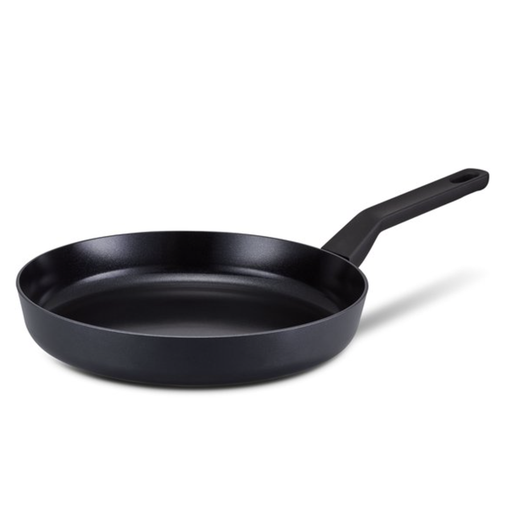
Why it suits this type of cook: Its compact size is suitable for one person, small portions and everyday use. According to the product description, the pan has a PFAS-free ceramic coating.
The product specifications identify both the coating and the material: 100% recycled aluminium and a PFAS-free ceramic layer. Hand-washing is recommended to help it last longer.
20 cm diameter, suitable for induction and other heat sources, and dishwasher-safe according to the product information.
We’ve put together a complete, up-to-date list of products that meet these strict selection criteria and the applicable European safety regulations.
Choose a pan that’s explicitly listed as suitable for induction or for all hobs. Also check that the base fits the cooking zone properly. A magnetic base and the right diameter are important for even heat distribution.
That depends on the material, how often you use it and how you care for it. An uncoated stainless steel pan can last a long time if you heat and clean it correctly. With a coated pan, overheating, scratches and abrasive cleaning are major causes of wear. Replace the pan if the coating starts to peel visibly or the base becomes warped.
Using the dishwasher isn’t always the gentlest option. “Dishwasher-safe” means the manufacturer allows it, but dishwasher detergent, heat and prolonged exposure to moisture can put extra strain on handles, coatings and finishes. Hand-washing with mild washing-up liquid and a soft sponge will usually help keep your pan in good condition for longer.
