
Vandaag of morgen in huis

Kwaliteit gegarandeerd

Welkomstaanbiedingen ontgrendelen: GRATIS bezorging | Tot 80% korting | Gratis 30 dagen JoyPlus-proefperiode
Download de app
Frying pans get plenty of use in many Dutch kitchens, from frying eggs and stir-frying vegetables to searing meat and making pancakes. But not every pan is suitable for every hob or cooking method. The wrong combination of material, size and care can lead to uneven heat, a damaged coating or a pan that barely fits in your kitchen cupboard.
Watch out for these three common pitfalls:
Check that the frying pan is suitable for your heat source: gas, induction, ceramic or electric. An induction disc or magnetic base is needed for an induction hob. An aluminium frying pan, for example, will not automatically work on induction. So the product information should clearly state that the pan is suitable for induction.
A wide, flat base helps distribute heat more evenly across the cooking surface. With gas, the burner diameter matters too: a large pan over a small flame will heat less evenly.
Each material has different characteristics:
Claims such as “extra scratch-resistant” or “non-stick” should be read as information provided by the brand. According to 5Five’s own product information, certain models have two non-stick layers and are highly scratch-resistant. Even so, use wooden, silicone or plastic spatulas to avoid unnecessary wear.
A 20 cm pan is suitable for smaller portions. A 28 cm frying pan gives you more room to cook for two people or prepare a family meal. A 30 cm model is handy for larger quantities, but needs more storage space and a suitably sized cooking zone.
Check the handle, depth and weight too. A cast iron model weighing almost 2 kg feels very different from an aluminium pan weighing around 570 grams. Also check whether the pan is dishwasher-safe. That doesn’t always mean the manufacturer recommends putting it in the dishwasher: some advise hand-washing to help preserve the finish or coating.
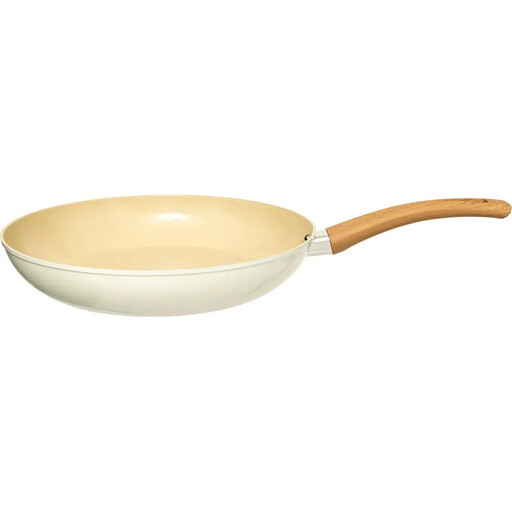
Why it suits this profile: This lightweight 28 cm aluminium pan is designed for everyday cooking on gas, induction, ceramic and electric hobs.
The product information explicitly lists four heat sources and a stainless steel induction disc. That means you don’t have to guess whether it’s suitable based on the material alone.
570 grams, 28 cm diameter, two non-stick layers according to 5Five, and dishwasher-safe; hand-washing is recommended.
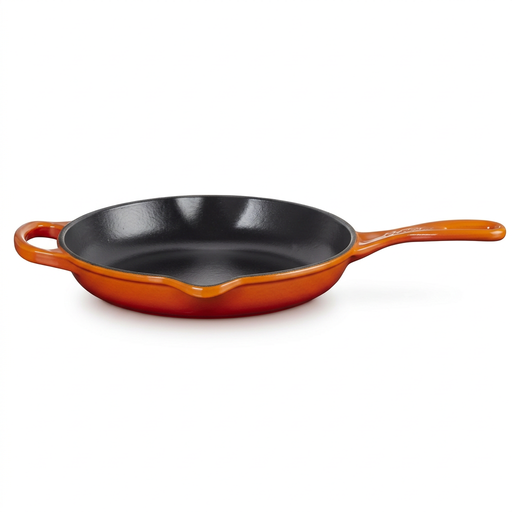
Why it suits this profile: The enamelled cast iron construction is ideal if retaining heat and searing are more important to you than a lightweight pan.
The product specifications clearly state that it has no non-stick coating. So you won’t buy a pan expecting a different type of coating from the one described.
23 cm, 1.93 kg, two pouring spouts, enamelled cast iron and, according to the product information, PFAS-free.
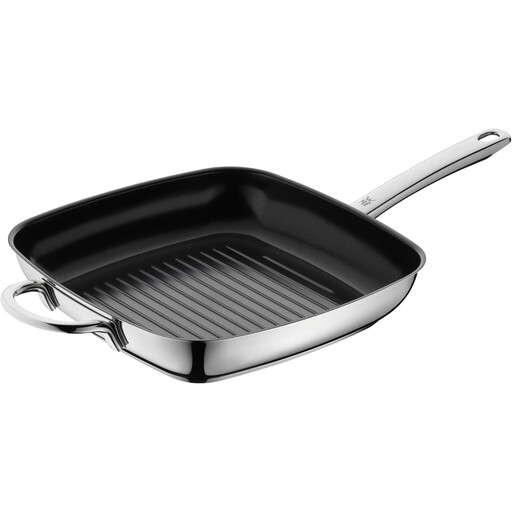
Why it suits this profile: This 28 cm square grill pan is designed to create grill marks and cook generous portions. It’s a good choice if you want to grill specific ingredients rather than simply fry them.
The specifications list a ceramic coating, induction compatibility and hand-washing. This makes it clear that this model isn’t intended for the dishwasher.
Cromargan 18/10 stainless steel, ceramic coating, wide pouring rim and suitable for all heat sources according to the product information.
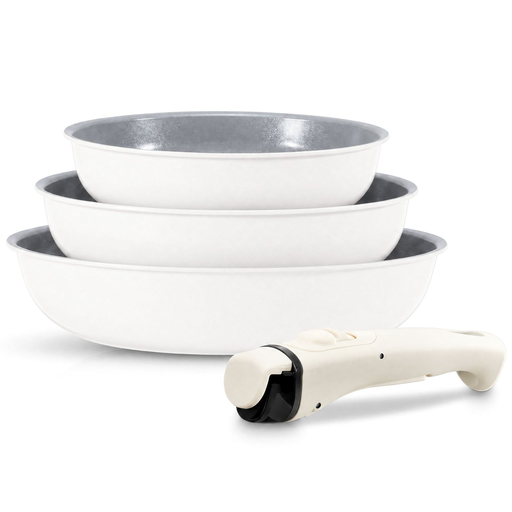
Why it suits this profile: Three sizes – 20, 24 and 28 cm – give you the flexibility to cook single portions, side dishes and family meals.
The set is listed as suitable for all hobs and has a ceramic non-stick coating. Before buying, check the latest product details for information about the handle, oven use and care.
Three popular diameters, a space-saving design and suitable for induction according to the product title.
We’ve put together a complete, up-to-date list of products that meet these strict selection criteria and the applicable European safety regulations.
For everyday cooking for two to four people, 24 to 28 cm is often practical. A 20 cm pan is suitable for small portions. Choose 30 cm if you regularly cook larger quantities and have enough space on your hob.
No. Aluminium is not magnetic on its own. Look for a clear statement that the pan is suitable for induction, and check that it has an induction disc or a suitable base.
Its lifespan depends on the temperature, utensils and care. Avoid overheating, metal spatulas and abrasive cleaning products. If the coating is visibly damaged or the cooking results have clearly changed, it’s better to replace the pan than to scrub it more vigorously.
