
Vandaag of morgen in huis

Kwaliteit gegarandeerd

Welkomstaanbiedingen ontgrendelen: GRATIS bezorging | Tot 80% korting | Gratis 30 dagen JoyPlus-proefperiode
Download de app
A new frying pan seems like a straightforward purchase – until it heats unevenly, the non-stick coating wears out quickly or it turns out not to be suitable for induction. Online deals can make important details less obvious than terms such as “granite”, “titanium” or “healthy cooking”.
The most common pitfalls:
An aluminium pan usually heats up quickly and is relatively lightweight. Cast aluminium can also offer a sturdy construction. Stainless steel is more hard-wearing, but often needs more care when preheating and cooking.
When it comes to a non-stick frying pan, care is particularly important. Use wooden, silicone or nylon utensils, and don’t heat the pan empty at a high temperature. If the coating is damaged or starts to peel, stop using the pan.
If you’re health-conscious, pay attention to the exact wording:
A brand’s claim about its coating should be read as a statement from the manufacturer. According to SENSARTE’s own information, various coatings are made without intentionally added PFOA, PFOS, APEO, lead or cadmium. Brabantia’s product information describes the Onyx pan as 100% PFAS-free.
If you have an induction hob, choose an induction frying pan with a magnetically conductive base. Gas, electric and ceramic hobs are usually less specific in their requirements, but a flat base helps distribute heat evenly.
Also check:
A frying pan for all heat sources is a practical choice if you’re moving or use different types of hob. “All heat sources” doesn’t mean every part of the pan is oven-safe. The handle, lid or coating may have a lower temperature limit.
A 20 to 24 cm pan is handy for one or two portions, eggs and pancakes. Sizes around 26 to 28 cm are often more useful for families. A deep pan is better for sauces, stir-fries and larger quantities.
Also consider the difference between:
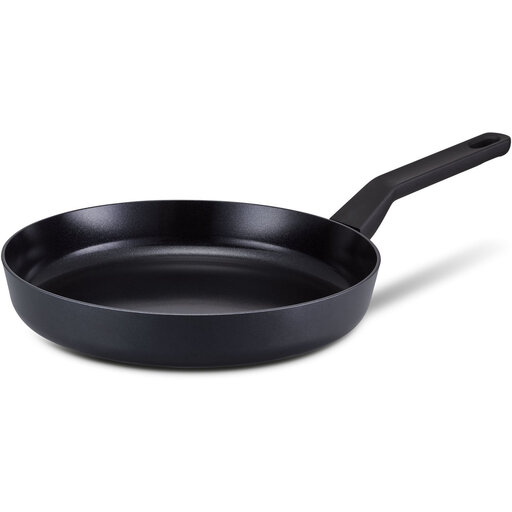
Why it suits this profile: A manageable size for everyday meals and a practical choice if PFAS-free properties are important to you.
The product information states that it has a ceramic coating without PFAS and is suitable for induction, gas, electric, ceramic and halogen hobs.
24 cm diameter, recycled aluminium, ceramic coating and dishwasher-safe according to the product description.
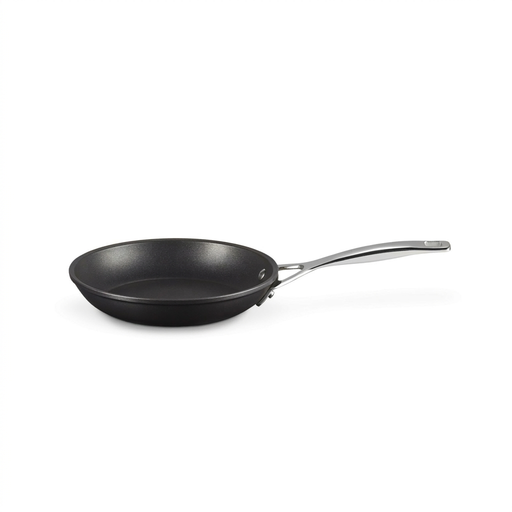
Why it suits this profile: A spacious pan for frying, sautéing and browning, with a sturdy build for regular use.
The product information specifies a PFOA-free coating, induction compatibility and oven safety. The pan is 28 cm in diameter and 4.5 cm high.
Aluminium pan with a stainless steel handle, suitable for all the listed hob types according to the product description.
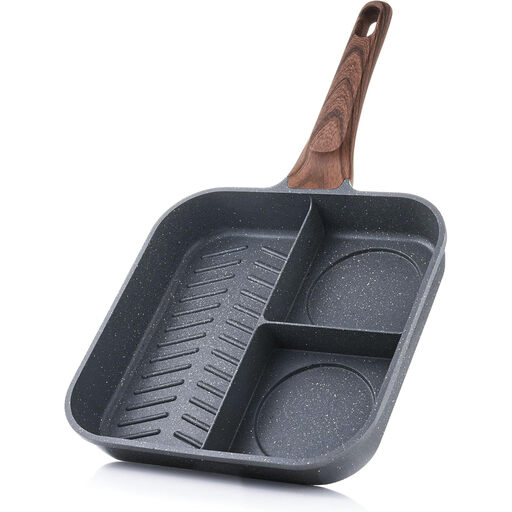
Why it suits this profile: Handy for breakfast, burgers, bacon, sausages and pancakes when you need to cook several ingredients at once.
The pan has three separate sections and, according to the product information, is suitable for induction, gas and electric hobs. It is not oven-safe or dishwasher-safe.
Raised ridges, three cooking compartments and a coating made without intentionally added PFOA, PFOS, APEO, lead or cadmium, according to SENSARTE.
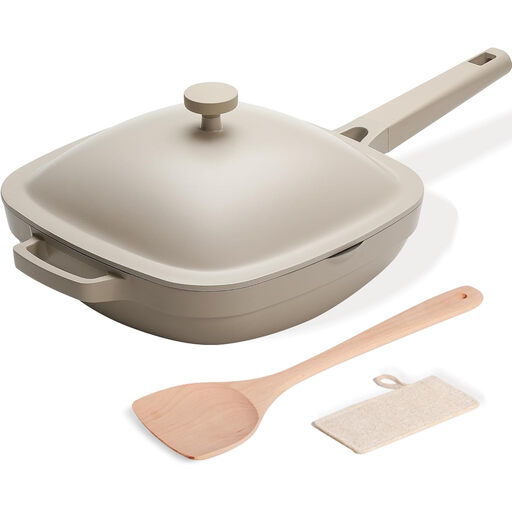
Why it suits this profile: Its deep shape, lid and 3.8-quart capacity make it a good fit for sauces, stir-fries and meals for several people.
The product information specifies a ceramic coating, PFAS-free properties and compatibility with all hob types. The pan is not suitable for the oven or dishwasher.
The product description says it comes with a lid, two pouring spouts, a wooden spatula and a scouring sponge.
We’ve put together a complete, up-to-date list of products that meet these strict selection criteria and the applicable European safety regulations.
A pan around 26 to 28 cm is often practical for two to four people. Pay particular attention to the flat base and how much food you want to cook at once. A deep sauté pan may be a better choice for sauces and one-pan meals.
Its lifespan depends on heat, utensils, cleaning and storage. Use low to medium heat, avoid metal utensils and hand-wash the pan if the manufacturer recommends it. Replace it if the coating is visibly damaged or peeling.
It can be, but ceramic itself doesn’t make a pan induction-compatible. The pan needs a magnetic base. So always check the specifications of the individual model before ordering.
