
Vandaag of morgen in huis

Kwaliteit gegarandeerd

Welkomstaanbiedingen ontgrendelen: GRATIS bezorging | Tot 80% korting | Gratis 30 dagen JoyPlus-proefperiode
Download de app
A frying pan may seem like a simple purchase, but small differences can affect how enjoyable everyday cooking is. A pan can be lightweight yet unstable on induction. A non-stick coating can make cleaning easy, but incorrect care can shorten its lifespan. And a large frying pan will not necessarily fit every hob.
For UK households, three pitfalls are particularly important:
An aluminium frying pan is usually lightweight and heats up quickly. This is practical for everyday frying, sautéing and turning food. Cast or forged aluminium can also feel sturdier than thin sheet material.
Pay particular attention to the base construction. A composite base, stainless-steel induction disc or specially designed base can help make a pan suitable for different hobs. According to the product information for various models in this range, certain pans are suitable for gas, electric, ceramic and induction hobs. Always check the individual product, as the material alone does not guarantee induction compatibility.
A non-stick frying pan is useful for eggs, pancakes, vegetables and dishes that tend to stick easily. Ceramic coatings are often offered as an alternative to traditional coatings. For some models, the product information states that the coating is PFAS-free or PFOA-free. This is a product specification, not a general guarantee of a longer lifespan or particular performance.
For any non-stick coating, wooden, silicone or plastic utensils are preferable. Avoid metal spatulas, scouring pads and harsh cleaning products. Allow a hot pan to cool down before washing it. Even a dishwasher-safe frying pan may last longer if you wash it by hand. “Dishwasher-safe” does not mean that the coating will remain unchanged indefinitely in the dishwasher.
The right diameter depends on your household and cooking style:
A larger pan offers more cooking surface, but it may be heavier and heat less evenly if the cooking zone is much smaller. On induction, the match between the pan base and cooking zone is particularly important.
The recommendations below are based on verifiable product information, including size, material, coating, heat sources and care requirements. They are intended as a practical buying guide, not as a general ranking.
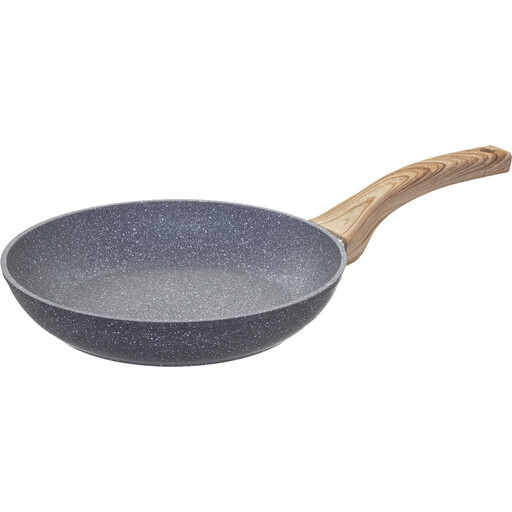
Why it suits this profile: The compact size and stated weight of 520 grams make this pan suitable for small portions and as a first frying pan for everyday use.
The product information states that it has two non-stick coatings and a stainless-steel induction disc. This means you do not have to rely solely on the aluminium pan wall when checking the heat source.
20 cm diameter, aluminium body, suitable for gas, induction, ceramic and electric cooking; the product information states that it is dishwasher-safe.
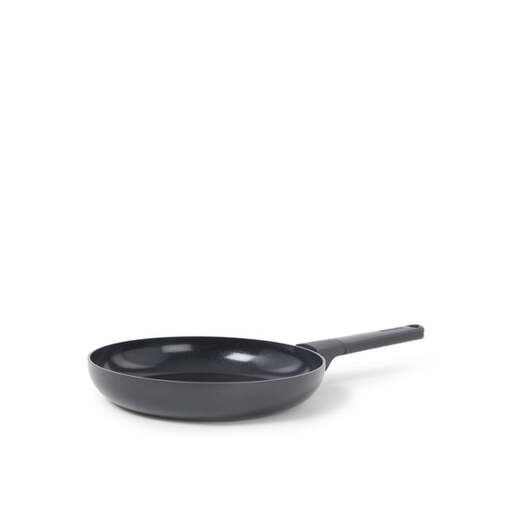
Why it suits this profile: The 24 cm size is versatile, while the stated PFAS-free ceramic coating appeals to buyers who compare product specifications carefully.
The product information explicitly lists the suitable heat sources: electric, gas, induction and ceramic. Dishwasher use is also mentioned, with hand washing recommended to help preserve the coating for longer.
Aluminium body, ceramic PFAS-free coating according to the product information, 24 cm diameter and a 3-year manufacturer's warranty.
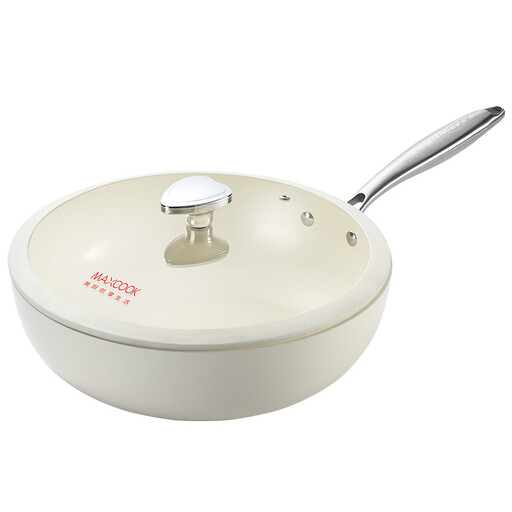
Why it suits this profile: The 32 cm diameter provides plenty of room for larger meals and cooking for several people. According to the product information, the cast aluminium body is designed to distribute heat evenly.
The product information states that it has a composite base for induction, gas, electric and ceramic-glass hobs. However, check that 32 cm is suitable for your cooking zone and storage space.
32 cm diameter, cast aluminium, ceramic non-stick coating and, according to the product information, compatibility with all the listed heat sources.
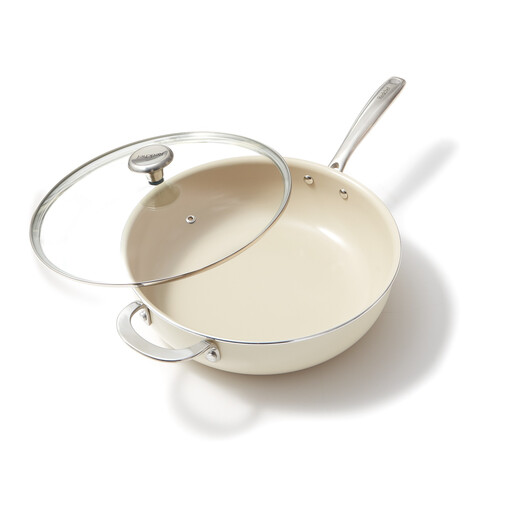
Why it suits this profile: The deep shape and stated capacity of 5 quarts are practical for stir-frying, simmering and preparing larger portions without food quickly spilling over the edge.
The product information states that it has an induction base and is suitable for gas and electric cooking. It also provides care instructions, including avoiding metal utensils.
28 cm diameter, deep design, glass lid, ceramic coating according to the product information and suitable for oven use up to 450 °C according to the stated specification.
We have put together a complete, up-to-date list of products that fully meet these strict selection criteria and the applicable European safety regulations.
Wash the pan with warm water and a mild washing-up liquid before using it for the first time. Do not heat an empty non-stick frying pan at a high temperature for extended periods. Use a soft sponge and allow the pan to cool completely before cleaning it. With a ceramic frying pan, washing it by hand can help limit coating wear, even if it carries a dishwasher-safe label.
Also check the base and coating regularly. If any parts are flaking or damaged, it is best to stop using the pan. Always follow the maximum oven temperature and the manufacturer's instructions.
For one person, 20 cm is often sufficient. A 24 cm frying pan is suitable for everyday portions for one or two people. For families, 28 cm and 32 cm are more practical, provided that your hob and storage space can accommodate them.
Only if the pan has a suitable magnetic base or induction disc. Check the product specification. A standard aluminium pan without an induction base will not be heated by an induction hob.
Its lifespan depends on heat, utensils and care. With medium temperatures, hand washing and soft spatulas, the coating will generally remain usable for longer than if exposed to overheating, metal utensils and frequent dishwasher use. Inspect the coating regularly and replace the pan if it is visibly damaged.
