
Vandaag of morgen in huis

Kwaliteit gegarandeerd

Welkomstaanbiedingen ontgrendelen: GRATIS bezorging | Tot 80% korting | Gratis 30 dagen JoyPlus-proefperiode
Download de app
A frying pan might seem simple to buy, but small differences can have a big impact on how much you enjoy using it. For example, a pan may be suitable for induction but have an unsuitable base size. And “non-stick” tells you little about how to care for it, its maximum temperature or how long the coating will last.
For households in the Netherlands, three buying pitfalls are particularly important:
A 20 cm frying pan is handy for an egg, omelette or small portion. For one or two people, a 24 cm frying pan is often more versatile: it’s suitable for vegetables, a piece of meat or several eggs.
A 28 cm frying pan gives you more room for family meals and dishes where ingredients need to sit side by side. Check that the pan fits your hob’s cooking zone, though. A pan that’s too large for a small induction zone may not heat evenly.
As well as the diameter, consider:
A non-stick frying pan is handy for eggs, pancakes and dishes that need little fat. If the product information recommends it, use wooden, silicone or plastic utensils. Metal utensils can damage the coating.
A ceramic frying pan may be worth considering if you’re specifically looking for a PFAS-free option. Always check that “PFAS-free” is stated in the product specifications. This is explicitly mentioned in the product information for the Brabantia Onyx and WMF Durado. It’s different from making a general assumption about every ceramic pan.
A stainless steel frying pan usually doesn’t have a traditional non-stick coating. According to the product description, the Maxcook 28 cm is made from 304 stainless steel without a non-stick coating. It needs a different technique: preheat the pan, add oil and don’t try to move the food too soon. It takes a little getting used to, but means you don’t have to worry about protecting a coating.
Be wary of durability claims in marketing. If a brand describes a coating as “extra scratch-resistant” or says it “lasts twice as long”, treat this as a claim from the brand’s product information, not a guaranteed lifespan in every kitchen.
For an induction frying pan, the base needs to be magnetic. Also check the recommended cooking zone and maximum power. “Suitable for all hobs” is useful, but doesn’t tell you how much heat the pan can distribute evenly.
Also check:
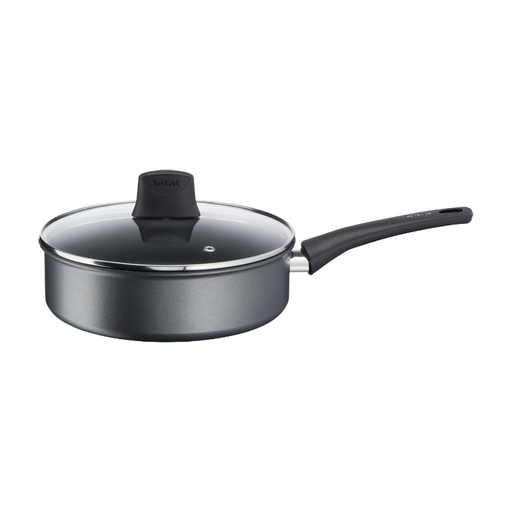
Why it suits this type of user: The 24 cm size is practical for everyday cooking, and the glass lid makes the pan suitable for dishes you want to cook through gently. According to the product information, it’s suitable for induction and other types of hob.
The specifications list the base diameter, compatible hob types and maximum oven temperature of 175 °C. So you don’t have to rely on the term “non-stick” alone.
24 cm diameter, glass lid, induction compatibility and a coating described as dishwasher-safe in the product information.
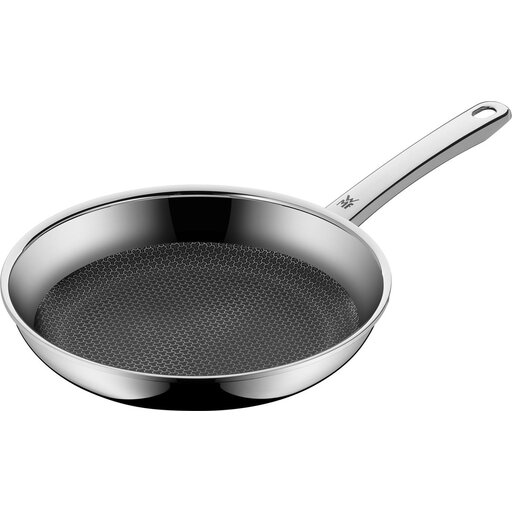
Why it suits this type of user: This pan is designed for people looking for a roomy pan that can handle high temperatures. According to the product description, its three-layer construction consists of aluminium, stainless steel and a chromium layer.
The product information confirms that it’s suitable for induction, recommends handwashing and gives a maximum heat resistance of 260 °C. This makes its usage limits clearer than a general claim about the coating.
28 cm cooking surface, three-layer construction, honeycomb structure and a five-year guarantee according to the product information.
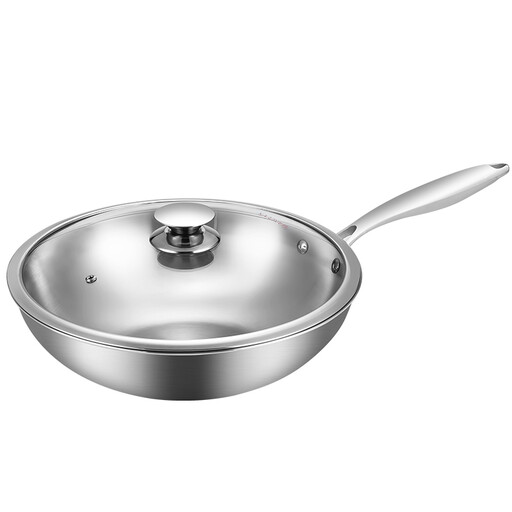
Why it suits this type of user: This wok is designed for stir-frying, searing and everyday cooking without a traditional non-stick coating. The glass lid and induction compatibility make it even more versatile.
The product description clearly states that this pan doesn’t have a chemical non-stick coating. So you know exactly how it differs from a non-stick frying pan before you buy.
304 stainless steel, 28 cm size, suitable for induction and dishwasher use according to the product information, plus a glass lid.
A smaller PFAS-free option is the Brabantia Onyx frying pan 24 cm. The 20 cm version may be more practical for one-person households. If you need several sizes, you could also compare an induction pan set.
We’ve put together a full, up-to-date list of products that meet these strict selection criteria and comply with current European safety regulations.
A 24 cm frying pan is usually a practical choice for two people. For larger portions or ingredients that need to cook side by side, a 28 cm pan gives you more room. If you have an induction hob, check that the base matches the cooking zone.
That depends on the temperature, how often you use it, the utensils you choose and how you care for it. Avoid overheating an empty pan, using sharp metal spatulas and exposing it to sudden temperature changes. A pan may technically be dishwasher-safe, but many product instructions recommend handwashing with a soft sponge to help keep the coating in good condition for longer.
Not necessarily. “PFAS-free” refers to the product’s stated composition or claim; a ceramic coating is a separate material characteristic. So check both specifications separately before you buy.
