
Vandaag of morgen in huis

Kwaliteit gegarandeerd

Welkomstaanbiedingen ontgrendelen: GRATIS bezorging | Tot 80% korting | Gratis 30 dagen JoyPlus-proefperiode
Download de app
A frying pan may seem like a straightforward purchase, but the difference between a pan you enjoy using and a poor buy often comes down to the details. For example, a pan may appear suitable for induction, but have a magnetic base that is too small. A non-stick coating may perform less effectively after just a few months if you use the wrong utensils or temperature. A large frying pan can also be awkward to use on a compact hob.
In this buying guide, we compare materials, sizes, care requirements and practical features. This will help you choose a frying pan for everyday cooking based on what you need, rather than relying solely on marketing terms.
Always check whether the pan is suitable for your type of hob: gas, electric, ceramic or induction. A frying pan for induction requires a magnetic base. A pan may be described as suitable for induction, but the base diameter and flatness also affect how efficiently heat is transferred.
A non-stick frying pan still requires appropriate use. Metal spatulas, heating an empty pan at a high temperature and suddenly moving it from hot to cold can all put strain on the coating. “Scratch-resistant” and “durable” are not unlimited guarantees. Check the care instructions and, where recommended by the manufacturer, use silicone, wooden or nylon utensils.
A 28 cm frying pan offers more cooking surface, but it also takes up more space and can become heavy when full. For one person or a small kitchen, 20 to 24 cm is often more practical. For a family, 26 to 28 cm, optionally with a frying pan with lid, is more convenient. Also check the height of the sides: low sides are useful for pancakes, while higher sides are better suited to sauces and stir-fries.
Aluminium generally heats up quickly and is relatively lightweight. Many aluminium pans have a non-stick coating. This combination is practical for eggs, pancakes and dishes that require little fat.
A stainless-steel frying pan usually does not have a traditional non-stick coating. Stainless steel can withstand intensive use, but requires the right temperature and enough fat to reduce sticking. A multi-layer base with an aluminium core can distribute heat more evenly. According to the product information, the PURECOOK Tri-Ply 304 series uses a stainless steel–aluminium–stainless steel construction.
A ceramic frying pan has a ceramic coating and is often chosen by consumers looking for a pan without intentionally added PFAS. Pay attention to the exact wording: according to product information from various brands, this may mean “free from intentionally added PFAS, PTFE or PFOA”, for example. This is different from a general claim covering every possible substance. Always check the current product specifications and instructions for use.
A frying pan set is not automatically better value. Consider whether you will actually use every size and whether the handles can be stacked or removed. In a small kitchen, campervan or student room, removable handles can save space.
Check these three separate features:
When choosing an oven-safe frying pan, also check the handle material. With some models, the oven limit applies only when the removable handle has been taken off or when a specific handle configuration is used.
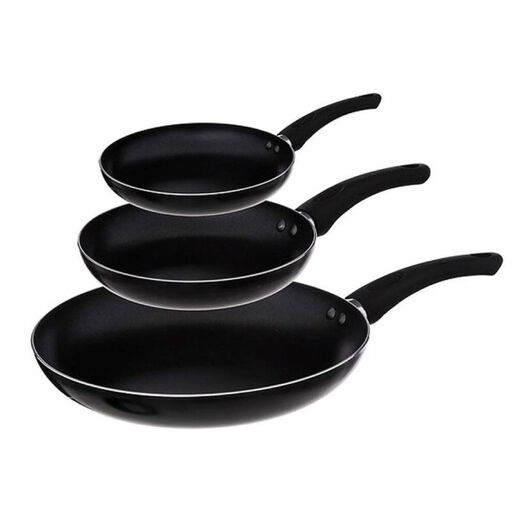
Why it suits this profile: Three popular sizes offer an easy starting point for households preparing different portion sizes. According to the product information, the set works on gas, electric, ceramic and induction hobs.
The diameters are clearly stated, so you do not have to use one size for every dish. Hand washing is recommended to help protect the two non-stick layers for longer.
Set of 20, 24 and 28 cm pans; dishwasher-safe according to the product information; suitable for all the heat sources listed.

Why it suits this profile: This 28 cm stainless-steel frying pan with a three-layer construction is designed for anyone looking for a pan for frying, stir-frying and simmering.
The product information states that it is compatible with gas, induction, electric, ceramic and halogen hobs. The stated oven limit is 220°F; always check the manual before using the pan in the oven.
304 stainless steel with an aluminium core; glass lid included; dishwasher-safe according to the product description.
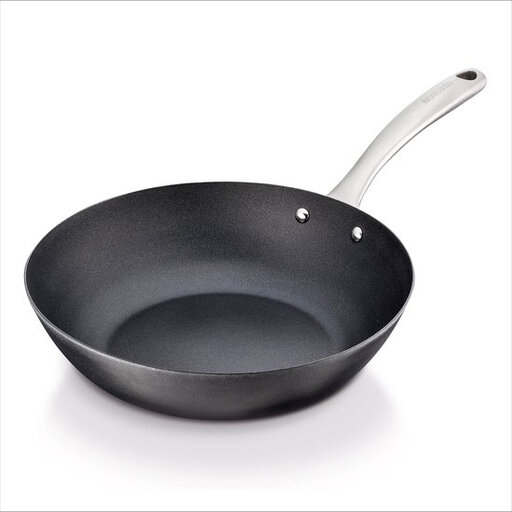
Why it suits this profile: The deeper shape is suitable for stir-fries, vegetables and dishes containing several ingredients. According to the product information, the pan is suitable for gas, electric, ceramic, halogen and induction hobs.
The instructions recommend using wooden, plastic or silicone utensils. This helps reduce the risk of scratches despite the stated scratch-resistant coating.
28 cm diameter; oven-safe according to the product information; dishwasher-safe; stainless-steel handles.
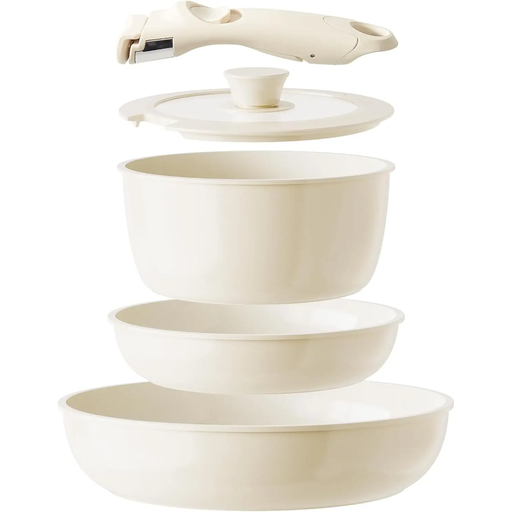
Why it suits this profile: The set includes two frying pans, a saucepan, a lid and a removable handle. According to Redchef, the stackable design saves up to 75% of cupboard space; this claim comes from the brand’s product information.
The removable handle makes storage easier, but it must be attached securely before use. Do not use metal utensils, to protect the ceramic coating.
Ceramic coating; free from PFAS, PTFE and PFOA according to the product information; suitable for induction; dishwasher-safe according to the manufacturer.
We have put together a complete, up-to-date list of products that fully meet these strict selection criteria and the applicable European safety regulations.
A wok pan is an alternative if you often stir-fry. For eggs, pancakes and small portions, a shallow frying pan is usually more convenient. If you mainly want to cook without a coating, consider a stainless-steel model; if you want fast cooking and easy cleaning, aluminium with a coating is often the better choice.
For one person, 20 cm is often enough. A 24 cm pan is suitable for everyday use and two small portions. Choose 26 to 28 cm when cooking for several people or when ingredients need room to fry rather than steam.
This varies by model and wording. Check whether the product information explicitly states that the pan is free from PFAS, PTFE and PFOA, or says that it is “without intentionally added” substances. According to their own product information, Redchef and Brabantia state these properties for the models mentioned. Always check the current specifications and care instructions before buying.
Its service life depends on how it is used, the temperature, the utensils and cleaning. A coating can wear more quickly when exposed to metal spatulas, abrasive sponges and prolonged cooking at a high temperature. Replace the pan when the coating is visibly damaged or when the pan no longer sits steadily on the hob.
