
Vandaag of morgen in huis

Kwaliteit gegarandeerd

Welkomstaanbiedingen ontgrendelen: GRATIS bezorging | Tot 80% korting | Gratis 30 dagen JoyPlus-proefperiode
Download de app
A new frying pan might seem simple to pick, until you have to decide between aluminium, stainless steel, ceramic coating, different diameters, and whether or not to get a lid. For everyday cooking in a British kitchen, the heat source, size and maintenance are the key factors.
Also, keep an eye on marketing claims. A pan with an “extra-strong non-stick coating” won’t automatically stay in the same condition for years. And “suitable for induction” says nothing about the base size or heat distribution. These checks will help you avoid a bad buy.
A 28 cm frying pan doesn’t always have a 28 cm cooking surface. The diameter is usually measured at the top rim. The base can be significantly smaller, especially with a pan that has sloping sides. On induction hobs, that matters: a base that’s too small may heat less evenly.
A dishwasher-safe frying pan can be practical, but detergent, high temperatures and prolonged moisture can put extra strain on a non-stick coating and handle. Manufacturers therefore often recommend hand washing, even when the pan is officially dishwasher-safe.
A non-stick frying pan isn’t designed for prolonged heating without any ingredients. Metal spatulas, knives and abrasive sponges can damage the coating. Also, check whether a product is actually labelled as a PFAS-free frying pan. “PFOA-free” is not the same as “PFAS-free”; these are different designations.
An aluminium frying pan generally heats up quickly and is relatively light. An induction disc or suitable base is needed for induction hobs. The 5five aluminium frying pan, 20 cm, for example, has an aluminium body, a stainless steel induction disc and two non-stick layers according to the product description. The pan is specified for gas, induction, ceramic and electric hobs.
A stainless steel frying pan is generally resistant to high temperatures and scratches, but requires more attention when preheating and cooking. A multi-layer construction can help distribute heat through the pan. The PURECOOK pan, 20 cm, is made from 304 stainless steel with an aluminium core, according to the product specification. The manufacturer also mentions rounded, smoothly finished edges and suitability for gas and induction, among others. The stated food contact standards are China GB 4806.9 and the US FDA; these are product specifications, not a guarantee of a particular cooking result.
With a ceramic coating, it’s worth looking at the precise claim. Brabantia states for the Onyx line a 100% PFAS-free ceramic coating and a body made from 100% recycled aluminium. This is a brand claim from the product information; always check the current packaging and specifications at the time of purchase.
A wok often has higher, sloping sides. This makes tossing easier, but the base can be smaller than on a standard frying pan. For stir-frying, braising and larger quantities, a wok might be a better fit. Do consider the weight: a cast iron model can be significantly heavier.
A frying pan with a lid is practical for simmering, gentle cooking and dishes that splatter. Check whether the lid is glass and whether the knob is heat-resistant. Also look at the maximum oven temperature. Not every handle is suitable for the oven.
A dishwasher-safe frying pan is easy to clean, but hand washing with a soft sponge can help extend the life of a coating. Let the pan cool down before washing it and avoid sudden temperature changes.
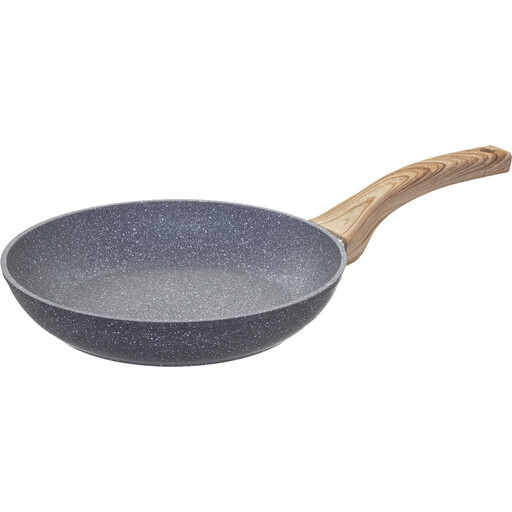
Why this fits the profile: The compact size and weight of 520 g make it suitable for small portions and daily use.
The product information explicitly states the suitable heat sources and the presence of an induction disc.
Aluminium body, two non-stick layers and suitable for gas, induction, ceramic and electric hobs.
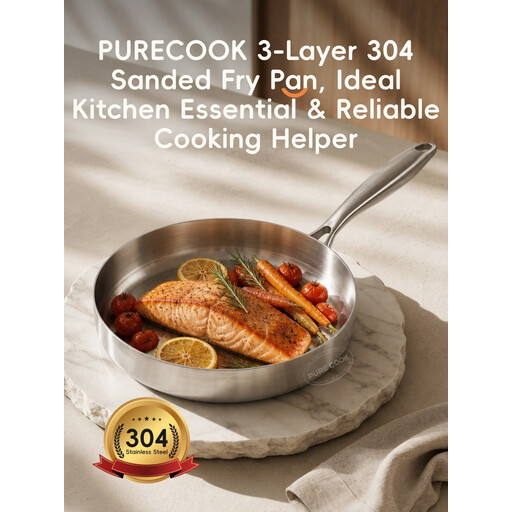
Why this fits the profile: The multi-layer stainless steel construction suits those looking for a pan without a classic non-stick coating.
The product specification lists the material in full and mentions an aluminium core for heat conduction.
304 stainless steel, triple-ply construction, smoothly finished edges and stated suitability for induction and gas.
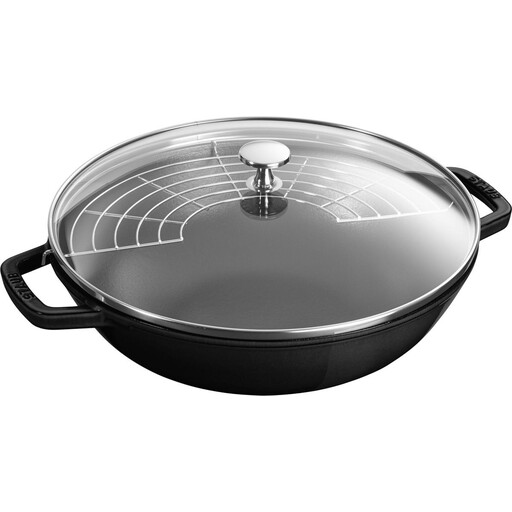
Why this fits the profile: The 30 cm cast iron wok is designed for stir-frying, braising and use on various heat sources.
The weight of 3.3 kg is stated, so you can factor in handling and storage beforehand.
Enamelled cast iron, 4.4 litre capacity, suitable for induction and dishwasher-safe according to the specification.
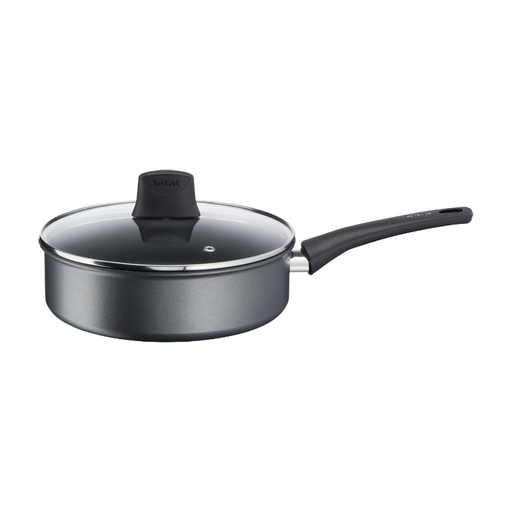
Why this fits the profile: The medium size, glass lid and suitability for induction make the pan useful for everyday family meals.
The product information states the maximum oven temperature of 175 °C and recommends hand washing and non-metal utensils.
We’ve put together a full, up-to-date list of products that fully meet these strict selection criteria and current European safety regulations.
Choose a model where induction is explicitly stated in the product specifications. Also check the base diameter. A pan can be technically suitable for induction, but work less efficiently if the base is much smaller than the hob zone.
That depends on use, temperature, utensils and maintenance. Don’t use metal objects, don’t heat the pan empty for long periods, and let it cool down before cleaning. Replace the pan when the coating visibly peels or becomes damaged.
It can be handy for quick cleaning, but hand washing is often a gentler maintenance option. Always check the manufacturer’s recommendations. For some pans, the rule is: dishwasher allowed, but hand washing recommended for a longer lifespan.
