
Vandaag of morgen in huis

Kwaliteit gegarandeerd

Welkomstaanbiedingen ontgrendelen: GRATIS bezorging | Tot 80% korting | Gratis 30 dagen JoyPlus-proefperiode
Download de app
A frying pan may seem like a simple purchase, but the differences between models can be significant. A pan that works well on gas is not automatically suitable for induction. Likewise, a non-stick coating can be useful for eggs, while stainless steel is better suited to high temperatures and searing.
As a Joybuy Product Recommendation Officer, I focus mainly on verifiable product details: material, diameter, hob compatibility, care requirements and included accessories. This helps you avoid paying for a marketing term that adds little value in your kitchen.
Always check whether induction is explicitly mentioned. An aluminium frying pan cannot work on induction without a magnetic base. According to the product information, the 28 and 32 cm Tefal Easy Cook & Clean models are suitable for gas, electric and ceramic hobs, but not for induction.
An induction frying pan generally has a magnetisable base or an integrated induction disc. If this information is not clearly stated on the product page, look up the technical specifications before ordering.
A non-stick frying pan still requires careful use. Metal spatulas, abrasive sponges, prolonged heating without food and a sudden change from hot to cold can damage the coating.
With a ceramic frying pan, hand washing is often the wiser option, even when the product information permits dishwasher use. A dishwasher-safe frying pan is convenient, but dishwasher detergent and high temperatures can affect a coating’s lifespan.
The diameter does not tell you everything about the usable cooking surface. A deep frying pan with straight sides can hold more ingredients than a shallow pan of the same size. Also check the weight, height, handle and whether a lid is included.
A 24 cm frying pan is well suited to smaller portions and households of one to three people. A 28 cm frying pan provides more room for stir-frying, meat or several portions. However, a large pan may heat less evenly on a small hob zone.
An aluminium frying pan generally heats up quickly and is relatively light. This makes the material practical for everyday cooking. Aluminium is often combined with a non-stick coating or a steel induction base.
An uncoated stainless-steel frying pan can withstand high temperatures and may be suitable for frying, searing and stir-frying. With a pan featuring an aluminium core, such as a tri-ply construction, the product information states that a layer of aluminium is placed between layers of 304 stainless steel to distribute heat. Without a non-stick coating, you need to preheat the pan properly and use enough fat to reduce sticking.
A ceramic frying pan has a coating based on ceramic material. Check exactly what the manufacturer states about PFAS, PTFE, dishwasher use and the maximum oven temperature. According to the product information, the Brabantia Dusk features a PFAS-free ceramic coating and is suitable for oven use up to 200 °C.
Pay attention to the combination of hob and oven. A pan may be suitable for induction, but the handle or lid may limit the maximum oven temperature. Therefore, check:
With an uncoated pan, you can generally use a wooden or silicone spatula and soak stubborn residue loose with warm water. For a non-stick coating, soft sponges and mild cleaners are preferable. Product information about dishwasher suitability is useful, but also check whether hand washing is recommended to keep the surface in good condition for longer.
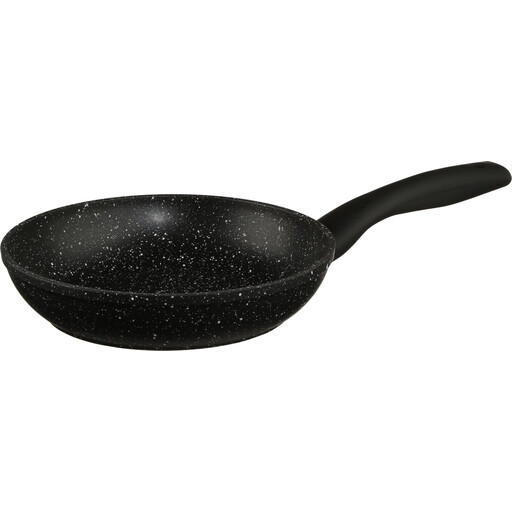
Why it suits this profile: With a 20 cm diameter and a stated weight of 490 grams, this pan is practical for small meals, eggs and pancakes.
The specifications mention gas, induction, ceramic and electric use. This makes the hob choice clear before purchase. Hand washing is recommended for a longer service life.
Aluminium body, two non-stick layers, a capacity of 1.9 litres and a two-year warranty period according to the product information.

Why it suits this profile: This 24 cm frying pan combines a recycled forged aluminium body with a ceramic coating and a riveted stainless-steel handle.
The product information explicitly states that it is PFAS-free, suitable for induction and safe for oven use up to 200 °C. This makes key material and compatibility details verifiable.
Suitable for all listed heat sources, dishwasher-safe according to the product information and made with RCS-certified recycled aluminium.

Why it suits this profile: The 28 cm version with glass lid is designed for stir-frying, searing and dishes where moisture needs to be retained.
The specifications state tri-ply 304 stainless steel, compatibility with all listed hobs and an oven limit of 220 °F. Before buying, check that this temperature suits your cooking needs.
Three-layer construction, glass lid and dishwasher-safe design according to the product description. There is no non-stick coating, so preheating and temperature control remain important.
We have put together a complete, up-to-date list of products that fully meet these strict selection criteria and the applicable European safety regulations.
A 24 cm frying pan is suitable for smaller portions, eggs, vegetables and a meal for up to a few people. Choose a 28 cm frying pan if you often cook for several people or need more room for stir-frying. Also measure the hob zone, especially if you use induction.
A stainless-steel frying pan requires a different technique from a coated pan. Preheat the pan gradually, add oil and only then place the food in the pan. Excessive heat or too little fat can cause sticking. With a tri-ply model, the aluminium core helps distribute heat evenly, according to the product information.
Its lifespan depends on heat, cleaning and the utensils you use. Use soft spatulas, do not heat the pan empty for extended periods and allow it to cool before washing. If the coating shows flaking, deep scratches or sections coming loose, replacing the pan is a sensible choice. When buying, do not look only for a dishwasher-safe frying pan; also check the care instructions and warranty terms.
