
Vandaag of morgen in huis

Kwaliteit gegarandeerd

Welkomstaanbiedingen ontgrendelen: GRATIS bezorging | Tot 80% korting | Gratis 30 dagen JoyPlus-proefperiode
Download de app
A frying pan may seem like a simple purchase, but differences in the base, coating and handle can affect how enjoyable it is to use every day. A pan may be described as suitable for induction on the packaging, yet have a base that’s too small for your cooking zone. A coating may be marketed as “durable” but still be vulnerable to metal utensils or high temperatures.
The three most common pitfalls are:
Choose a size to suit your cooking habits:
The stated diameter is usually the external measurement. The usable cooking surface may be smaller. This is particularly important on induction hobs, where the base needs to match the cooking zone properly. A large pan on a small zone may not heat evenly.
An aluminium frying pan usually heats up quickly and is relatively light, making it practical for everyday use. However, an aluminium pan for induction needs a magnetic plate in its base.
A stainless steel frying pan usually doesn’t have a non-stick coating. You can cook at higher temperatures, but controlling the temperature and using enough fat are important to help prevent food sticking. A multi-layer construction, such as stainless steel-aluminium-stainless steel, can improve heat distribution. According to the product information, the PURECOOK Tri-Ply 304 models have this three-layer construction.
An iron pan or wok may be suitable for high temperatures and stir-frying. Bear in mind that it may need to be seasoned, dried thoroughly and lightly oiled, depending on the design. According to the product information, the ochama Premium Iron Wok has a Teflon-free non-stick coating. Always check the latest care instructions and coating information on the product page.
A frying pan with a non-stick coating usually needs less oil and is easy to clean. Its lifespan depends partly on how you use it: avoid heating an empty pan, using metal utensils and cleaning with abrasive sponges.
For a PFAS-free frying pan, the product information should state this clearly. According to the product information provided, the Brabantia Dusk, Brabantia Onyx, Brabantia Nocta and Tefal Renewal have a PFAS-free ceramic coating. This is a product claim made by the manufacturer or seller; don’t assume it applies to every ceramic frying pan.
Also check the dishwasher and oven information:
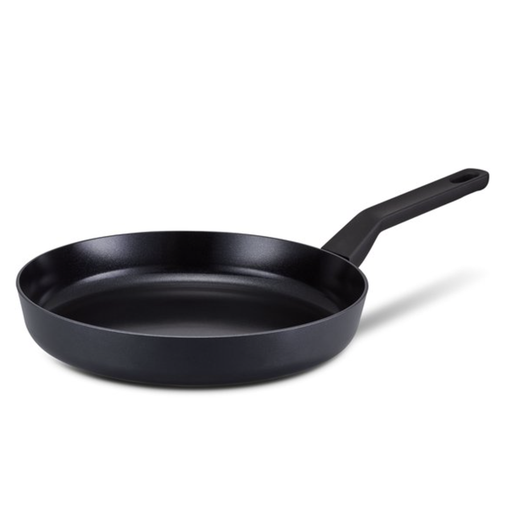
Why it suits this need: Its compact size is easy for beginners to manage and is ideal for one portion, eggs or a small omelette. According to the product information, this pan works on induction, gas, electric, ceramic and halogen hobs.
The product information explicitly states that it’s PFAS-free, has a ceramic coating and is dishwasher-safe. Even so, hand-washing and using gentle utensils are preferable to protect the coating.
20 cm size, recycled aluminium, double ceramic non-stick coating and induction compatibility.

Why it suits this need: If you’re looking for a pan without a traditional non-stick coating, this stainless steel model has an aluminium core, a glass lid and broad hob compatibility.
The materials and heat-retaining construction are clearly described. Bear in mind that stainless steel takes a little more technique to help prevent food sticking.
304 stainless steel, three-layer construction, lid, oven-safe according to the product information and dishwasher-safe.
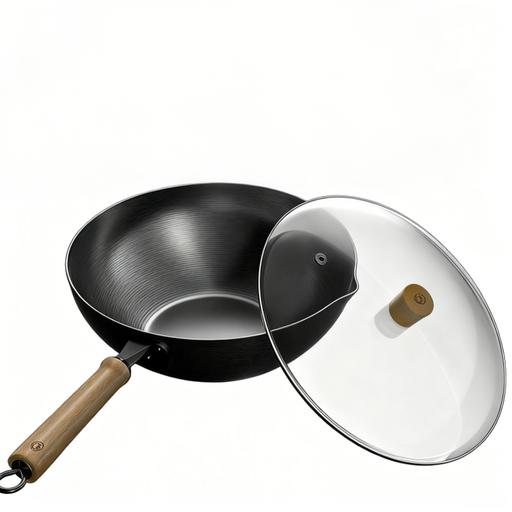
Why it suits this need: Its deep shape and 32 cm diameter make it well suited to stir-frying and cooking larger quantities. According to the product information, this wok is suitable for induction and gas.
The compatible heat sources and Teflon-free coating are specified in the product information. Before buying, check that its dimensions suit your cooking zone and storage space.
32 cm cooking surface, lid, iron construction and suitability for stir-frying on induction or gas.
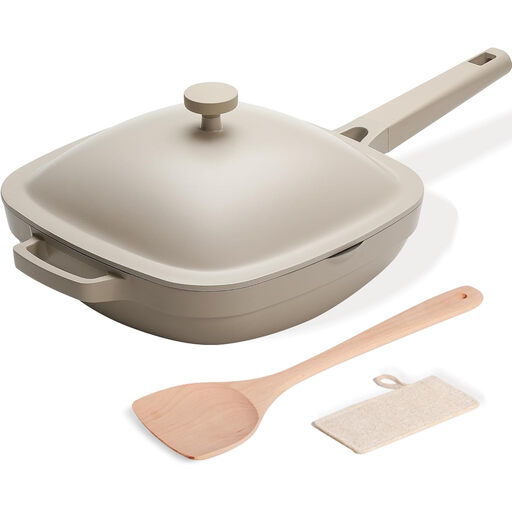
Why it suits this need: The product information specifies a PFAS-free Ti-Ceramic coating, a capacity of 3.8 quarts and use on all types of hob, including induction.
The coating claim and hob compatibility are clearly specified. According to the product information, the pan isn’t dishwasher-safe or oven-safe, so you know what to expect.
Ceramic coating, lid, deep shape, plus a wooden spatula and scrubber included.
Let a hot pan cool down before washing it. For ceramic coatings, use a soft sponge, mild washing-up liquid and wooden, silicone or plastic utensils. A stainless steel frying pan can usually withstand more, but check the manufacturer’s instructions. Stop using any pan with a damaged or peeling coating.
You can clean a dishwasher-safe frying pan in the machine, but hand-washing is often the gentler option. Also check the handle attachment and that the base is flat from time to time.
We’ve put together a complete, up-to-date list of products that meet these strict selection criteria and comply with the applicable European safety regulations.
Look for the words “suitable for induction” and check that the base is magnetic. Aluminium without a magnetic induction plate won’t work on an induction hob. Also check the diameter of the base against the size of your cooking zone.
Not automatically. “Ceramic” describes the type of coating, but on its own it doesn’t tell you enough about PFAS. Only choose a PFAS-free frying pan if this is explicitly stated in the current product information.
Lifespan depends on the material, coating, temperature and care. A coating can wear out more quickly if the pan is heated empty, used with metal spatulas or cleaned abrasively. A stainless steel frying pan has no non-stick coating, but requires more attention to temperature and cooking technique.
