
Vandaag of morgen in huis

Kwaliteit gegarandeerd

Welkomstaanbiedingen ontgrendelen: GRATIS bezorging | Tot 80% korting | Gratis 30 dagen JoyPlus-proefperiode
Download de app
A frying pan may seem like a straightforward kitchen essential, but you’ll soon notice if you choose the wrong one. It might not fit your induction hob, the non-stick coating could become damaged, or the size might not work well for a household with several people. Marketing terms such as ‘granite’, ‘healthy’ and ‘extra durable’ don’t tell you much on their own without verifiable specifications.
So, look out for these three common pitfalls:
A 24 cm frying pan is practical for one or two portions, such as eggs, an omelette or a small amount of vegetables. For families and larger meals, 28 cm is often a better choice. A 30 cm pan gives you even more room, but can feel heavy when it’s full.
As well as the diameter, consider:
A wide pan on a small induction zone may not heat evenly. So, check that the base is roughly the same size as the cooking zone.
Aluminium usually heats up quickly and is relatively lightweight. It generally needs a suitable base to work on induction. Stainless steel, such as 304 stainless steel, is hard-wearing and suitable for high temperatures, but needs more care when preheating and adding fat to help prevent food sticking.
A ceramic frying pan has a ceramic non-stick coating. Some products are described in their product information as having a PFAS-free composition. Always check the specific product page, as ‘ceramic’ doesn’t automatically mean that every unwanted substance has been excluded.
A granite frying pan often refers to the look or name of the non-stick coating. According to the manufacturer, SENSARTE’s Swiss ILAG coating contains no intentionally added PFOA, PFOS, APEO, lead or cadmium. This is a manufacturer’s product claim, not a general property of all granite pans.
A non-stick frying pan is handy for eggs, pancakes and fish. Wooden, silicone or nylon utensils are best. Avoid heating an empty pan for a long time and follow the maximum oven temperature.
Also, bear in mind that ‘dishwasher-safe’ doesn’t necessarily mean that the dishwasher is the recommended way to care for your pan. Several manufacturers say their pans can go in the dishwasher, but recommend hand-washing to help the coating last longer. Hand-washing a stainless steel frying pan can also help reduce marks and discolouration, although caring for it is different from looking after a coated pan.
A lid can be useful for simmering and keeping food warm. Check whether one is included; a frying pan with a lid isn’t always a given.
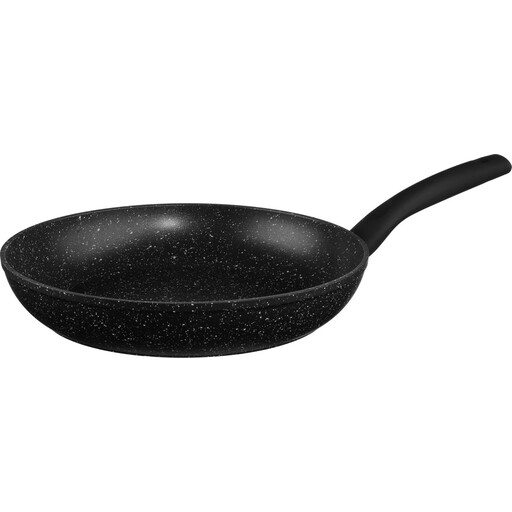
Why it suits this profile: This spacious aluminium pan is suitable for gas, induction, ceramic and electric hobs. Its 30 cm diameter gives you plenty of room for larger portions.
Hob compatibility and the two non-stick layers are clearly stated. Hand-washing is recommended to help protect the coating.
30 cm diameter, aluminium body and suitable for four types of hob.
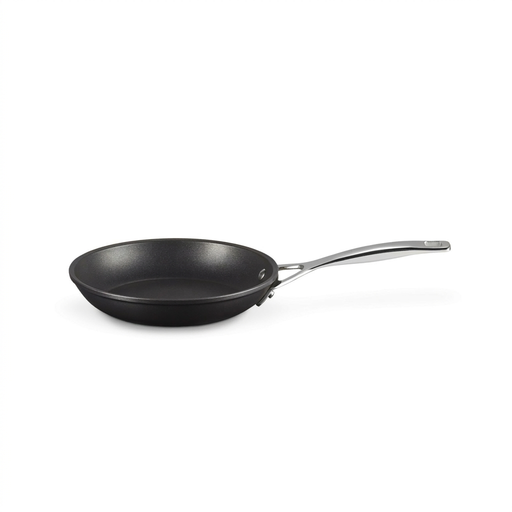
Why it suits this profile: This 28 cm pan is designed for everyday frying, sautéing and browning. The product information specifies a reinforced non-stick coating and compatibility with induction hobs.
The specifications describe both its flat, shallow shape and its compatibility with induction. This makes its intended use clearer than a pan with only a general marketing name.
28 cm diameter, aluminium body, PFOA-free coating according to the product information, and suitable for oven use.

Why it suits this profile: Its three-layer construction of stainless steel, aluminium and stainless steel is designed to distribute heat evenly. The glass lid is useful for simmering and reducing sauces.
The material construction, lid and maximum oven temperature are all specified. This helps you decide whether it’s right for frequent frying and slow cooking.
28 cm, 304 stainless steel, three-layer base, lid, and suitable for induction, gas, ceramic and electric hobs.
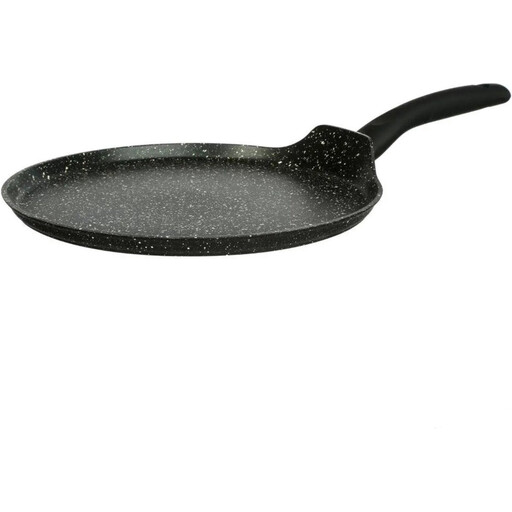
Why it suits this profile: The low sides and 28 cm diameter make this pan suitable for pancakes and everyday frying. According to the product information, it works on gas, induction, ceramic and electric hobs.
Its specific design means you won’t end up buying a deep frying pan for a task that’s easier with low sides.
28 cm diameter, two non-stick layers according to the product information, and compatibility with a wide range of hobs.
A frying pan set or complete cookware set can be a good-value option if you need several sizes. For example, an aluminium set with 20, 24 and 26 cm pans covers a range of portion sizes. Just check that all the pans are suitable for your hob and whether they have a non-stick coating.
A wok is more practical for stir-frying thanks to its high sides. A carbon steel wok does need to be hand-washed, dried straight away and seasoned regularly. A grill pan with ridges is designed to create grill marks and cook foods such as vegetables, burgers and sandwiches. For breakfast, an egg pan with compartments or a pancake pan with low sides is better suited to the job.
We’ve put together a complete, up-to-date list of products that meet these strict selection criteria and the applicable European safety requirements.
Choose a model that explicitly states it’s suitable for induction. A magnetic stainless steel base or induction disc is a useful indication, but always check the official product specifications. Also consider the diameter of the flat base and the size of your induction zone.
Its lifespan depends on how you use it, the temperature and how you care for it. Don’t use metal utensils, heat the pan when it’s empty or wash it while it’s still hot. Hand-washing with a soft sponge can help keep the coating in good condition for longer than frequent dishwasher use.
Yes, but the cooking technique is different from that used with a non-stick pan. Preheat the pan gradually, then add oil or butter and use a suitable temperature. A stainless steel model is particularly worth considering if you value high-temperature cooking, searing and a coating-free surface.
