
Vandaag of morgen in huis

Kwaliteit gegarandeerd

Welkomstaanbiedingen ontgrendelen: GRATIS bezorging | Tot 80% korting | Gratis 30 dagen JoyPlus-proefperiode
Download de app
A frying pan may seem like a straightforward purchase, but the difference between enjoyable cooking and daily frustration often comes down to the details. For example, a pan may be advertised as “suitable for all hobs”, while its base does not work properly on your induction hob. A non-stick coating can also become damaged quickly if you use metal utensils or heat the pan while it is empty.
Pay particular attention to these three common pitfalls:
An aluminium frying pan is generally lightweight and heats up quickly. This makes it well suited to everyday frying, stir-frying and omelettes. A forged aluminium pan can also offer a sturdy construction. However, check that the base is suitable for your hob.
An stainless steel frying pan without a traditional non-stick coating requires more control over temperature and the amount of fat used. On the other hand, stainless steel is generally resistant to scratches and metal spatulas. A tri-ply version, with aluminium between layers of stainless steel, is designed to distribute heat more evenly.
A cast iron frying pan retains heat for a long time and is suitable for searing meat and vegetables. The drawback is its greater weight. Enameled cast iron does not require a traditional seasoned layer, but the pan remains heavy and needs to be heated gradually.
With a non-stick frying pan, care is at least as important as the coating itself. Ideally, use wooden, silicone or plastic spatulas and avoid heating the pan empty for prolonged periods. A dishwasher can be convenient, but according to many product instructions, hand-washing extends the coating’s service life.
A ceramic frying pan may be advertised as a PFAS-free frying pan. If so, check that the product information states this explicitly. According to the product information provided, the Brabantia Nocta 24 cm and Brabantia Dusk have a ceramic coating that is PFAS-free. The 5five pan, by contrast, is specifically listed as: PFAS-free: no. This distinction helps you avoid relying solely on the general term “ceramic”.
PFOA-free does not automatically mean PFAS-free. According to the product description, the Tefal Easy Cook & Clean is described as free from PFOA, lead and cadmium, but it is not a PFAS-free frying pan according to the specification provided. This version is also not suitable for induction.
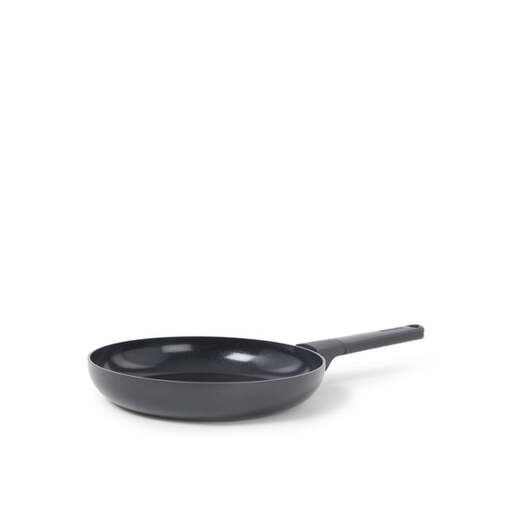
Why it suits this profile: The 24 cm size is easy to handle in smaller households and, according to the product information, the pan is suitable for gas, electric, ceramic and induction hobs.
Hob compatibility is clearly stated and the ceramic coating is described as PFAS-free in the product details.
Aluminium construction, ceramic non-stick coating, dishwasher-safe design and a three-year manufacturer’s warranty according to the product information.
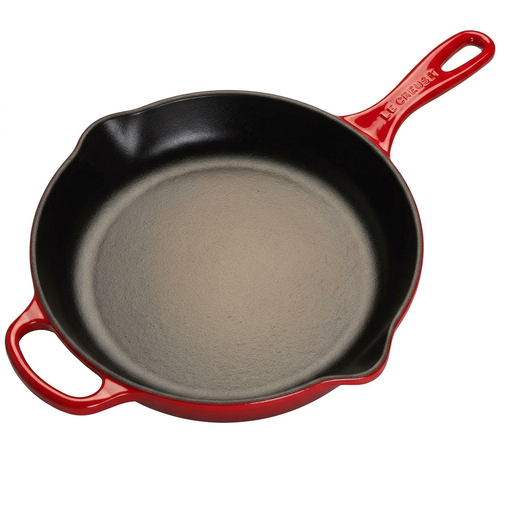
Why it suits this profile: This enameled cast iron frying pan is designed for searing and even cooking, with pouring spouts on both sides.
The material and diameter are clearly stated. This means you know in advance that, at 1.51 kg, the pan is heavier than many aluminium models.
Enameled cast iron, a matt black interior, two pouring spouts and dishwasher-safe design according to the product description.

Why it suits this profile: The 28 cm frying pan with lid is designed for stir-frying, frying and simmering, making it ideal for households looking for one versatile pan.
The details explicitly mention tri-ply 304 stainless steel, an aluminium core, induction compatibility and oven use up to 220 °C.
Three-layer construction, glass lid, suitable for gas, induction, electric and ceramic hobs, plus dishwasher-safe design according to the product information.
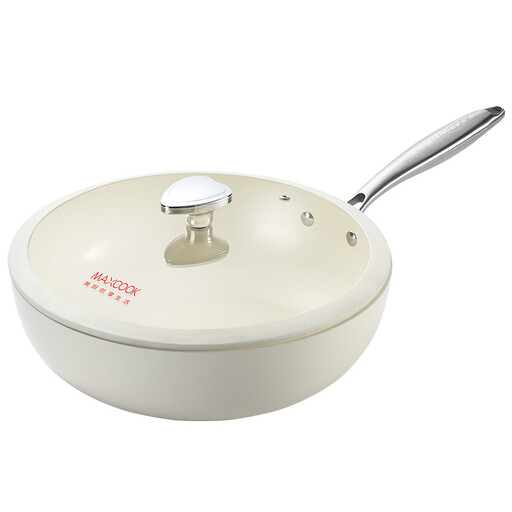
Why it suits this profile: The large size provides plenty of room for bigger portions, while the product description mentions a composite base for gas, electric, ceramic and induction hobs.
The diameter and hob compatibility are clearly specified. However, check that 32 cm fits your cooking zone and kitchen cupboard.
Die-cast aluminium, ceramic non-stick coating and, according to the product information, a PFOA-free coating.
Allow a hot pan to cool down before washing it. When caring for a coated pan, use a soft sponge and avoid wire wool, abrasive cleaners and metal spatulas. Even with dishwasher-safe models, check the care instructions: “dishwasher-safe” does not mean that every cleaning cycle will leave the coating untouched.
When using a stainless steel frying pan, preheat it over a medium heat. Then add oil or butter and only place the food in the pan once the surface is hot enough. Cast iron requires extra care because of its weight, handles and sensitivity to changes in temperature. Always use oven gloves with a hot pan; even a handle that stays cool on the hob can become hot in the oven.
We have put together a complete, up-to-date list of products that fully meet these strict selection criteria and the applicable European safety regulations.
Choose a model that explicitly lists induction as a suitable heat source. An aluminium frying pan will not automatically work on induction; it needs a magnetic base or induction disc. Also check that the base diameter matches the cooking zone.
Its service life depends on the material, coating and how it is used. A non-stick coating can wear out more quickly through overheating, metal utensils and abrasive cleaning. A stainless steel or cast iron frying pan generally does not have a vulnerable traditional coating, but it does require a different cooking technique and careful maintenance.
Yes, if you often simmer food, make sauces or keep dishes warm. A glass lid allows you to monitor the cooking process without letting unnecessary heat escape. Before buying, check whether the lid is included and what maximum oven or temperature limit applies.
