
Vandaag of morgen in huis

Kwaliteit gegarandeerd

Welkomstaanbiedingen ontgrendelen: GRATIS bezorging | Tot 80% korting | Gratis 30 dagen JoyPlus-proefperiode
Download de app
A frying pan may seem like a simple purchase, until you have to choose between aluminium, stainless steel, ceramic coating, induction compatibility and different sizes. A pan that looks spacious in the product photo may be too small for a family meal in practice. An attractive non-stick coating may also be less suitable if you often cook at high temperatures.
As a Joybuy Product Recommendation Officer, I filter product information for practical details. Below, you’ll find out which features to check before buying, which marketing claims to view with some caution and which models suit different cooking styles.
Not every frying pan suitable for gas, electric and ceramic hobs is also suitable for induction. A magnetic base is essential for this. According to the product information, the 28 and 32 cm Tefal Easy Cook & Clean are suitable for gas, electric and ceramic hobs, but not for induction. If you have an induction hob, always check the ‘suitable heat sources’ section rather than relying solely on the general product title.
A non-stick coating will remain usable for longer if you avoid sharp metal utensils and do not heat the pan empty for extended periods. Even a so-called scratch-resistant structure is not an invitation to use knives, forks or abrasive sponges. When choosing a PFAS-free frying pan or ceramic frying pan, also look at the precise wording: “without intentionally added PFAS” is a specific product claim, not a general statement about every pan.
A 24 cm pan is practical for one to a few people. For a family or larger portions, 28 to 32 cm is more convenient. A deep frying pan, sauté pan or wok offers extra room for sauces, vegetables and stir-fries, but it also takes up more space on the hob and in the cupboard.
An aluminium frying pan is generally lightweight and heats up quickly. This makes aluminium suitable for eggs, pancakes and everyday frying. A cast or forged aluminium body may feel sturdier than thin sheet material, but always check the stated weight and the construction of the base.
Stainless steel is less forgiving with delicate ingredients, but a multi-layer construction can distribute heat more evenly. According to the product description, the MAXCOOK Tri-Ply wok has a three-layer stainless steel construction and a magnetic flat base. This 30 cm wok is designed for stir-frying, braising, boiling and deep-frying.
A ceramic frying pan has a smooth cooking surface and is often chosen for cooking with little oil. Product claims about food safety or performance at high temperatures should be attributed to the brand. For example, the product information for various models states that the coating is free from certain substances or that no PFAS have been intentionally added. This is not a reason to heat a pan empty at a high temperature for an extended period.
Pay attention to the care instructions:
For induction, the base must be magnetic and sit flat against the cooking zone. A 24 cm frying pan does not always work optimally on a large induction zone; a 28 or 32 cm pan distributes the heat over a larger surface. Also check whether the diameter refers to the top rim or the actual cooking surface.
A frying pan with a lid is useful for simmering and cooking food through. If you often make one-pan meals, a sauté pan or deep frying pan may be a better choice. For one specific preparation, such as cooking four eggs at once, an egg pan with compartments is more practical than a standard round pan.
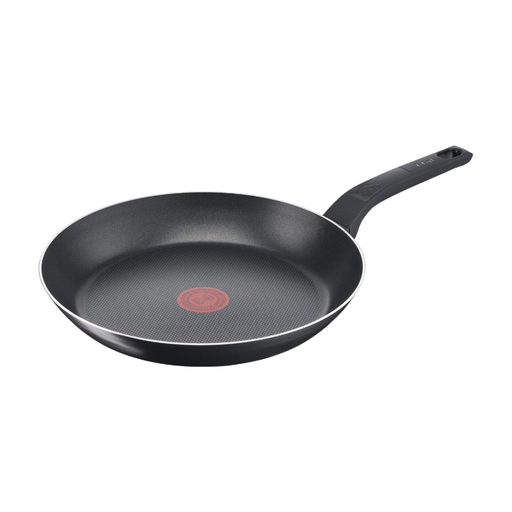
Why it suits this profile: This aluminium pan has a diameter of 28 cm, a deep shape and, according to the product information, is suitable for gas, electric and ceramic cooking.
The product information clearly states that this pan is not suitable for induction. This means you can compare it properly with your hob before buying.
Aluminium body, Thermo-Signal indicator, dishwasher-safe according to the product description and a deep shape.

Why it suits this profile: This compact ceramic frying pan is designed for everyday use in smaller households and, according to the product information, works on all common hobs.
The product description mentions a PFAS-free ceramic coating, a diameter of 24 cm and a maximum oven temperature of 200 °C. Always check these details against the current listing.
Made from recycled forged aluminium according to the product information, suitable for induction and fitted with a ceramic coating.
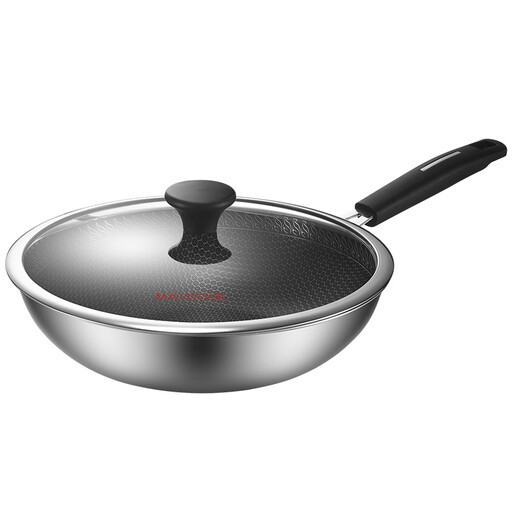
Why it suits this profile: This spacious wok is suitable for stir-frying, braising, boiling and deep-frying. According to the product information, the flat magnetic base is suitable for induction, gas, electric and ceramic hobs.
The size and applications are clearly stated. The manufacturer recommends hand washing, avoiding any false expectations about dishwasher use.
30 cm, three-layer stainless steel body, ceramic non-stick coating, honeycomb structure and toughened glass lid.
A frying pan set can be cost-effective if you regularly prepare different portion sizes. A small pan is useful for eggs or a sauce, while a larger pan is better suited to vegetables, meat or potatoes. Do check that all the sizes have the same coating, handle construction and hob compatibility.
For breakfast dishes, an egg pan with four compartments, such as the 19 cm PURECOOK aluminium egg pan, is practical. According to the product information, the pan is suitable for induction, gas and ceramic hobs. For larger meals, a 32 cm deep pan or a sauté pan with a lid is more suitable.
We’ve put together a complete, up-to-date list of products that fully meet these strict selection criteria and the applicable European safety regulations.
Choose a pan with a magnetic, flat base and check the product specifications. An aluminium pan without a magnetic base will not automatically work on induction. Models such as the Brabantia Dusk and the MAXCOOK wok are listed as induction-compatible in the product information.
Its lifespan depends on how it is used, the temperature and how well it is cared for. Do not use sharp metal utensils, do not heat the pan empty for extended periods and avoid major temperature shocks. Replace the pan when the coating begins to visibly flake off, is badly damaged or the handle is no longer firmly attached.
A ceramic frying pan can support cooking with little oil because ingredients come away more easily. According to a brand’s own research or claims, its performance should not be treated as a general fact that applies to all models. Instead, check the exact coating information, cooking temperature and care instructions for the pan you choose.
