
Vandaag of morgen in huis

Kwaliteit gegarandeerd

Welkomstaanbiedingen ontgrendelen: GRATIS bezorging | Tot 80% korting | Gratis 30 dagen JoyPlus-proefperiode
Download de app
A frying pan may seem like a simple kitchen essential, but small differences can make a big difference to how much you enjoy using it. A pan that’s too small for your household, doesn’t work properly on an induction hob or is easily damaged by incorrect care can quickly turn out to be the wrong choice.
As a Joybuy Product Recommendation Officer, I focus on factors you can check: size, material, hob compatibility, coating and care. Here’s what to look out for before choosing a new frying pan.
Terms such as “extra strong”, “stone effect” or “ceramic” may sound appealing, but they don’t tell you everything about how a pan will perform day to day. Always check:
Even a non-stick frying pan can be damaged by metal utensils, scouring pads or overheating. It’s best to use wooden, silicone or plastic utensils, and let a hot pan cool down before washing it.
A 28 cm frying pan offers plenty of cooking space, but it also takes up more room and may feel heavier when full. The actual cooking area is also affected by the sloping sides and the diameter of the base.
A 20 cm frying pan is better suited to one person, an omelette or a small portion. For two to four people, 24 to 28 cm is often more practical. If you regularly cook larger quantities, consider a 30 cm pan or a deep sauté pan.
Aluminium conducts heat quickly, but aluminium on its own won’t work on an induction hob. The pan needs a magnetic base or an induction disc. So don’t just check the pan’s material: make sure the product description explicitly says it is suitable for induction.
An induction pan should also sit flat on the hob. A warped base can cause uneven heating and make cooking less enjoyable.
An aluminium frying pan is usually lightweight and heats up quickly. This makes it a good choice for everyday frying, sautéing and preparing breakfast. Forged and cast aluminium can differ in weight and heat distribution, so compare the product weight provided.
A ceramic frying pan has a ceramic non-stick coating. According to product information from various brands, this type of coating can help prevent food from sticking, but its lifespan depends greatly on the temperature, utensils and cleaning method. If the coating is damaged or peeling, stop using the pan.
As well as the diameter, check the height and stated capacity:
A deep rim is useful for sautéing, simmering or cooking dishes with sauce. A low rim is often more convenient for thin pancakes. A dedicated pancake pan usually has a flat cooking surface and a low rim to make flipping easier.
A soft-touch handle can be comfortable for regular use. Do check whether the pan is oven-safe, as plastic or wooden handles often have limitations. A frying pan with a lid is useful for cooking food through, keeping it warm and preparing dishes where moisture is important. Check the lid material, how well it fits and where you can put it down when hot.
“Dishwasher-safe frying pan” doesn’t mean that the dishwasher is the best choice for long-term use. For several models, hand-washing is recommended to keep the coating and handle in better condition for longer.
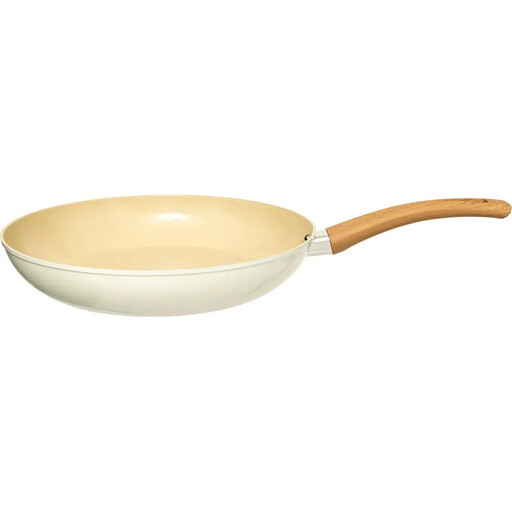
Why it suits this profile: According to the product specifications, this lightweight frying pan weighs 570 grams and is suitable for gas, induction, ceramic and electric hobs. Its 28 cm diameter offers plenty of room for everyday meals.
The product page lists two non-stick layers and compatibility with several heat sources. Hand-washing is recommended, despite the stated dishwasher-safe design.
Recycled aluminium, 28 cm diameter, stainless steel induction disc and a soft-touch handle.
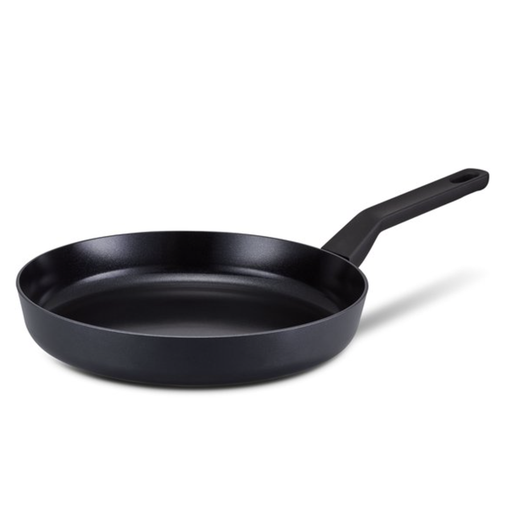
Why it suits this profile: This compact model is designed for smaller portions. According to the product information, it has a ceramic, PFAS-free coating and an ergonomic Bakelite handle.
Its size means you don’t need to heat a large pan for one egg or a small meal. The product information lists compatibility with induction, gas, ceramic, electric and halogen hobs.
20 cm diameter, recycled aluminium, ceramic coating and dishwasher-safe design; hand-washing is recommended.
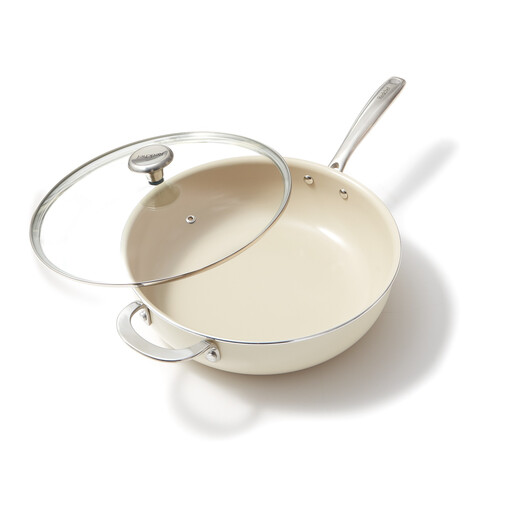
Why it suits this profile: Its deep shape, stated capacity of 5 quarts and glass lid make it suitable for larger meals, sautéing, simmering and batch cooking.
The product information lists an induction base, compatibility with gas and electric hobs, and a heat-resistant glass lid. Check your local hob and the instructions before use.
Deep 28 cm pan, ceramic coating according to the product description, glass lid, and a dishwasher-safe pan and lid.
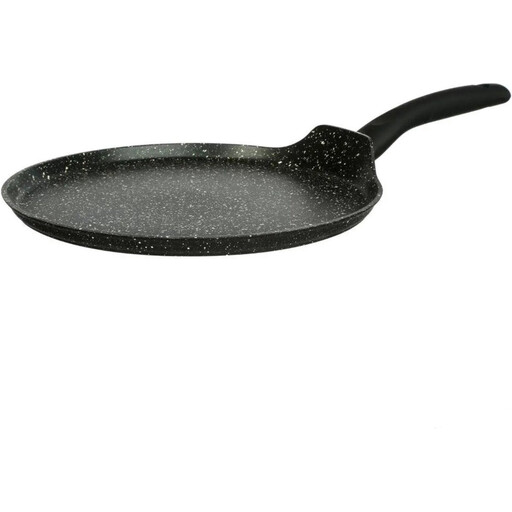
Why it suits this profile: This model is designed for pancakes, but can also be used for eggs, burgers and other flat dishes.
Its low, purpose-designed shape means you don’t need to use a deep frying pan for pancakes. Hand-washing is listed as the better way to care for it.
28 cm diameter, aluminium body, two non-stick layers according to the product information, and suitable for all listed heat sources.
We’ve put together a complete, up-to-date list of products that meet these strict selection criteria and the applicable European safety regulations.
A 20 cm pan is practical for one person or small portions. A 24 to 28 cm pan is usually better for everyday cooking for two or more people. Choose 30 cm if you often cook large quantities at once and have enough hob and storage space.
Only if the pan has a suitable induction base or induction disc. Check the product specifications. Aluminium without a magnetic base won’t be heated directly by an induction hob.
Use low to medium heat, don’t heat the pan when it’s empty, choose wooden or silicone utensils and avoid abrasive cleaners. Even if a pan is dishwasher-safe, hand-washing can help keep the coating in good condition for longer. Stop using it if the coating is visibly peeling or badly damaged.
