
Vandaag of morgen in huis

Kwaliteit gegarandeerd

Welkomstaanbiedingen ontgrendelen: GRATIS bezorging | Tot 80% korting | Gratis 30 dagen JoyPlus-proefperiode
Download de app
A new frying pan might seem simple to choose – until you have to decide between aluminium, stainless steel, cast iron, ceramic, different coatings and multiple sizes. One pan may be suitable for induction, yet not sit properly on your hob zone. Likewise, a dishwasher-safe pan can have different properties from one that must be washed by hand only.
The most common buying mistakes usually come down to three things:
A 24 cm frying pan is practical for eggs, an omelette, vegetables or a few burgers. This size generally heats up quickly and takes up little space. For two to four people, or dishes where ingredients need to sit side by side, a 28 cm frying pan is often more convenient.
Bear in mind that the stated diameter usually refers to the top rim. The actual cooking surface may be smaller. So, especially with induction, check that the base matches your hob zone properly.
An aluminium frying pan is relatively light and known for fast heat transfer. Aluminium is often combined with a non-stick coating or a magnetic base for use on induction.
A ceramic frying pan has a ceramic non-stick coating. With the Brabantia Nocta, the product information states a PFAS-free ceramic coating is used. “PFAS-free” should always be checked as a product specification for the particular model; it doesn’t automatically mean every ceramic pan has the same composition.
A stainless steel frying pan without a classic non-stick coating is suitable for high temperatures and searing, but requires a different cooking technique. Heat the pan gently first, then add oil, and avoid turning your food too early.
A cast iron frying pan retains heat for a long time and is ideal for heavy-duty searing. However, cast iron is heavy and requires maintenance. An uncoated version usually needs to be seasoned, dried immediately and lightly treated with oil to prevent rust.
For an induction frying pan, check that the manufacturer explicitly mentions induction. The models in this selection are, according to their product descriptions, suitable for induction, gas and/or ceramic hobs. If you’re unsure about another model, a magnetic base is a practical thing to check.
A dishwasher-safe frying pan saves time, but hand washing can help extend the life of a coating or handle. With non-stick pans, it’s best to use wooden or silicone utensils. Avoid heating an empty pan on a high flame, and let a hot pan cool down before washing it.
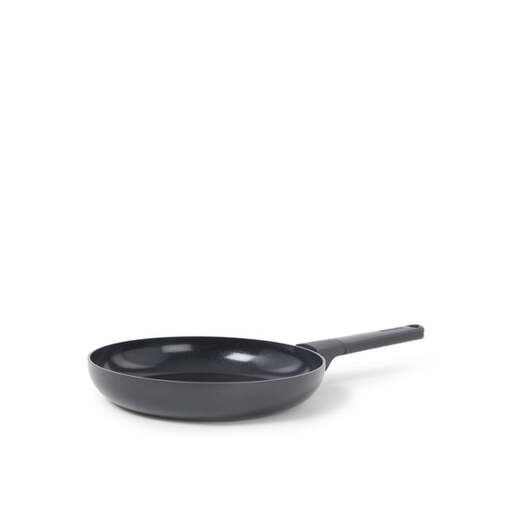
Why this fits the profile: A manageable size for everyday cooking and smaller households, with a coating and broad hob compatibility according to the product specification.
The diameter is clearly stated and, according to Brabantia, the pan is suitable for electric, gas, induction and ceramic hobs. The ceramic coating is described by the brand as PFAS-free.
Aluminium pan, 24 cm, ceramic non-stick coating, dishwasher-safe and three-year manufacturer’s warranty according to the product information.
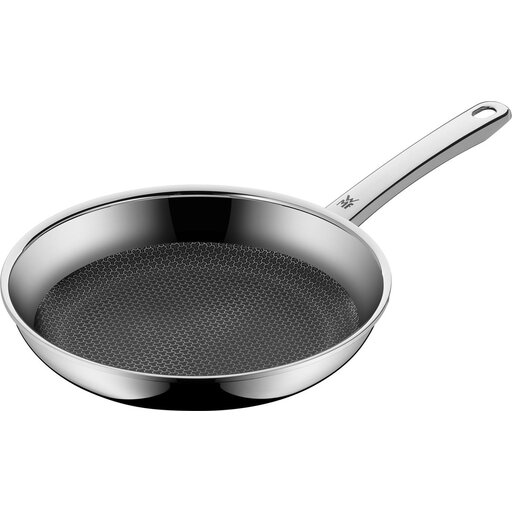
Why this fits the profile: For those who want a roomy pan for meat, vegetables and meals for several people, with a multi-layer construction.
The product specification mentions an aluminium core, stainless steel layers, a honeycomb structure and suitability for all heat sources, including induction.
28 cm diameter, PermaDur non-stick coating, heat resistance up to 260 °C and five-year warranty according to the manufacturer.
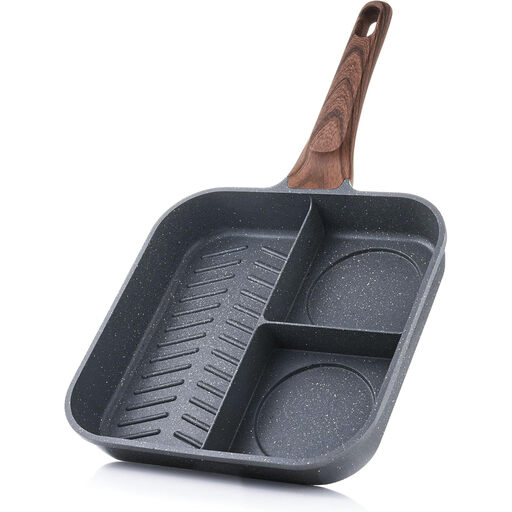
Why this fits the profile: For breakfasts, burgers, eggs and grilled dishes where you want to cook several ingredients at the same time.
The pan has a 4.5 mm thick magnetic stainless steel base and, according to the product description, is suitable for induction, gas, electric and ceramic hobs. The coating is described by the seller as free from PFOA, PFOS, APEO, lead and cadmium.
Three separate compartments, grill ridges and a non-stick coating. This version is not dishwasher-safe and must be washed by hand.
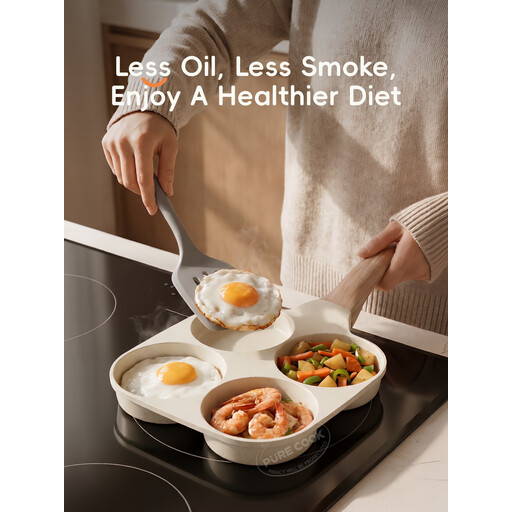
Why this fits the profile: The four compartments are practical for eggs, mini pancakes, burgers or sausages during a hearty breakfast.
The purpose and size are clearly defined: 19 cm, four compartments and suitable for induction, gas and ceramic hobs. The pan is not dishwasher-safe.
Lightweight aluminium, four cooking compartments and a wooden heat-insulating handle. Hand washing with a soft sponge is recommended.
We’ve put together a full, up-to-date list of products that fully meet these strict selection criteria and comply with current European safety regulations.
Choose a model where the manufacturer explicitly states it is suitable for induction. Also check that the base is flat and roughly matches the diameter of your hob zone. An aluminium pan without a magnetic base usually won’t work on induction; a version with a stainless steel induction base will.
The term PFAS-free refers to the stated coating, but doesn’t automatically cover all components, such as the handle, base or maximum cooking temperature. So check the full product specification. Always use any non-stick pan according to the care instructions and avoid overheating.
That depends on use, temperature and care. Wooden or silicone spatulas, moderate heat and hand washing can help reduce unnecessary wear. Once the coating visibly peels or becomes badly damaged, it’s wise to replace it. A stainless steel or enamelled cast iron pan doesn’t have a classic non-stick layer, but does require a different cooking technique and maintenance.
