
Vandaag of morgen in huis

Kwaliteit gegarandeerd

Welkomstaanbiedingen ontgrendelen: GRATIS bezorging | Tot 80% korting | Gratis 30 dagen JoyPlus-proefperiode
Download de app
A frying pan seems like a straightforward purchase until you have to choose between aluminium, stainless steel, ceramic, a non-stick coating, 24 or 32 cm, and whether or not you want a lid. You often only notice you have made the wrong choice once you get home: the pan does not work on induction, heats unevenly or loses its non-stick performance because it has not been cared for properly.
This practical buying guide compares the most important features. That way, you can choose the right frying pan for induction, gas or another cooking surface.
A product may be suitable for gas, electric and ceramic cooking, but not for induction. Always check the listed heat sources. An induction frying pan needs a magnetic base. If you are unsure, hold a magnet against the underside or check the product specifications.
Also pay attention to how flat the base is. A warped pan makes poorer contact with an induction or ceramic hob, which means the heat is distributed less evenly.
A non-stick frying pan may have a traditional coating, a ceramic coating or an uncoated stainless-steel interior. Marketing terms such as “healthy”, “non-toxic” or “PFAS-free” should not be treated as universal guarantees without further explanation.
Look at the specific product information. The Brabantia Nocta, for example, is listed as having a PFAS-free ceramic coating. Other products only state that a ceramic coating or a coating free from certain substances has been used. According to SENSARTE’s product information, PFAS, PTFE, PFOA, PFOS, APEO, lead and cadmium have not been intentionally added to the pans mentioned. This is a statement in the brand’s product description, so always check the latest product specifications and care instructions.
A large frying pan measuring 28 or 32 cm is useful for cooking for several people, but it needs more storage space and can become heavy when full. A pan measuring 20 to 24 cm is often better suited to one or two people. For a family, 28 cm may be more practical.
A frying pan with a lid is suitable for simmering, reducing sauces and keeping food warm. If you mainly want to stir-fry, a wok with higher sides may give you more room to move the ingredients around.
An aluminium pan generally heats up quickly and is relatively lightweight. A thicker, cast-aluminium body can distribute heat more consistently. Stainless steel is uncoated and known for its robust nature, but it requires more control over temperature and cooking fat to help prevent food from sticking.
According to the product description, an stainless-steel frying pan with a three-layer construction combines stainless-steel layers with an aluminium core. The PURECOOK Tri-Ply 304 is listed as being made from 304 stainless steel and suitable for gas, induction, electric, ceramic and halogen hobs. The supplied glass lid also makes the pan suitable for simmering. However, check the exact oven temperature: this model has a stated oven limit of 220 °F, which is approximately 104 °C.
A ceramic frying pan can be easy to clean, but care for the coating according to the manufacturer’s instructions. Avoid heating the pan empty over high heat and, where recommended, use wooden or silicone utensils.
With an uncoated stainless-steel pan, metal spatulas are often less of a concern, although scratches or discolouration can still occur. A smooth interior helps with cleaning, but “less sticking” does not mean that temperature and cooking fat no longer matter.
Use this rule of thumb:
A wok is not a direct replacement for every frying pan. Its round or deep shape is suitable for stir-frying and larger quantities, while a flat frying pan is more practical for frying, turning food and maintaining even contact with the hob.
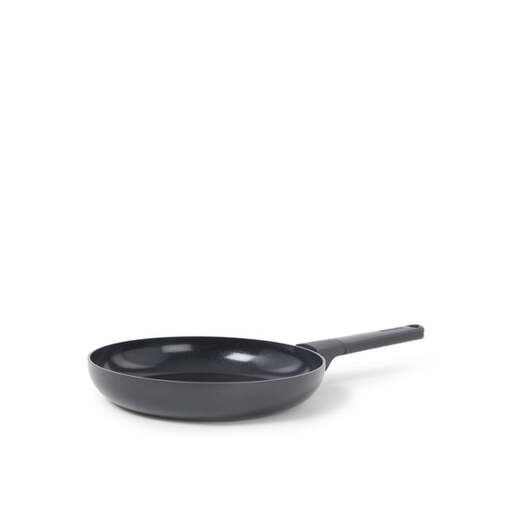
Why it suits this profile: The compact size is practical for everyday portions, while the product information states that the pan is suitable for gas, electric, induction and ceramic cooking.
The stated compatibility helps prevent you from buying a pan that will not work on your hob. The product information also mentions that it is dishwasher-safe.
24 cm, ceramic coating, PFAS-free according to the product information, and a 3-year manufacturer’s warranty.

Why it suits this profile: The 28 cm pan with its three-layer 304 stainless-steel construction is a good fit for anyone looking for an uncoated pan that works with different hobs and cooking techniques.
The specifications list gas, induction, electric, ceramic, halogen and oven use. The lid is useful for simmering and sauce-based dishes.
28 cm, 304 stainless steel, aluminium core, glass lid and dishwasher-safe according to the product description.

Why it suits this profile: This 30 cm wok offers plenty of room for stir-frying, braising, boiling and deep-frying. According to the product information, its flat magnetic base is suitable for induction.
The product specifications explicitly list all common hob types. Hand-washing is required, helping to prevent a dishwasher from damaging the handle or structure.
30 cm, three-layer stainless-steel body, ceramic coating, honeycomb structure and glass lid.
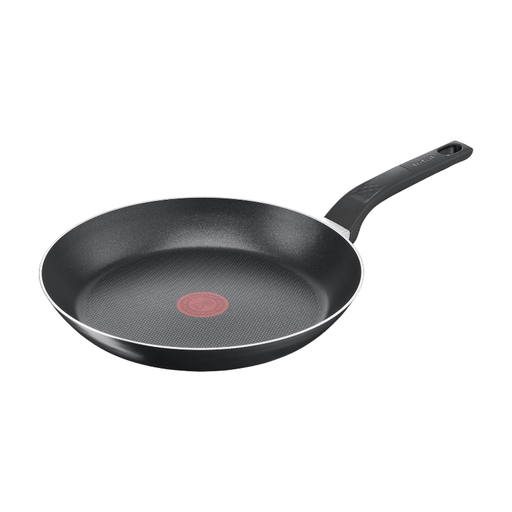
Why it suits this profile: The deep shape and 32 cm diameter are practical for larger portions. This pan is designed for gas, electric and ceramic cooking, but not for induction.
The induction limitation is clearly stated. This helps prevent the wrong purchase for households with an induction hob.
32 cm, deep shape, non-stick coating, dishwasher-safe and oven-safe up to 175 °C according to the product information.
We have put together a complete, up-to-date list of products that fully meet these strict selection criteria and the applicable European safety regulations.
Choose a pan whose product information explicitly states induction compatibility. A magnetic base is essential. Not every aluminium pan works on induction; it usually needs a magnetic layer in the base.
Its lifespan depends on use, temperature and care. Do not heat an empty pan over high heat for extended periods, use suitable utensils and allow the pan to cool before washing it. The manufacturer may state that it is dishwasher-safe, but washing by hand can sometimes help keep the coating and handle in good condition for longer.
Yes, provided you are prepared to control the temperature properly. Heat the pan gradually, add enough cooking fat and avoid trying to release your food too early. For quick and easy frying, a non-stick coating may be more practical; for high durability and cooking without an interior coating, stainless steel can be a suitable choice.
