
Vandaag of morgen in huis

Kwaliteit gegarandeerd

Welkomstaanbiedingen ontgrendelen: GRATIS bezorging | Tot 80% korting | Gratis 30 dagen JoyPlus-proefperiode
Download de app
A frying pan may seem simple, but its coating, base, size and care requirements all affect how enjoyable it is to cook with. A pan that appears suitable for every hob on the packaging might, for example, be too small for your induction zone. A non-stick coating can also wear more quickly if you cook at high temperatures or use metal utensils.
So, look out for these common pitfalls:
An aluminium frying pan usually heats up quickly and is relatively lightweight. Aluminium alone, however, isn’t automatically suitable for induction. This usually requires a magnetic base, often made of stainless steel. So look for an explicit statement that it’s a frying pan suitable for all heat sources, and check that gas, electric, ceramic and induction are all listed.
A thicker base helps distribute heat evenly. This is useful for pancakes, omelettes and fish, as well as searing meat. You should also place the pan on a hob zone that’s roughly the same size as its base. A zone that’s too small can slow down cooking; one that’s too large can heat the pan unevenly.
With a non-stick frying pan, the coating matters more than the marketing name. “Granite”, “stone” or “titanium” doesn’t always tell you exactly what the coating is made of. Look for verifiable information about the type of coating and the substances the manufacturer says were not intentionally added.
A PFOA-free frying pan isn’t automatically the same as a PFAS-free frying pan. PFOA is one specific substance within the wider PFAS group. So, if a product is advertised as a PFAS-free frying pan, check exactly what the manufacturer’s claim says. According to the product information, Tefal describes the Renew set as having a PFAS-free ceramic coating. Other models, for example, are described as “without intentionally added PFOA”. These are different claims and shouldn’t be used interchangeably.
A ceramic coating may suit anyone specifically looking for a ceramic frying pan. With any coating, it’s best to use wooden, silicone or nylon utensils and avoid heating an empty pan to a high temperature.
For one person or an omelette, 20 to 24 cm is often a practical size. A 26 to 28 cm pan gives you more room for vegetables, potatoes or several pieces of meat. A deep pan with a lid is more versatile for stir-frying, simmering and one-pot meals.
Also check:
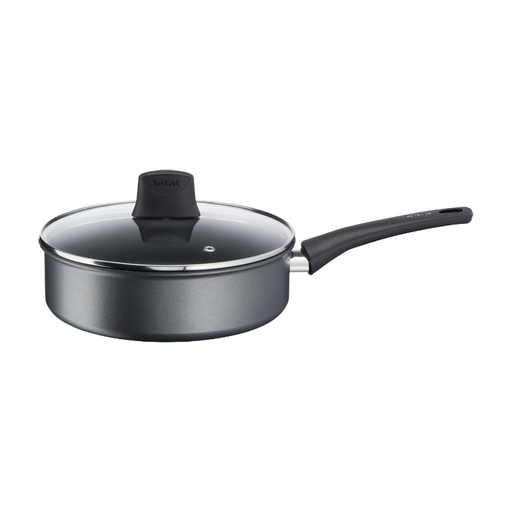
Why it suits this profile: The 24 cm pan with a glass lid is practical for everyday portions, and the product information lists it as suitable for induction, gas, electric, ceramic and halogen hobs.
The included lid means you won’t have to look for a suitable one later. The product information also states that the pan is oven-safe up to 175 °C.
24 cm diameter, glass lid, Thermo-Signal indicator and an aluminium body with a titanium-reinforced non-stick coating, according to the product description.
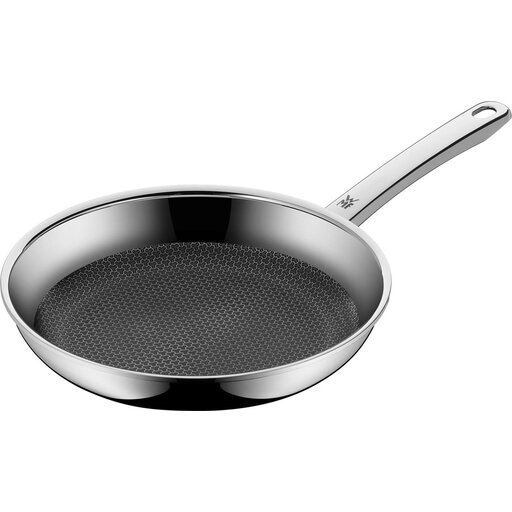
Why it suits this profile: The combination of stainless steel, an aluminium core and a honeycomb structure is designed for anyone who regularly sears food at higher temperatures.
The product information specifies induction compatibility, a TransTherm base and heat resistance up to 260 °C. The pan isn’t suitable for the dishwasher.
Layered construction, a PermaDur non-stick coating according to the product description, suitability for all heat sources and a stated 5-year guarantee.
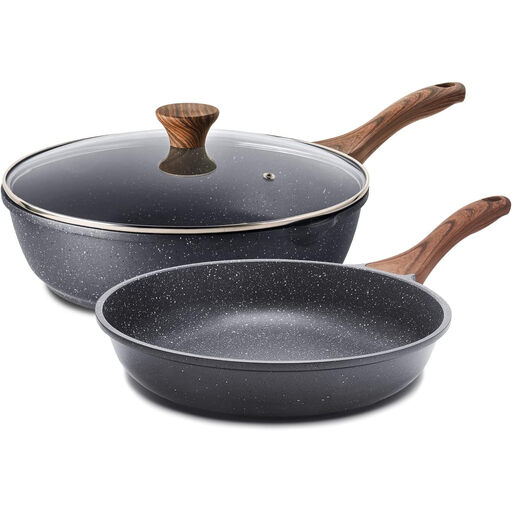
Why it suits this profile: The combination of a frying pan and a deep sauté pan with a glass lid is ideal for families and home cooks who want several cooking options in one pan set.
You get more than just a shallow pan: there’s also a deep pan with a lid. The product information lists compatibility with induction, gas and electric hobs.
9.5-inch frying pan, 5-quart sauté pan, glass lid and cast aluminium, according to the product information. The coating is stated to be free of intentionally added PFOA and PFOS.
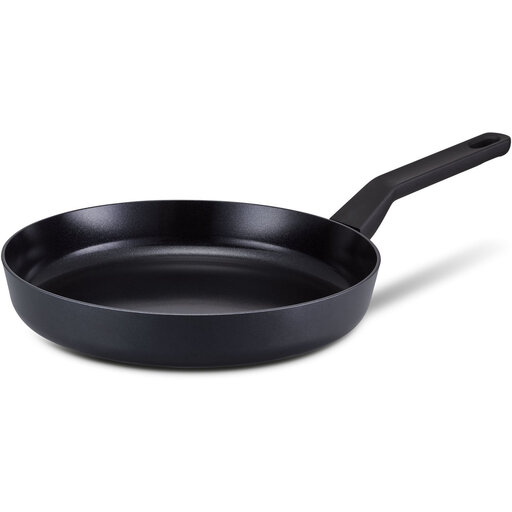
Why it suits this profile: This 24 cm pan is designed for everyday use and is listed as being made from 100% recycled aluminium with a PFAS-free ceramic coating.
The product description names the heat sources: induction, gas, electric, ceramic and halogen. That means you don’t have to rely on the vague term “universal”.
24 cm diameter, recycled aluminium, ceramic coating and dishwasher suitability according to the product information. Hand washing is recommended to help the coating last longer.
We’ve put together a complete, up-to-date list of products that meet these strict selection criteria and the current European safety regulations.
Choose a model that explicitly lists induction in its specifications. Aluminium pans usually need a magnetic base. You can check this at home with a magnet: if it sticks to the underside, the base is magnetic. Also check the base diameter against the size of your induction zone.
Its lifespan depends on how you use and care for it. Don’t use metal utensils, heat the pan empty on a high setting or wash it while it’s still hot. Washing by hand with a soft sponge is generally gentler than repeated dishwasher cleaning. Replace the pan if the coating starts to peel, is badly damaged or no longer allows food to cook evenly.
A set can be useful if you need different sizes or a deep pan with a lid. One 24 cm pan may be enough for a single-person household. So compare more than just the price: check the sizes included, whether there’s a lid, compatibility with your hob and the care requirements. That way, you won’t pay for pieces you rarely use.
