
Vandaag of morgen in huis

Kwaliteit gegarandeerd

Welkomstaanbiedingen ontgrendelen: GRATIS bezorging | Tot 80% korting | Gratis 30 dagen JoyPlus-proefperiode
Download de app
A frying pan may seem simple, but differences in material, diameter and coating can make a real difference to how enjoyable it is to cook with. A cheap pan, for example, may warp quickly, while a heavy one can be awkward if you need to take it out of the cupboard every day. Terms such as “non-stick”, “durable” and “suitable for induction” only tell you so much, so it’s worth checking the product specifications.
In this buying guide, you’ll find out what to look for and which models suit different cooking habits.
An aluminium frying pan won’t necessarily work on an induction hob. It needs a magnetic base or an induction plate. So check that induction is specifically listed among the compatible heat sources. A pan suitable for all heat sources will usually list gas, induction, ceramic and electric hobs.
Pay attention to the diameter of the base, too. A 28 cm frying pan may have a smaller effective base, which means the whole pan won’t heat up as quickly.
A non-stick frying pan is handy for eggs, pancakes and fish. However, not every non-stick coating is PFAS-free. A PFOA-free claim doesn’t automatically mean the entire coating is PFAS-free. Look for an explicit product claim, such as “PFAS-free frying pan”.
If your pan has a coating, it’s best to use wooden, silicone or plastic utensils. Metal can damage the coating, even if the manufacturer says it has greater scratch resistance.
According to the product information, a dishwasher-safe frying pan can go in the dishwasher. But that doesn’t mean doing so will extend the life of its coating. Some models recommend washing by hand with a soft sponge. Let the pan cool before washing it to reduce the risk of warping due to a sudden change in temperature.
The right size depends on your household and cooking style:
A 24 cm frying pan is often easier to handle. A 28 cm frying pan is more versatile if you cook for several people. As well as the diameter, check the weight. An all-metal model may feel sturdy, but can be less comfortable if you often lift the pan with one hand.
An aluminium frying pan is usually lightweight and heats up quickly. Aluminium is often combined with a non-stick coating or an induction plate. If you choose an aluminium model, always check that its base is suitable for your hob.
A stainless steel frying pan can withstand high temperatures and usually doesn’t have a traditional non-stick coating. Cooking technique matters more with stainless steel: heat the pan gradually, add enough cooking fat and let the food sear before turning it over.
Multi-layer models often combine stainless steel with an aluminium core. According to their product descriptions, these pans are designed to distribute heat more evenly. Check that the pan is suitable for induction, gas and other heat sources.
A coating makes it easier to release food and clean the pan, but it needs careful handling. Check:
A frying pan with a lid is handy for simmering, stewing and dishes where you want to retain heat and moisture. A glass lid lets you keep an eye on your food without lifting it.
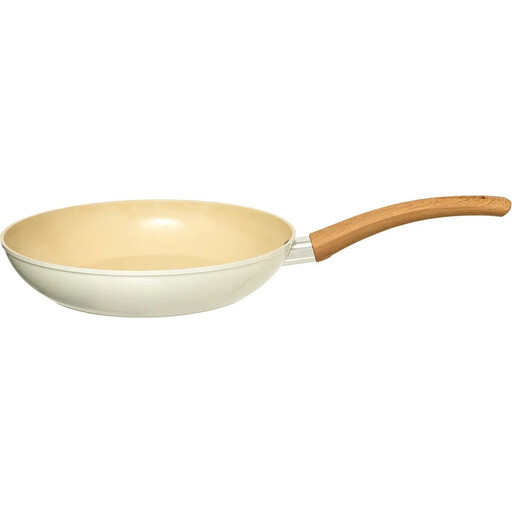
Why it suits this profile: This 24 cm aluminium pan is lightweight, with a stated weight of 440 grams, and is suitable for gas, induction, ceramic and electric hobs. That makes it practical for everyday use.
The specifications specifically mention a stainless steel induction plate and two non-stick layers. Hand washing is recommended to help the pan last longer.
24 cm, stated usable capacity of 3.1 litres, suitable for all listed heat sources and dishwasher-safe according to the product information.
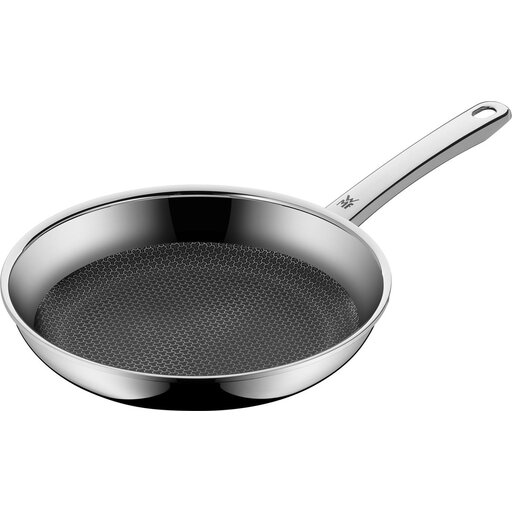
Why it suits this profile: This model combines stainless steel, an aluminium core and a PermaDur non-stick coating. It’s designed for cooks who want to combine high-temperature cooking with a range of techniques.
The pan is suitable for induction and other heat sources. The product information recommends hand washing, helping you avoid compromising care for the convenience of the dishwasher.
28 cm, three layers with an aluminium core, honeycomb structure and a stated heat resistance of up to 260 °C.

Why it suits this profile: This 28 cm pan with a glass lid is designed for frying, sautéing, roasting and simmering. Its three-layer construction combines stainless steel with an aluminium core.
The product information lists compatibility with induction, gas, ceramic hobs, electric hobs and halogen hobs, as well as oven use. The lid makes the pan suitable for dishes with added liquid.
304 stainless steel, a three-layer base, glass lid and dishwasher-safe according to the product description.
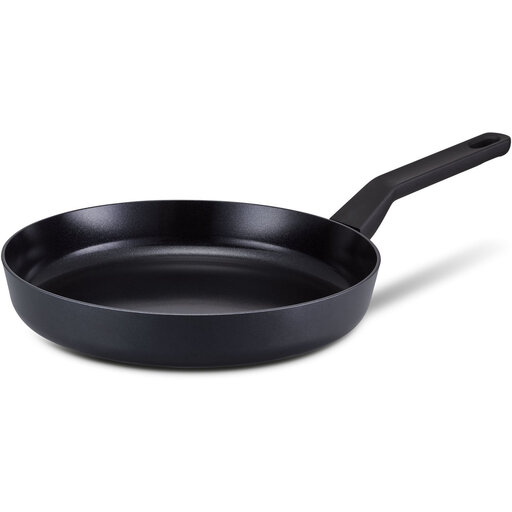
Why it suits this profile: According to the product information, this aluminium pan has a double-layer ceramic, PFAS-free non-stick coating and is made from 100% recycled aluminium.
The product description explicitly says “100% PFAS-free”, rather than only PFOA-free. Hand washing is recommended to help the ceramic coating last longer.
24 cm, suitable for induction and other listed heat sources, ceramic coating and dishwasher-safe according to the product information.
We’ve put together a complete, up-to-date list of products that meet these strict selection criteria and current European safety regulations.
An induction frying pan has a magnetic base or an induction plate. Check the product information to make sure induction is specifically listed. A pan that’s suitable for all heat sources can usually also be used on gas, electric and ceramic hobs.
A 24 cm frying pan is a good fit for one or two portions and is relatively lightweight. A 28 cm frying pan offers more cooking space for several people, but takes up more room and may be heavier. Choose the diameter to suit your hob, household and storage space.
It depends on how you use the pan, the temperature, your utensils and how you care for it. Don’t keep using a pan if its coating is damaged or peeling. Hand washing, moderate temperatures and wooden or silicone spatulas can help keep it usable for longer.
