
Vandaag of morgen in huis

Kwaliteit gegarandeerd

Welkomstaanbiedingen ontgrendelen: GRATIS bezorging | Tot 80% korting | Gratis 30 dagen JoyPlus-proefperiode
Download de app
A frying pan seems simple to choose, until you have to decide between aluminium, ceramic and cast iron, different sizes, and terms such as “non-stick” or “PFAS-free”. A pan that looks handy in a product photo might turn out to be too small for a family, unsuitable for induction or difficult to clean.
So focus on specifications you can check. Marketing terms tell you less than the material, dimensions, hob compatibility and care instructions.
Not every pan works on induction. It needs a magnetic base. Also check whether the pan is suitable for gas, electric, ceramic or halogen hobs. An induction frying pan should also match the diameter of your cooking zone. A 28 cm pan may not heat as evenly on a small zone.
A non-stick pan can make it easier to cook eggs, pancakes and vegetables without them sticking, but the coating is still vulnerable to scratches, high temperatures and metal utensils. Even when a pan is described as dishwasher-safe, some product descriptions recommend hand washing to keep the coating in good condition for longer.
So use wooden, silicone or nylon utensils. Avoid heating an empty pan unnecessarily, and let a hot pan cool down before washing it.
Check exactly what is being claimed. According to the product descriptions for certain Redchef models, the ceramic coating and materials used are free from PFAS, PTFE, PFOA, lead and cadmium. SENSARTE’s own product description states that no PFOA, PFOS, APEO, lead or cadmium has been intentionally added. This is not automatically the same as a general claim about all PFAS. If in doubt, check the full ingredient and compliance information for the specific model.
An aluminium frying pan is generally lightweight and heats up quickly. That makes it practical for everyday cooking and for anyone who regularly lifts a pan with one hand. Aluminium is often combined with a non-stick coating, such as a ceramic coating.
According to the product description, a ceramic frying pan can help you cook with little oil. The coating does need careful handling. A cast-iron pan retains heat for longer, but is heavier and requires more care when lifting and cleaning.
A set of pans in different sizes can be good value if you often cook different quantities. If you already have a saucepan, stockpot or sauté pan, you may be better off buying one frying pan that suits your needs.
Check whether the pan is dishwasher-safe and whether its handle is oven-safe. These two features are not necessarily the same. Some models are oven-safe up to a certain temperature, while the handle may have its own limitations. Always use oven gloves and follow the temperature stated in the product information.
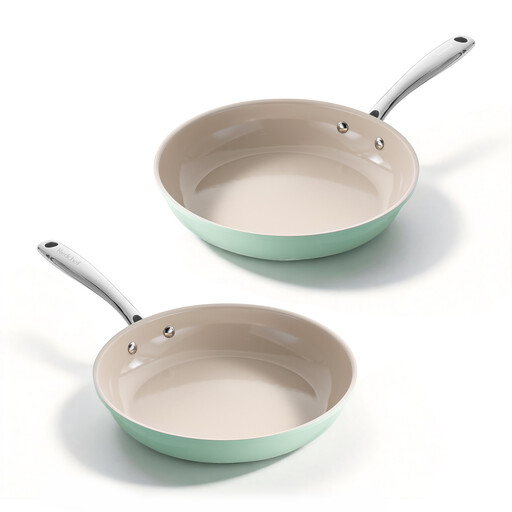
Why it suits this profile: The two sizes are suitable for small and medium portions. According to the product description, this set is compatible with induction, gas and electric hobs.
The product information describes it as suitable for PFAS-free cooking and says it has a ceramic non-stick coating. Hand washing is recommended to help the coating last longer.
20 and 24 cm; ceramic coating; suitable for induction, gas and electric hobs; oven-safe up to the stated product limit.
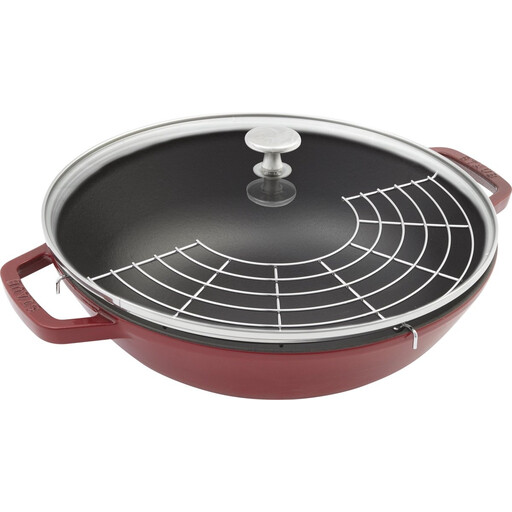
Why it suits this profile: This 30 cm cast-iron wok is designed for anyone who wants to retain heat for longer and regularly cooks larger quantities.
The material and diameter are clearly stated. Bear in mind that it weighs 3.3 kg, and preferably clean the pan by hand.
Cast-iron construction; enamel coating; 4.4-litre capacity; suitable for induction, gas, electric and ceramic hobs.
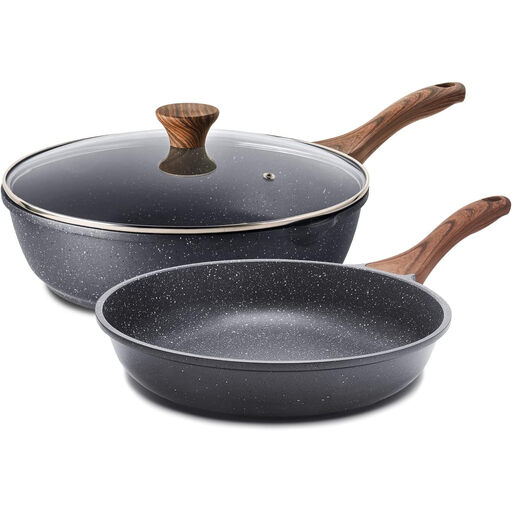
Why it suits this profile: The combination of a 9.5-inch frying pan and a deep sauté pan with a lid is practical for families and for meals that involve several cooking techniques.
According to its own product description, no PFOA, PFOS, APEO, lead or cadmium has been intentionally added. The description also states that it is compatible with induction, gas and electric hobs.
Die-cast aluminium; Swiss granite non-stick coating; sauté pan with glass lid; hand washing recommended to help the coating last longer.
We’ve put together a complete, up-to-date list of products that meet these strict selection criteria and the applicable European safety regulations.
A single frying pan is a good choice if you simply want to replace a worn-out pan. A set is more convenient when you need several sizes. For soup, pasta and stews, you’re more likely to need a stockpot or saucepan. A sauté pan has higher sides and is suitable for sauces and larger one-pot meals. A raclette grill is designed for cooking at the table, so it serves a very different purpose from an oven-safe pan.
Whatever you choose, check the same essentials: size, material, heat source, coating, handle and care. That way, you won’t pay for features you don’t use.
Choose a model that explicitly states it is suitable for induction. The pan needs a magnetic base. Also check the base diameter to make sure it matches your cooking zone.
Its lifespan depends on how you use and care for it. Don’t use metal utensils, avoid overheating and follow the cleaning instructions. Even if a pan is dishwasher-safe, the product information may still recommend hand washing.
No. You can’t tell just from the word “ceramic”. Check the manufacturer’s statement for the specific model. Also look out for the difference between “free from intentionally added substances” and a general PFAS-free claim.
