
Vandaag of morgen in huis

Kwaliteit gegarandeerd

Welkomstaanbiedingen ontgrendelen: GRATIS bezorging | Tot 80% korting | Gratis 30 dagen JoyPlus-proefperiode
Download de app
A frying pan seems like a simple purchase, until you have to choose between aluminium, ceramic, a classic non-stick coating, different diameters and whether it’s suitable for induction. Marketing copy often highlights one feature while making important limitations less obvious.
Look out for these three common pitfalls:
The diameter determines how many ingredients you can cook at once and how evenly the pan sits on the hob zone.
A frying pan set with two sizes can be better value than buying pans individually if you regularly cook for different numbers of people.
An aluminium frying pan is relatively lightweight and heats up quickly. A thicker or die-cast aluminium body can distribute heat more evenly. Also check what type of coating is used.
A ceramic frying pan usually has a ceramic non-stick coating. Product information may state that it is PFAS-free or PFOA-free. These terms don’t mean the same thing: PFOA is one specific group of substances, while PFAS covers a broader group. So check the exact claim on the product page.
A coating described by the manufacturer as suitable for cooking with little oil doesn’t mean the pan is completely maintenance-free. Preferably use wooden, silicone or nylon utensils, and avoid heating an empty pan for too long.
If you cook on induction, you’ll need an induction frying pan with a magnetic base. Also check whether the pan is suitable for gas, electric, ceramic or halogen hobs.
An oven-safe frying pan can only be used up to the stated maximum temperature. Check the handle too: a plastic or Bakelite handle may have limitations, even if the pan itself is oven-safe. Always use oven gloves.
The dishwasher-safe label means that, according to the product information, the pan can go in the dishwasher. Hand-washing with a soft sponge is often the gentler option for preserving the coating. Let a hot pan cool down before washing it to prevent warping from a sudden change in temperature.
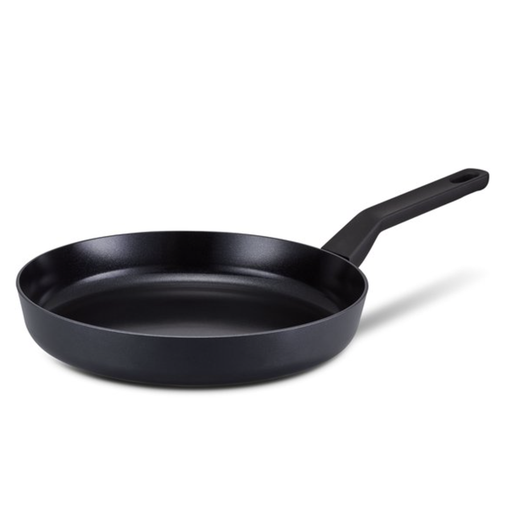
Why it suits this profile: Its compact size is practical for one person, student kitchens and smaller portions. According to the product information, the pan is suitable for induction, gas, electric, ceramic and halogen hobs.
The diameter is clearly specified, and the product information states that it has a 100% PFAS-free ceramic coating. Do check whether 20 cm gives you enough cooking space for your portions.
100% recycled aluminium, a PFAS-free ceramic coating and dishwasher-safe, according to the product description.
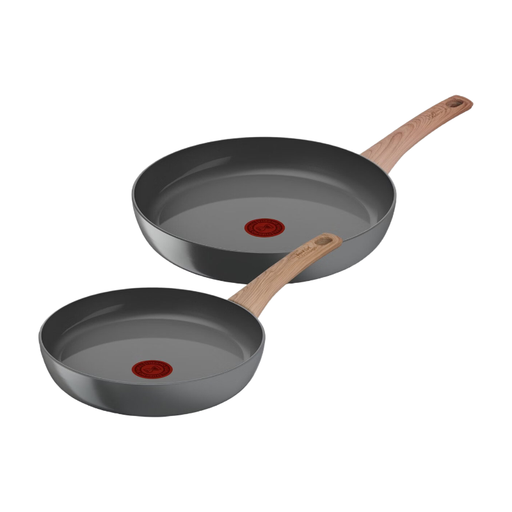
Why it suits this profile: The two popular sizes give you flexibility for everyday cooking, including meat, fish and vegetables. According to the product information, the ceramic coating is PFAS-free and both pans are suitable for induction.
The set clearly states the pan sizes, that the coating is PFAS-free and that the pans are suitable for all heat sources, including induction. The pans are not dishwasher-safe.
24 and 28 cm pans, 100% recycled aluminium and a temperature indicator, according to the product information.
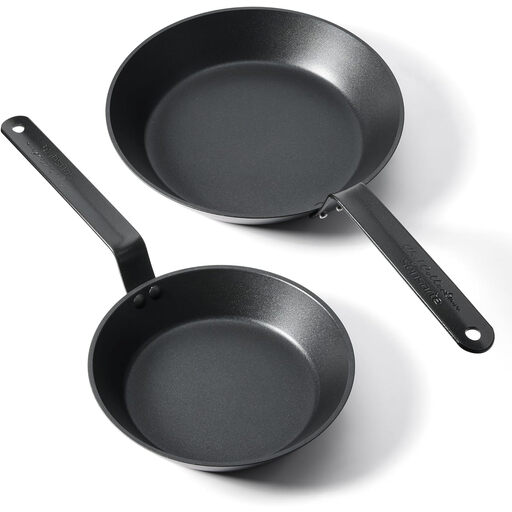
Why it suits this profile: The two pans are designed for different types of cooking, from eggs and pancakes to sautéing and dishes that need more cooking space.
The product information specifies a magnetic stainless steel base, induction compatibility and a maximum oven temperature of 450°F. Hand-washing is recommended to protect the coating.
Two sizes, aluminium construction, oven-safe and, according to the product description, a PFOA- and PFOS-free coating.
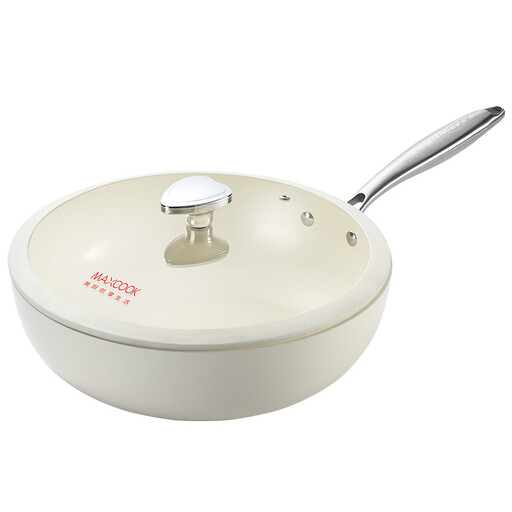
Why it suits this profile: The 32 cm diameter gives you room to cook larger quantities. According to the product description, the pan is suitable for induction, gas, electric and ceramic hobs.
The size and compatible hobs are clearly stated. Do check the diameter of your hob zone and the cupboard space available before buying.
Die-cast aluminium, a ceramic coating and a multi-layer base for different heat sources, according to the product information.
We’ve put together a complete, up-to-date list of products that meet these strict selection criteria and the applicable European safety regulations.
A healthy frying pan isn’t an official product category. Instead, look for specific features such as the coating type, stated material information, the right cooking temperature and the care instructions. For example, a PFOA-free claim doesn’t automatically mean that a pan is PFAS-free.
A 20 or 24 cm frying pan is often practical for one person. For two to four people, 28 cm is a good choice. Choose 32 cm if you cook large portions and your hob is big enough.
No. An aluminium pan usually needs a magnetic base to work on induction. Always check the specification for “induction-compatible” or “suitable for induction hobs”.
Its lifespan depends on the material, how you use it and how well you care for it. Avoid high temperatures, metal utensils and harsh cleaning products. Replace the pan if the coating becomes visibly damaged or its cooking performance clearly deteriorates.
