
Vandaag of morgen in huis

Kwaliteit gegarandeerd

Welkomstaanbiedingen ontgrendelen: GRATIS bezorging | Tot 80% korting | Gratis 30 dagen JoyPlus-proefperiode
Download de app
A frying pan seems like a simple purchase – until the base doesn’t work on induction, the coating quickly deteriorates, or the pan turns out to be too small for your household. Marketing terms like “extra strong”, “healthy cooking” and “suitable for all hobs” don’t tell you much without clear product specifications.
With this practical checklist, you can choose a frying pan, induction frying pan, wok pan or pan set for everyday use more effectively.
Not every aluminium pan works on induction. Most require a magnetic, encapsulated base. An example is the Tefal Easy Cook & Clean frying pan, 32 cm. According to the product information, it is suitable for gas, electric and ceramic hobs, but not for induction. So always check the specification “suitable for induction” rather than just the general product title.
Do you use an electric or ceramic hob? Then also take a look at the range of pans for an electric ceramic hob.
A non-stick frying pan won’t automatically stay in the same condition for years. High temperatures, an empty pan left on the hob, and metal spatulas can all damage the coating. With ceramic coatings, a PFAS-free composition is often mentioned, but that doesn’t mean the pan is scratch-proof.
According to product information from various brands, including Brabantia and Naturepan, hand washing with a soft sponge is recommended to extend the life of the coating, even if the pan is labelled as dishwasher-safe.
A 24 cm frying pan doesn’t always have a 24 cm cooking surface. The base can be smaller, which affects heat distribution. A 28 or 32 cm pan offers more space, but also requires a suitable cooking zone and enough storage space. For one person, a 20 cm frying pan can be more practical; for a family, 28 cm, 30 cm or 32 cm is often more convenient.
A claim about scratch resistance or a long lifespan comes from the brand itself. Treat it as a product specification rather than a guarantee for every cooking style.
Choose the size based on portions:
A frying pan with a lid or sauté pan is handy for simmering, sauces and dishes that need to retain moisture. A wok pan generally has higher sides and is suitable for stir-frying. A sauté pan is more versatile for stews and one-pot meals.
Pay attention to three separate features:
Let a hot pan cool down before rinsing it. A sudden temperature change can cause warping. Do not continue using a pan with a damaged or peeling coating.
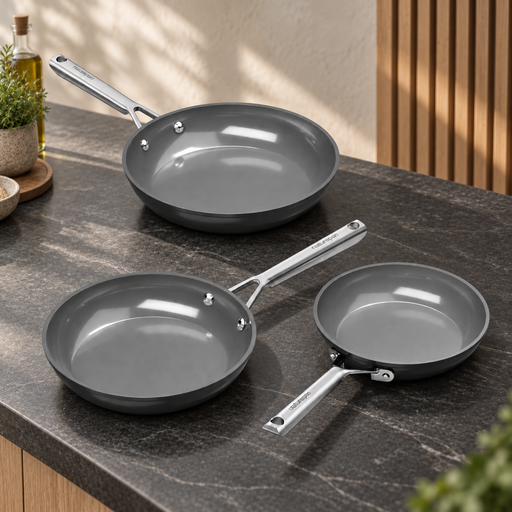
Why this fits the profile: Three sizes offer flexibility without having to buy several individual pans straight away. According to the product information, the set is suitable for induction, gas, ceramic and electric hobs.
The product description explicitly mentions a PFAS-, PTFE- and PFOA-free ceramic coating. Use soft spatulas and avoid prolonged high heat.
20, 24 and 28 cm; oven-safe up to 260 °C according to the product information; dishwasher-safe.
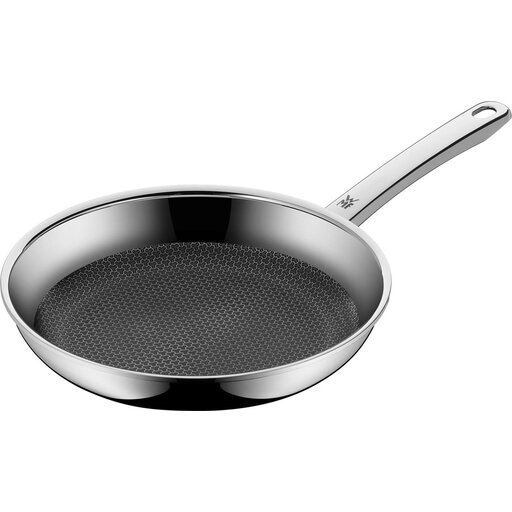
Why this fits the profile: This pan combines stainless steel, an aluminium core and a honeycomb structure. It suits those who regularly cook meat, vegetables and eggs and want a sturdy pan.
The specifications list all heat sources, including induction, and a maximum heat resistance of 260 °C. The pan is not dishwasher-safe.
24 cm; suitable for all hobs; according to the product information, a five-year guarantee.
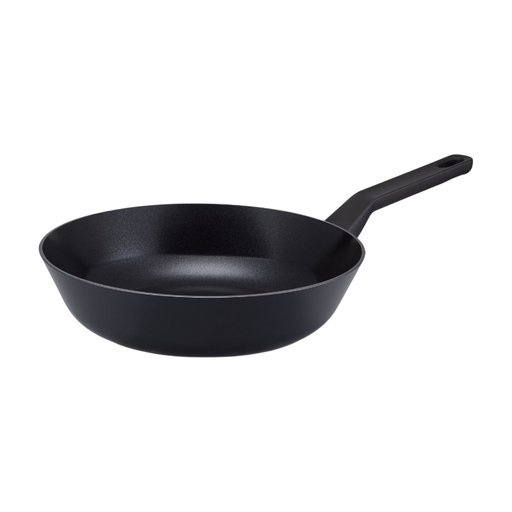
Why this fits the profile: The higher shape is practical for stir-frying, noodles, vegetables and larger portions. According to the product description, the pan is suitable for induction, gas, electric, ceramic and halogen hobs.
The product information mentions a PFAS-free ceramic double non-stick coating. Hand washing is recommended to preserve the coating for longer.
28 cm; made from 100% recycled aluminium according to the product description; suitable for multiple hobs.
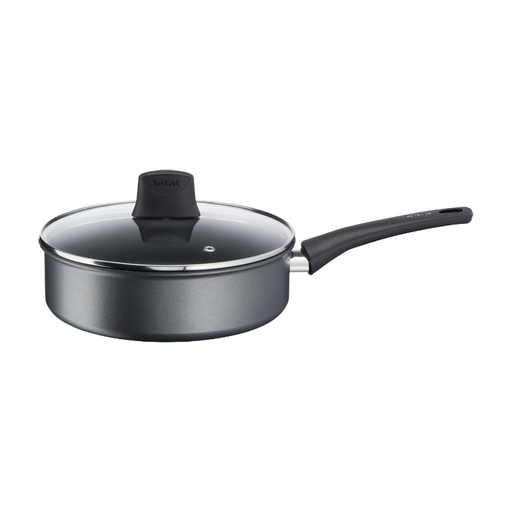
Why this fits the profile: The glass lid makes this 24 cm sauté pan suitable for simmering, sauces and meals where you want to keep an eye on the contents.
The specifications mention a wide induction base and suitability for all hobs. The oven limit is 175 °C; please bear this in mind.
24 cm; glass lid included; Thermo-Signal indicator according to the product information.
We have compiled a full, up-to-date list of products that fully meet these strict selection criteria and current European safety regulations.
For one person, 20 cm is often sufficient. A 24 cm frying pan suits smaller households and everyday meals. For three or more people, 26 to 28 cm is usually more practical. Only choose 32 cm if your hob has a suitably large zone and you regularly cook large quantities.
That depends on the base, not just the ceramic coating. Check whether the manufacturer explicitly mentions induction. A ceramic frying pan can be suitable for induction, gas, electric and ceramic hobs, but this varies by model.
The lifespan depends on temperature, utensils, cleaning and frequency of use. Do not heat a non-stick pan empty for a long time, do not use sharp metal spatulas, and let the pan cool down before washing it. A dishwasher-safe frying pan can still last longer with hand washing using a soft sponge.
