
Vandaag of morgen in huis

Kwaliteit gegarandeerd

Welkomstaanbiedingen ontgrendelen: GRATIS bezorging | Tot 80% korting | Gratis 30 dagen JoyPlus-proefperiode
Download de app
A new frying pan may seem like a straightforward purchase—until you have to choose between aluminium, ceramic, stainless steel, cast iron or a complete frying pan set. Terms such as “durable”, “healthy” and “non-stick” are not always used consistently either. As a result, an attractive deal may not be the best choice for your hob, dishwasher or everyday cooking style.
With this buying guide, the Joybuy Product Recommendation Officer filters the most important product information. This helps you compare pans based on verifiable specifications rather than marketing copy alone.
A pan may be suitable for gas, electric and ceramic cooking, but not for induction. This is explicitly stated for the Tefal Easy Cook & Clean 32 cm, for example: the pan is suitable for gas, electric and ceramic cooking, but not for induction.
Always check:
A 28 cm frying pan does not automatically have a 28 cm base. With induction, the base must align properly with the cooking zone. The Tefal Renewal 24 cm, for example, specifies a base diameter of 18 cm.
A ceramic frying pan may feature a PFAS-free non-stick coating, but that does not mean it can be used without care. Abrasive sponges, high temperatures and metal utensils can damage the coating more quickly.
With a PFAS-free frying pan, it is important to check exactly what claim is being made. According to Brabantia’s product information, the ceramic coating on the Nocta frying pan is PFAS-free. Tefal likewise specifies a PFAS-free ceramic coating for the Renewal 24 cm. For other models, always check the current product specifications and any available conformity information.
A dishwasher-safe frying pan is convenient, but detergent, heat and contact with other pans can put additional strain on a non-stick coating. For this reason, several models recommend hand washing to help extend their service life.
A pan without a coating, such as a stainless steel frying pan, often has fewer limitations under intensive use. Stainless steel does require more attention to preheating and using the right amount of fat, however. Otherwise, food may stick more readily.
Aluminium generally heats up quickly and is relatively lightweight. Many aluminium pans feature a non-stick coating. Pay close attention to the care instructions and avoid metal utensils if the manufacturer advises against them.
Stainless steel is hard-wearing and suitable for high temperatures. According to the product description, the PURECOOK Tri-Ply 304 Stainless Steel frying pan uses a three-layer construction: stainless steel, an aluminium core and another layer of stainless steel. The manufacturer states that this design supports fast and even heat distribution. This is a manufacturer claim, not a universal guarantee for every hob or cooking method.
Ceramic coating is often chosen by consumers looking for a PFAS-free frying pan. Alongside the coating, check whether the pan is dishwasher-safe and oven-safe. These properties vary by model.
Cast iron retains heat for a long time and is well suited to high-heat searing. The trade-off is its considerable weight. According to the product specification, the 20 cm Le Creuset Signature Skillet weighs 1.51 kg.
A pan with a lid is practical for simmering, preparing sauces and cooking dishes where moisture needs to be retained. Check whether the lid is included; a set or pan with a matching diameter does not always automatically come with one.
Before buying, check:
According to the product information, the PURECOOK Tri-Ply 28 cm comes with a glass lid and is suitable for oven use up to 220°F, which is approximately 104°C. Check this temperature before use, as it is considerably lower than the oven temperatures specified for some other pans.
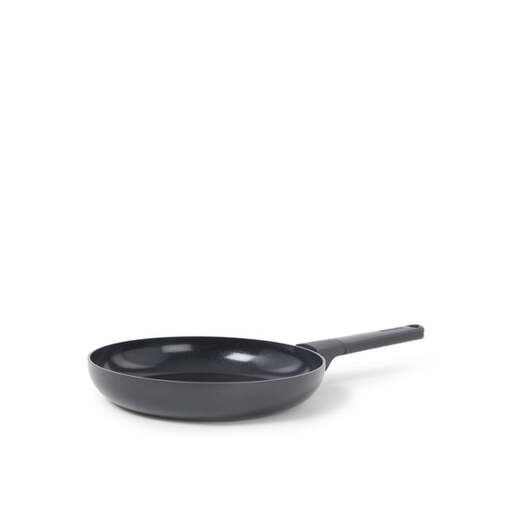
Why This Fits Their Persona: A well-balanced size for everyday cooking in an apartment, student kitchen or small household.
The product information states that the pan is suitable for induction, gas, electric and ceramic cooking. This reduces the risk of choosing a pan that is incompatible with your hob.
24 cm, aluminium body, ceramic coating, PFAS-free according to the product information, and dishwasher-safe.

Why This Fits Their Persona: A strong fit for home cooks looking for a stainless steel frying pan without a traditional non-stick coating for regular use.
The specification lists 304 stainless steel, an aluminium core and compatibility with all common hob types. The product description also states that it can be used in a dishwasher.
28 cm, glass lid, three-layer construction, and suitable for gas, induction, electric, ceramic, halogen and oven use according to the listed product details.
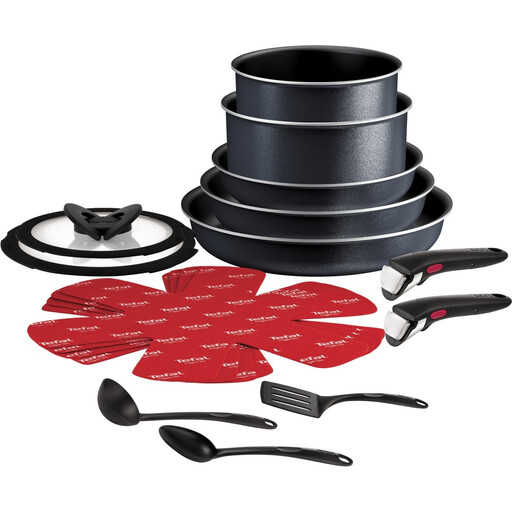
Why This Fits Their Persona: Practical when you need multiple sizes for cooking, frying, stewing and storing.
The set includes five pans, diameters from 18 to 28 cm, a detachable handle and induction compatibility. Before buying, check which components are oven-safe for your needs.
16-piece set, stackable design, lid included according to the product details, and titanium coating.
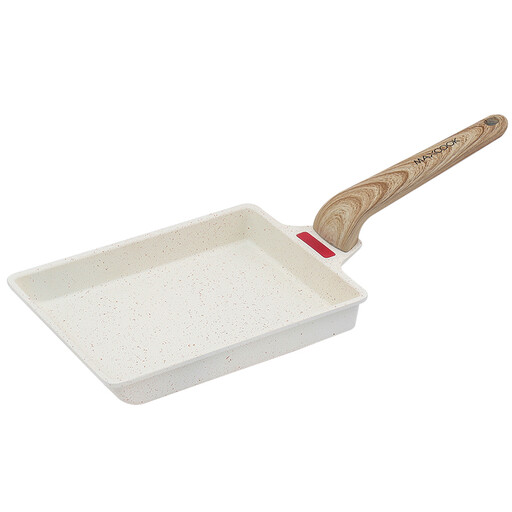
Why This Fits Their Persona: The rectangular shape is designed for Japanese omelettes, stuffed eggs and compact portions.
Its compact format gives this pan a clearly defined purpose. You are not buying a large pan that mainly takes up valuable cupboard space.
19 × 14 cm, aluminium alloy, composite base and, according to the product name, suitable for induction hobs and open flames.
Explore a current selection of frying pan tools in different sizes and materials, with varying levels of hob compatibility. Always check the product specifications for your specific use case.
A 28 cm frying pan is often practical for multiple portions, vegetables or meat. For one or two people, 20 to 24 cm may be sufficient. Also consider the diameter of your cooking zone: an oversized pan may heat less evenly on a small induction zone.
That depends on the model. “Ceramic” usually describes the coating, not the base. According to their product information, the Brabantia Nocta 24 cm and Tefal Renewal 24 cm are suitable for induction. Always check this on the product page before ordering.
Its lifespan depends on the material, how it is used and how it is maintained. A stainless steel frying pan has no traditional non-stick coating that can wear away, but it does require a different cooking technique. With a non-stick frying pan, you can extend its service life by avoiding heating it empty at high temperatures, using soft utensils and following the care instructions. Claims about an extended lifespan should be understood as brand information, not as a fixed guarantee for every user.
