
Vandaag of morgen in huis

Kwaliteit gegarandeerd

Welkomstaanbiedingen ontgrendelen: GRATIS bezorging | Tot 80% korting | Gratis 30 dagen JoyPlus-proefperiode
Download de app
Buying a frying pan seems simple, until you have to choose between aluminium, stainless steel, ceramic and cast iron, or decide whether you need a 24 cm or 28 cm pan. Terms such as “durable”, “PFAS-free” and “suitable for all heat sources” can also be confusing. The right choice mainly depends on your hob, the meals you cook every day, how you look after your cookware and how long you want it to last.
Not every aluminium pan will work on an induction hob. It needs a magnetic base or an induction plate. The 5Five Forged Aluminium Pan, for example, has a stainless-steel induction plate and is described as suitable for gas, induction, ceramic and electric hobs.
When buying, always check:
A clear example of a poor match is the Tefal Easy Cook & Clean 32 cm. It is suitable for gas, electric, ceramic and glass-ceramic hobs, but not for induction.
A non-stick frying pan can make cooking eggs, pancakes and vegetables easier. However, the coating is still vulnerable to overheating, metal utensils and sudden temperature changes. “Scratch-resistant” doesn’t mean it’s risk-free in every situation.
Ideally, use wooden, silicone or plastic spatulas. Let a hot pan cool before washing it, and avoid heating it empty for long periods. Even if the product information says a pan is dishwasher-safe, hand-washing it with a soft sponge may help it last longer.
A 28 cm frying pan has room for several portions, but it also takes up more space on the hob and in the cupboard. A 24 cm frying pan is often easier to handle for one to three people. Check the height and weight, too. A heavy stainless-steel or cast-iron pan can feel stable, but may be less comfortable if you need to toss the ingredients often.
Forged aluminium generally heats up quickly and is relatively light. The 5Five pans combine an aluminium body with a stainless-steel induction base, making them a practical choice for everyday cooking on different types of hob.
A ceramic frying pan is worth considering if you’re looking for a PFAS-free frying pan. According to the product information, the Brabantia Dusk has a PFAS-free ceramic non-stick coating. The USELUCK pan is also described as PFAS-free in its product listing; this is a claim made in the brand’s product information, not an independent assessment. If in doubt, check the latest packaging, specifications and care instructions.
A stainless-steel frying pan doesn’t have a traditional non-stick coating and is suitable for searing meat and fish. The WMF Profi is made from Cromargan 18/10 stainless steel and has a TransTherm base. According to the product description, it’s suitable for all heat sources, including induction, and is oven-safe up to 250 °C.
Cast iron retains heat for a long time and is ideal for slow cooking, frying and dishes that go from hob to oven. The downside is its weight. Also check whether the pan is enamelled and follow the manufacturer’s cleaning instructions.
Use this guide as a starting point:
A high rim is useful for sauces, stews and stir-fries. A low rim is better for pancakes and omelettes. If you’re looking for a frying pan with a lid, consider a transparent glass lid, heat resistance and how well it holds in moisture.
An oven-safe frying pan is useful for frittatas, baked dishes that need searing first and recipes that start on the hob. Don’t just look for the words “oven-safe”; check the maximum temperature, as well as whether the lid and handle are oven-safe.
According to the product information, the Brabantia Dusk is oven-safe up to 200 °C. The WMF Profi can be used up to 250 °C. The USELUCK ceramic pan isn’t oven-safe, according to its product specifications. A plastic handle, such as one made from Bakelite, may also have limitations that don’t apply to a fully metal handle.
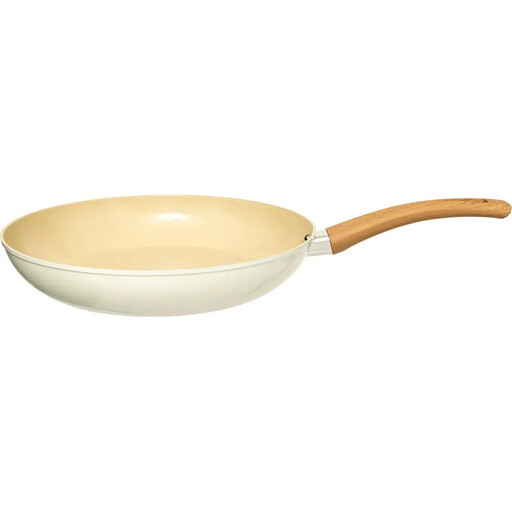
Why it suits this profile: A lightweight 28 cm aluminium pan for everyday meals on gas, induction, ceramic and electric hobs.
Its induction compatibility is clearly stated, and the pan has a stainless-steel induction plate. Hand-washing is recommended to protect the non-stick coating.
28 cm diameter, 570 grams, two non-stick layers and suitable for all the heat sources listed.
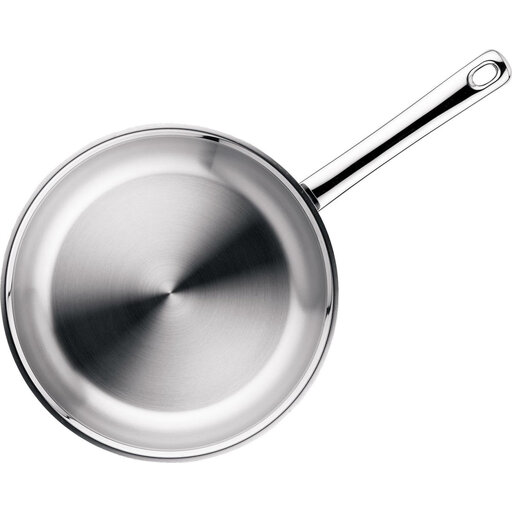
Why it suits this profile: For anyone looking for a stainless-steel frying pan for high-temperature cooking, searing and long-term use.
There’s no delicate traditional non-stick coating to damage with metal spatulas. Stainless steel does need to be preheated properly, with enough fat for cooking.
Cromargan 18/10 stainless steel, TransTherm base, induction-compatible and oven-safe up to 250 °C.

Why it suits this profile: For home cooks who want to fry, sauté and stew, and prepare dishes with a lid, all in one pan.
The specifications list three layers of 304 stainless steel and aluminium, as well as compatibility with induction, gas, electric and ceramic hobs, and oven use.
28 cm size, glass lid, dishwasher-safe according to the product information, and oven-safe up to 220 °F according to the listing.

Why it suits this profile: A practical size for smaller households and anyone looking for a ceramic, PFAS-free coating.
The product information explicitly states that it is 100% PFAS-free, induction-compatible and oven-safe up to a maximum temperature of 200 °C.
24 cm diameter, recycled forged aluminium, ceramic non-stick coating and suitable for all the heat sources listed.
We’ve put together a complete, up-to-date list of products that meet these strict selection criteria and the applicable European safety regulations.
Choose a pan that’s explicitly labelled as induction-compatible and check that its base is flat. Aluminium pans often need a separate stainless-steel induction plate. Also check the diameter of your cooking zone: a large pan won’t necessarily heat evenly if its base is much bigger than the zone.
Its lifespan depends on the material, how you use it and how you care for it. A stainless-steel frying pan doesn’t have a traditional non-stick coating that can wear away, while ceramic and other non-stick frying pans are more vulnerable to overheating and metal utensils. Follow the cleaning instructions, use suitable spatulas and replace the pan if the coating starts to peel or the handle becomes unsafe.
Not necessarily. Focus on the features you’ll actually use: induction compatibility, size, oven safety, a lid and ease of care. A 24 cm pan with a ceramic coating may be more practical for a small household than a heavy 28 cm stainless-steel pan. If you often cook at high temperatures, stainless steel or cast iron may be a better choice.
