
Vandaag of morgen in huis

Kwaliteit gegarandeerd

Welkomstaanbiedingen ontgrendelen: GRATIS bezorging | Tot 80% korting | Gratis 30 dagen JoyPlus-proefperiode
Download de app
Choosing a new frying pan seems straightforward, until you have to decide between aluminium, cast iron, ceramic, a non-stick coating or a complete pan set. The heat source also plays a major role. A pan that is suitable for gas or ceramic cooking will not automatically work on induction.
The biggest buying mistakes usually come down to three pitfalls:
Checking a few technical details in advance can prevent a great deal of frustration while cooking.
Do you have an induction hob? If so, look specifically for the wording suitable for induction. Also check the recommended cooking zones and the diameter of the base. A large pan will not always heat efficiently on a small zone.
An aluminium pan without a suitable induction base, such as the Tefal Easy Cook & Clean in 28 and 32 cm, is listed in the product information as suitable for gas, electric, ceramic and glass-ceramic cooking, but not for induction. By contrast, the Brabantia Onyx and Nocta models are described as suitable for induction, gas and ceramic hobs, among other heat sources.
Aluminium heats up relatively quickly and is generally lightweight. That makes it practical for everyday frying and tossing. A coating can make it easier to release food and clean the pan.
A non-stick frying pan does require careful use. Use wooden, silicone or plastic utensils and do not heat the pan empty for extended periods. Even if a pan is dishwasher-safe, washing it by hand with a soft sponge can help keep the coating in good condition for longer.
Cast iron retains heat for a long time and is suitable for slow cooking, roasting and stews. However, the material is heavy. The 26 cm Le Creuset Signature Cast Iron Roaster, for example, weighs 5,135 kg and has a capacity of 5,3 litres. This offers a very different cooking experience from a lightweight frying pan for a quick omelette.
A ceramic frying pan may be worth considering if you are specifically looking for a PFAS-free frying pan. Always check the product information: the Brabantia Onyx models are listed as having a 100% PFAS-free ceramic coating. This is a manufacturer’s product specification, not a general feature of every ceramic pan.
A frying pan set with 20, 24 and 28 cm pans can be useful if you prepare different portion sizes. However, check that all the pans have a coating, handle and heat-source compatibility that suit your kitchen.
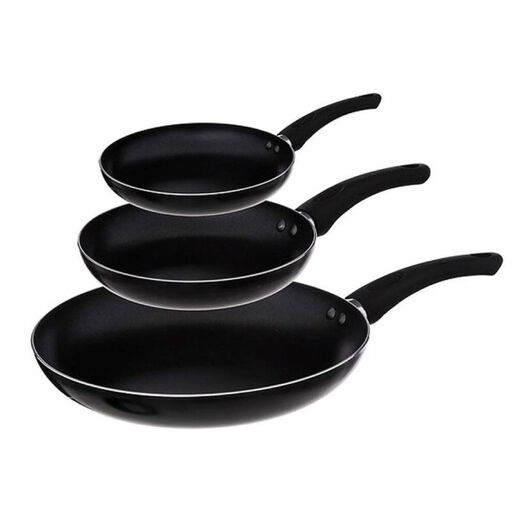
Why it suits this profile: The three sizes give beginners flexibility for small, medium and larger portions. According to the product description, the pans are suitable for all heat sources, including induction.
The clearly stated diameters prevent you from using one pan that is too small or too large for every dish. Hand washing is recommended to help protect the non-stick coatings for longer.
Set of three aluminium pans, two non-stick coatings and dishwasher-safe construction according to the product information.
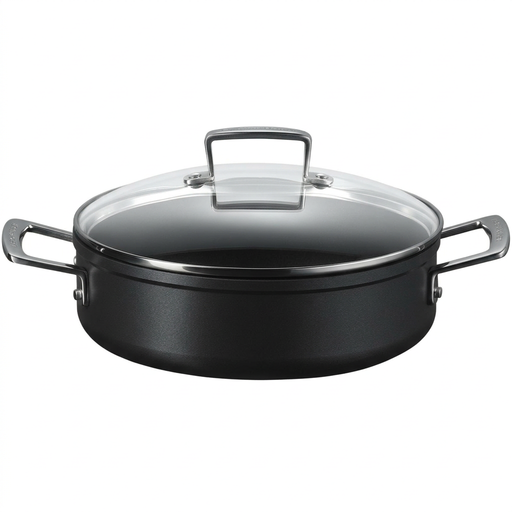
Why it suits this profile: The deep shape, 28 cm diameter, glass lid and 5,4-litre capacity are ideal if you want to fry, simmer and prepare larger meals in a single pan.
The product information states that it is suitable for all hobs, including induction, and for use in the oven. Before buying, check the exact oven limit in the current product specifications.
Aluminium construction, non-stick coating, lid and dishwasher-safe design according to the product description.
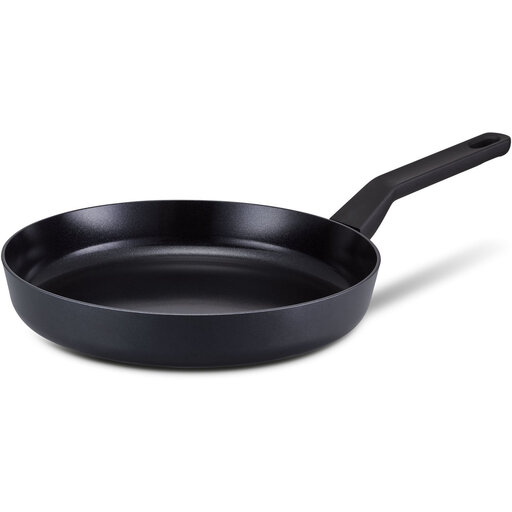
Why it suits this profile: The 24 cm size is suitable for everyday portions, while the manufacturer specifies a ceramic, 100% PFAS-free coating, recycled aluminium and compatibility with induction.
The coating and heat-source compatibility are clearly specified. Do not use metal utensils and preferably wash by hand to help protect the ceramic layer.
PFAS-free ceramic coating according to the manufacturer, 24 cm diameter, aluminium body and dishwasher-safe design.
We have compiled a complete, up-to-date list of products that fully meet these strict selection criteria and the applicable European safety regulations.
Not every dish calls for a classic frying pan. A sauté pan with lid is more practical for sauces, stews and vegetables. A wok pan has high, sloping sides and is suitable for stir-frying; bear in mind that a model such as the 5five Steel Wok Pan 35 cm is listed as not suitable for induction in the product information. A grill pan with ridges is designed to create grill marks on vegetables, meat and similar foods. A 27 cm cast-iron crêpe pan is better suited to pancakes than simmering.
Check the following every time you buy:
Only choose a model that explicitly states that it is suitable for induction. Aluminium without a magnetic base will generally not work on induction. Also check that the base fits the cooking zone properly.
Its lifespan depends on use, temperature and care. Metal utensils, overheating the pan while empty, abrasive sponges and significant temperature shocks can damage the coating. Replace the pan when the coating is visibly peeling or seriously damaged.
Not necessarily. Dishwasher-safe construction saves time, but hand washing can help protect the coating and handle for longer. Follow the manufacturer’s care instructions and allow the pan to cool before cleaning it.
