
Vandaag of morgen in huis

Kwaliteit gegarandeerd

Welkomstaanbiedingen ontgrendelen: GRATIS bezorging | Tot 80% korting | Gratis 30 dagen JoyPlus-proefperiode
Download de app
A frying pan might seem like a straightforward purchase – until, a few months in, you notice the non-stick coating is damaged, the pan doesn’t work on your induction hob, or the size doesn’t match your cooking zone. Marketing terms like “extra strong”, “healthy cooking” and “suitable for all heat sources” don’t tell you much without verifiable specifications.
With this buying guide, you can compare a non-stick frying pan, ceramic frying pan, aluminium frying pan and larger alternatives on the points that really matter in a British kitchen.
A pan can be suitable for gas, electric and ceramic hobs, but not for induction. The Tefal Easy Cook & Clean 32 cm, for example, is listed as suitable for gas, electric, ceramic and glass-ceramic cooking, but not for induction. Always check explicitly whether an induction base or induction disc is present.
A ceramic or other non-stick coating reduces food sticking, but it remains vulnerable to scratches, overheating and thermal shock. Use wooden, silicone or plastic utensils, and let a hot pan cool down before washing it. “Dishwasher-safe” does not automatically mean the coating will last for years.
A 24 cm frying pan is handy for one or two portions, while a 28 cm frying pan offers more space for multiple ingredients. A 32 cm frying pan is suitable for larger quantities, but it doesn’t always fit well on a small induction zone. Also look at the base diameter, depth, capacity and weight.
An aluminium frying pan typically heats up quickly and is relatively light. That’s practical for everyday frying and tossing. Forged or cast aluminium can feel sturdier, but the weight varies from model to model.
A ceramic frying pan usually has a ceramic coating on a metal base, often aluminium. The term “ceramic” therefore doesn’t always describe the entire pan body. Check the difference between:
According to the product information from various brands, some ceramic coatings are described as PFAS-free. Treat this as a manufacturer’s product specification and check the current packaging and product page if this feature is decisive for you.
Choose the size based on how you’ll use it:
A deep pan with a lid works more like a sauté pan. With it, you can not only fry, but also simmer, braise and make sauces. A frying pan with a lid is especially practical when you want to retain moisture or let dishes cook gently.
Check before you buy:
A lightweight frying pan is easy to manoeuvre, but a heavier pan can sit more steadily on the hob. Also pay attention to the handle: bakelite often stays more manageable than metal under normal use, while a metal handle is sometimes suitable for oven use. Always check the temperature limit.
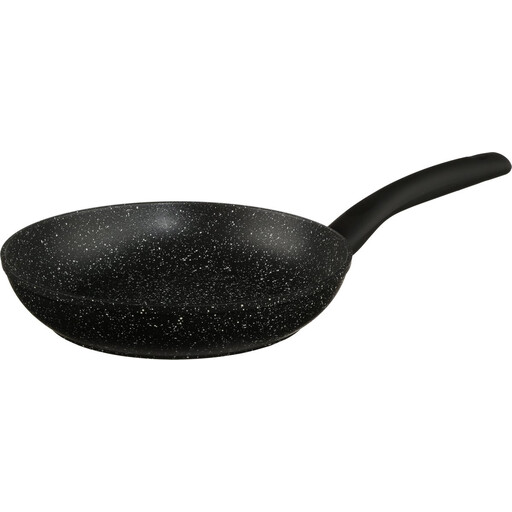
Why it fits the profile: A practical size for everyday frying, with an aluminium pan body, a weight of 630 g and a capacity of 2.7 litres. According to the product information, the pan is suitable for induction, gas, electric and ceramic hobs.
The hob compatibility and capacity are clearly stated. The pan is not dishwasher-safe, so hand washing is necessary to carefully maintain the two layers of non-stick material.
24 cm diameter; 630 g; suitable for induction and other common hobs; 2.7 litre capacity.
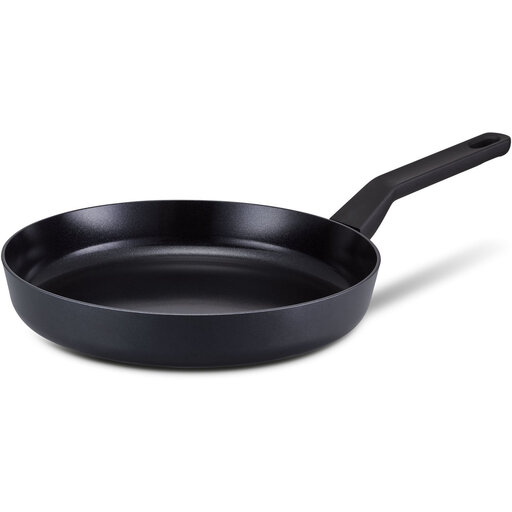
Why it fits the profile: This pan combines recycled aluminium with a ceramic double non-stick coating. According to the product information, the coating is PFAS-free and the pan is suitable for induction, gas, electric, ceramic and halogen hobs.
The product information mentions both the coating and the compatible hobs. Dishwasher use is possible according to the manufacturer, but hand washing is recommended to preserve the coating for longer.
24 cm; recycled aluminium; ceramic double non-stick coating; according to product information, PFAS-free and suitable for induction.
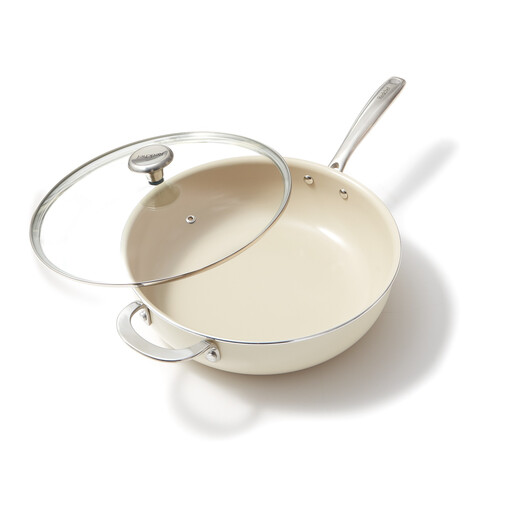
Why it fits the profile: According to the product information, this deep 28 cm pan has a capacity of 5 quarts, a glass lid and a ceramic coating. That suits larger portions, one-pot dishes, simmering and meal prepping.
According to the product specifications, the pan is suitable for induction, gas and electric hobs. The maximum oven temperature of 450 °C and dishwasher information are stated; check this limit before use.
28 cm; deep shape; glass lid; induction-compatible; according to the manufacturer, ceramic coating without PFAS, PTFE, PFOA, lead and cadmium.
We’ve put together a full, up-to-date list of products that fully meet these strict selection criteria and comply with current European safety regulations.
A standard frying pan usually has a low rim and is suitable for frying, searing and sautéing. A sauté pan has higher sides and often comes with a lid. It’s more practical for curries, pasta, stews and sauces. A wok has a deep shape and is ideal for stir-frying, but check that the base makes good contact with your induction zone.
For a household that mainly cooks eggs, pancakes and small portions, 20 or 24 cm will suffice. For everyday cooking, 26 or 28 cm is often more practical. Only choose 32 cm if your hob and storage space allow it.
Look for an explicit mention of “induction-compatible” and check whether the pan has a magnetic base or stainless steel induction disc. Don’t rely solely on the term “all hobs”; the product information should mention induction separately.
That depends on use, temperature and maintenance. Don’t use metal utensils, don’t heat the pan empty on a high setting, and avoid abrasive cleaning products. Hand washing with a soft sponge can help extend the life of a ceramic or other non-stick coating. Replace the pan when the coating visibly peels or becomes damaged.
No. “PFAS-free” describes the absence of certain substances according to the product claim, while “ceramic” refers to the type of coating. Check both properties separately in the current product specifications. That way, you won’t automatically assume a ceramic frying pan is PFAS-free.
