
Vandaag of morgen in huis

Kwaliteit gegarandeerd

Welkomstaanbiedingen ontgrendelen: GRATIS bezorging | Tot 80% korting | Gratis 30 dagen JoyPlus-proefperiode
Download de app
A frying pan seems simple to choose until you have to decide between stainless steel, aluminium, ceramic, a non-stick coating or a complete pan set. Terms such as “suitable for all heat sources” and “fast heat distribution” do not always tell the whole story either. With the right checks, you can avoid buying a pan that is too small, warps or does not work properly on your induction hob.
A pan may be suitable for gas, electric and ceramic cooking, but not for induction. This applies, for example, to some steel woks. Always check whether induction is explicitly mentioned. A magnetic base or multi-layer base is generally relevant for induction cooking, but the official product specification remains the deciding factor.
A non-stick frying pan generally requires less oil and is practical for eggs, pancakes and delicate ingredients. However, high temperatures, metal utensils and abrasive scourers can damage the coating. The same applies to a ceramic frying pan: follow the care instructions and do not heat the pan empty if the manufacturer advises against it.
A 28 cm pan does not always have a 28 cm cooking surface. The shape, wall thickness and base diameter determine how much food you can practically prepare. For one person, 20 to 24 cm is often manageable. For a household of several people, 26 to 30 cm provides more space. A 30 or 35 cm wok is roomier, but also takes up more cupboard space.
A stainless steel frying pan can withstand frequent use and often does not have a separate non-stick coating. A stainless steel frying pan does require the right temperature and enough fat to help prevent food from sticking. 304 stainless steel refers to the type of steel used. It is a verifiable material designation, but on its own it does not guarantee a particular cooking experience.
A tri-ply or triple-ply pan combines several layers. In PURECOOK product information, the construction consists of stainless steel layers with an aluminium core. According to the manufacturer, this construction is designed to provide fast and even heat transfer. This may be appealing if you regularly cook at low, medium and high temperatures.
Aluminium generally heats up quickly and is relatively lightweight. Many aluminium pans therefore have a magnetic base for induction and an interior coating. When buying a pan set, also check whether all the components are compatible with the same heat sources.
A standard non-stick coating is practical for cooking with little fat and makes cleaning easy. A ceramic frying pan has a ceramic-based coating. According to the Brabantia Nocta product description, the coating is PFAS-free; always check the individual product specification for other models.
Brands may state properties such as scratch resistance, safety or a longer lifespan based on their own research or product claims. Do not treat such claims as a universal guarantee. Also look at the usage instructions: hand washing, maximum oven temperature, suitable utensils and whether or not the pan is dishwasher-safe.
A frying pan with a lid is useful for simmering, reducing sauces and dishes where moisture needs to be retained. A glass lid allows you to monitor the cooking without repeatedly opening the pan. Also check the handle: a removable handle saves space, while a fixed metal handle may be more suitable for use in the oven.
Pay attention to the difference between “dishwasher-safe” and “hand washing recommended”. The first term describes a stated usage option; the second may indicate a care choice intended to keep the pan looking its best for longer.
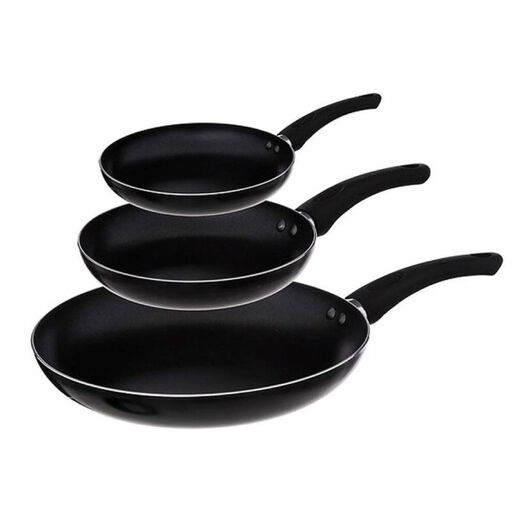
Why it suits this profile: Three sizes provide a practical starting point for a household preparing different portion sizes without immediately having to look for several separate pans.
The set contains 20, 24 and 28 cm pans and, according to the product information, is suitable for everything from gas to induction. Hand washing is recommended to help preserve the two non-stick layers for longer.
Three diameters, aluminium construction and dishwasher compatibility according to the product description.

Why it suits this profile: The 28 cm stainless steel pan with glass lid is ideal for home cooks who want to combine frying, sautéing and stewing in one spacious pan.
The stated tri-ply construction with an aluminium core is clearly described. According to the product information, the pan is suitable for gas, induction, electric, ceramic and halogen hobs.
304 stainless steel, three layers, glass lid and stated oven use up to 220 °F according to the product information.

Why it suits this profile: The spacious wok shape is designed for stir-frying, stewing, boiling and deep-frying, making it suitable for those who prepare larger portions and combine different cooking methods.
According to the product description, the flat magnetic base is suitable for induction, gas, electric and ceramic cooking. Hand washing is recommended for this wok.
30 cm diameter, tri-ply 304 stainless steel, ceramic inner coating, honeycomb structure and glass lid.
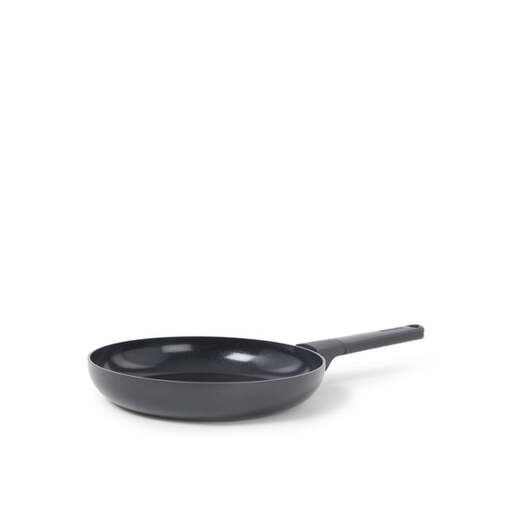
Why it suits this profile: A medium-sized pan is suitable for everyday portions and takes up less space than a large frying pan or wok.
The product information confirms compatibility with electric, gas, induction and ceramic cooking. The pan has a ceramic coating and, according to the description, is dishwasher-safe.
24 cm diameter, aluminium body, ceramic PFAS-free coating according to Brabantia’s product information and a three-year manufacturer’s warranty.
We have put together a complete, up-to-date list of products that fully meet these strict selection criteria and the applicable European safety regulations.
For one person or small portions, 20 to 24 cm is usually practical. A 26 to 28 cm frying pan is better suited to two to four portions. Choose 30 cm or larger when preparing lots of vegetables, meat or stir-fries at the same time. Take the diameter of your cooking zone into account.
It can be, but not every stainless steel pan works automatically on induction. Look in the specifications for “suitable for induction”, “all heat sources” or a magnetic base. A tri-ply 304 stainless steel pan with an aluminium core may be suitable for induction if the base has been designed for it.
A stainless steel pan does not have a vulnerable non-stick coating, but it requires more attention to temperature and sticking. A non-stick frying pan is easier to use straight away, but the coating can wear through high heat, unsuitable utensils or intensive cleaning. The right choice therefore depends on your cooking style and care routine.
