
Vandaag of morgen in huis

Kwaliteit gegarandeerd

Welkomstaanbiedingen ontgrendelen: GRATIS bezorging | Tot 80% korting | Gratis 30 dagen JoyPlus-proefperiode
Download de app
Choosing a new frying pan seems simple, until you have to consider the material, diameter, hob type and care instructions. A pan that looks versatile on paper may feel too heavy in practice, may not work properly on induction or may quickly lose its non-stick properties.
This buying guide compares options including an induction frying pan, non-stick frying pan, ceramic frying pan, frying pans with lids, woks and specialist pans for breakfast dishes.
The phrase pans for all hobs only tells you something useful if the base is genuinely suitable for your hob. Induction requires a magnetically conductive base, so check that the product information explicitly mentions induction. A steel wok, for example, is not automatically suitable for induction: according to the product information, the 5five Steel Wok Pan with Wooden Handle is only suitable for gas, ceramic and electric hobs.
A non-stick frying pan won’t stay in the same condition without proper care. High temperatures, metal utensils, scouring pads and the dishwasher can all put strain on the coating. For many models, the product information recommends hand-washing, even if the pan is technically dishwasher-safe.
For coated pans, it’s best to use silicone, wooden or nylon utensils. Don’t leave an empty pan heating for longer than necessary, and let it cool before washing.
A 28 or 30 cm pan offers plenty of cooking space, but it also takes up more room on the hob. On a small induction zone, heat may be distributed less evenly. A 20 to 24 cm pan is often practical for one or two portions, while 28 to 30 cm is better suited to families and larger dishes.
Also consider the weight. According to the product description, cast aluminium generally distributes heat evenly, but a heavy pan may be less comfortable for everyday tossing or serving.
Pay attention to the exact wording in the product information. “Made without intentionally added PFOA” is not the same as a general claim about all possible substances. For SENSARTE pans, the manufacturer states, among other things, that certain coatings are made without intentionally added PFOA, PFOS, APEO, lead and cadmium. The product information for the white ceramic SENSARTE set states that its coating is made without intentionally added PFAS, PTFE, PFOA, PFOS, APEO, lead and cadmium.
If you’re specifically looking for a PFAS-free frying pan, it’s worth reading the full product description and care instructions for the model you choose.
A frying pan with a lid is handy for simmering, cooking vegetables and making sauces, as well as for dishes where you want to retain moisture. A lid does make a set heavier and requires extra storage space.
For breakfast dishes, a pancake pan or egg pan can be practical. A square pan with compartments lets you cook several ingredients at once, but is less versatile for large amounts of stir-fried vegetables or sauce.
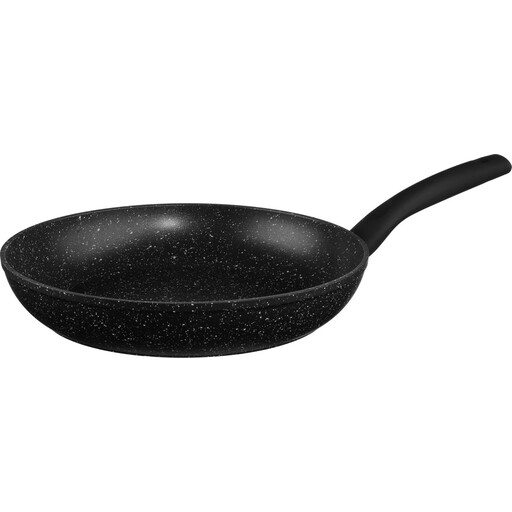
Why it suits this need: The 30 cm pan is suitable for everyday frying and, according to the product information, works on gas, induction, ceramic and electric hobs.
The product details list two non-stick layers and a stainless steel induction disc. Be sure to follow the care advice to help preserve the coating.
30 cm diameter, aluminium body, 2.5-litre capacity and dishwasher information in the product specifications.

Why it suits this need: The 28 cm pan with glass lid is a good choice if you want to fry, sear and stew without a traditional coating.
The tri-ply construction and aluminium core are clearly specified. This gives you more precise information about the material than a general term such as “premium pan”.
304 stainless steel, aluminium core, suitable for all hobs and oven-safe according to the product information.
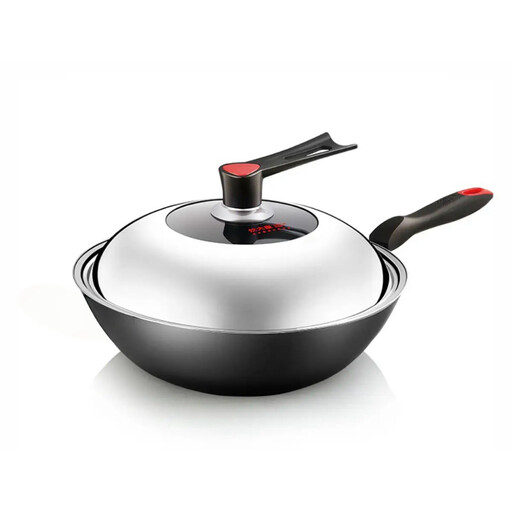
Why it suits this need: For high-temperature stir-frying, carbon steel offers a different cooking experience from a non-stick frying pan.
The care requirements are clearly stated: season the pan, hand-wash it and dry it immediately. This helps prevent you from expecting it to be maintenance-free.
30 cm carbon steel, a glass lid and suitability for stir-frying, searing and stewing; according to the product information, it is designed for gas hobs.
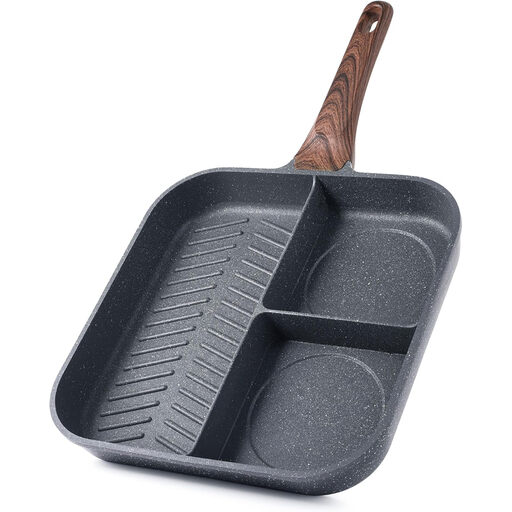
Why it suits this need: The three compartments are handy for breakfast, letting you cook things such as eggs, rolls, vegetables or meat separately.
The hob compatibility is clearly stated, as is the fact that the pan is neither oven-safe nor dishwasher-safe.
Three separate compartments, induction compatibility and an aluminium body according to the product specifications.
We’ve put together a complete, up-to-date list of products that meet these strict selection criteria and current European safety regulations.
A 20 to 24 cm pan is often practical for one or two people. A 28 to 30 cm pan gives you more room for family meals, but you’ll need a suitably sized hob zone and enough storage space.
It depends on the model. The ceramic coating itself doesn’t determine whether a pan works on induction; it’s the base that matters. Check that the product information explicitly mentions induction and that the pan has a magnetic base.
Use low to medium heat, avoid metal utensils and let the pan cool before washing. Hand-washing with a soft sponge is usually the gentlest option. Stop using the pan if the coating is visibly damaged or starts to peel.
