
Vandaag of morgen in huis

Kwaliteit gegarandeerd

Welkomstaanbiedingen ontgrendelen: GRATIS bezorging | Tot 80% korting | Gratis 30 dagen JoyPlus-proefperiode
Download de app
A frying pan may seem like a straightforward kitchen essential, but differences in materials, heat distribution and maintenance can be substantial. A pan that appears suitable for everyday use in the store may disappoint at home because of an unsuitable base, a delicate non-stick coating or a size that does not match your hob.
For home chefs, families and cooking enthusiasts, three marketing pitfalls are particularly important:
A stainless steel frying pan is generally strong and capable of withstanding intensive use. Stainless steel itself, however, conducts heat less quickly than aluminium. This makes the base construction important. According to the product description, the PURECOOK Tri-Ply 304 Stainless Steel frying pan features a three-layer construction of stainless steel, aluminium and stainless steel. The aluminium core is designed to distribute heat more quickly and evenly.
Aluminium pans are often lighter. A coating can make it easier to release food, but generally requires greater care with temperature and utensils. Cast iron retains heat for a long time, but is heavier. A 20 cm cast-iron frying pan may be suitable for searing, while an aluminium pan is more comfortable for quick everyday cooking.
A ceramic frying pan uses a ceramic coating applied to, for example, an aluminium base. Always check exactly what the manufacturer states about the coating, dishwasher use and operating temperature. According to the product information, the Brabantia Nocta comes with a ceramic, PFAS-free coating and is suitable for gas, electric, induction and ceramic hobs.
A claim regarding durability or safety is not necessarily a universally proven property. Instead, look for verifiable information such as:
According to Naturepan’s own product description, its ceramic coating is free from PTFE, PFAS and PFOA. The set is described as suitable for induction, gas, ceramic and electric cooking and can be used in the oven at temperatures of up to 260 °C. With coated pans, preferably use wooden, silicone or plastic utensils and avoid heating the pan empty for extended periods.
A 28 cm frying pan provides room for multiple portions, vegetables or larger cuts of meat. However, measure your hob zone: a wide pan that extends beyond the zone may heat less evenly.
For one person or smaller dishes, 20 to 24 cm is often sufficient. Families will generally benefit more from a 28 cm pan. A frying pan with a lid is useful for simmering, reducing sauces and preparing dishes where moisture needs to be retained. Also pay attention to the handle. Not every handle is oven-safe, even when the pan itself is.
A dishwasher-safe frying pan is easier to clean, but hand-washing can help extend the life of a coating or handle. Always check the current product instructions. “Dishwasher-safe” does not mean that intensive programmes have no effect on the finish or handle.
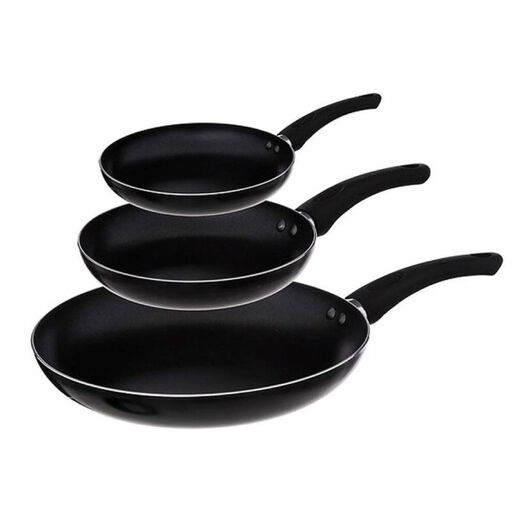
Why it’s a good fit: Three sizes for small portions, everyday cooking and family meals. According to the product information, the set is suitable for all heat sources, including induction.
The diameters and hob compatibility are clearly specified. Hand-washing is recommended to help preserve the two non-stick layers for longer.
20, 24 and 28 cm; aluminium; dishwasher-safe according to the product information.

Why it’s a good fit: For anyone who enjoys searing meat, reducing sauces and cooking with a pan that has no conventional non-stick coating.
The three-layer construction and stated compatibility with gas, induction, electric, ceramic and halogen hobs are clearly described.
28 cm, glass lid, oven-safe up to 220 °F according to the product information, and dishwasher-safe.
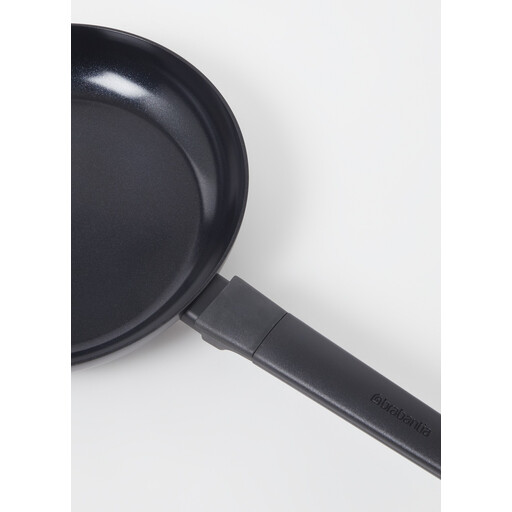
Why it’s a good fit: A spacious everyday pan for families who prioritise convenience, easy cleaning and broad hob compatibility.
The product details separately specify the ceramic coating, PFAS-free construction, diameter and compatible heat sources.
28 cm, aluminium, ceramic coating, induction-compatible and dishwasher-safe according to the product information.
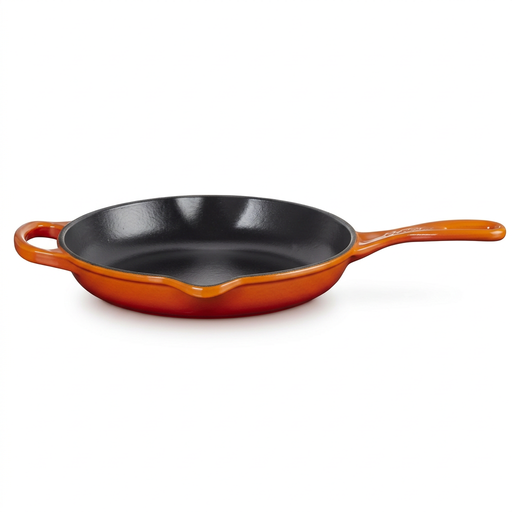
Why it’s a good fit: For those who value heat retention and even browning more than a lightweight design.
The material is enamelled cast iron, making it clearly different from a lightweight aluminium pan with a non-stick coating. The weight of approximately 1.93 kg is specified.
23 cm, two pouring spouts, enamelled surface and dishwasher-safe according to the product information.
Explore a current selection of safe frying pans in different materials and sizes, with compatibility across a range of hobs.
An induction frying pan requires a magnetic base. Also look for a flat underside and a diameter that matches the induction zone. Products that state only “all hobs” without further specification warrant additional checking.
This depends on how it is used, the temperature, cleaning method and the quality of the coating. Avoid heating the pan empty, exposing it to very high temperatures for extended periods and using abrasive cleaning products. A dishwasher-safe frying pan can be convenient, but according to many care instructions, hand-washing may help keep the coating and handle in good condition for longer.
Stainless steel often requires more attention to preheating and the use of fat than a coated pan. Heat the pan gradually, add oil once it has reached temperature and allow food to sear undisturbed before turning it. In return, stainless steel does not require a conventional non-stick coating and can be suitable for intensive cooking.
