
Vandaag of morgen in huis

Kwaliteit gegarandeerd

Welkomstaanbiedingen ontgrendelen: GRATIS bezorging | Tot 80% korting | Gratis 30 dagen JoyPlus-proefperiode
Download de app
Buying a frying pan sounds simple, until you have to choose between aluminium, stainless steel, ceramic, different sizes and various non-stick coatings. A pan that seems convenient in the shop may turn out to be too small at home, incompatible with your induction hob or difficult to clean.
So do not focus solely on the colour or a marketing claim. Above all, check the heat source, diameter, material construction, coating and care instructions.
An induction pan usually needs a magnetic base or a special induction disc. Do not just look at the product title; check the technical product information too. For example, the 32 cm Tefal Easy Cook & Clean is suitable for gas, electric and ceramic hobs, but not for induction.
When choosing an induction frying pan, also check that the base sits properly over the cooking zone. A base that is too small may heat less efficiently, while an oversized pan may heat unevenly.
The stated diameter is usually measured across the top of the pan. The actual cooking surface and base may be smaller. A 24 cm frying pan is practical for one or two portions, while a 28 cm frying pan provides more room for multiple ingredients.
A 20 cm frying pan is well suited to eggs, an omelette or a small portion. For a household with several people, 28 cm is often more convenient. If you prepare a variety of dishes, consider a frying pan set with 20, 24 and 28 cm pans.
According to the product descriptions of various brands, some pans feature two non-stick layers or an extra scratch-resistant coating. This does not mean that metal utensils, high temperatures and scouring pads cannot cause damage.
With a non-stick frying pan, preferably use wooden, silicone or plastic utensils. Allow the pan to cool before washing it and avoid heating it empty for extended periods.
An aluminium frying pan is generally lightweight and heats up quickly. This makes aluminium suitable for everyday frying and for anyone who regularly needs to move a pan. However, check whether it has a steel induction disc if you cook on an induction hob.
Stainless steel is durable and suitable for high temperatures, but it often requires more control while cooking. A multi-layer model, such as one with an aluminium core between layers of steel, can help distribute heat. Cast iron retains heat for longer, but is heavier and requires more care during use and maintenance.
A ceramic frying pan generally has a ceramic non-stick coating. According to the product information, the Brabantia Onyx models feature a PFAS-free ceramic double non-stick coating. With other models, always check whether PFAS-free is actually stated in the specifications. The term “non-stick” on its own says nothing about the chemical composition.
A classic non-stick frying pan can be convenient for eggs, pancakes and dishes requiring little fat. Always follow the manufacturer's care instructions, as the coating's lifespan also depends on temperature, utensils and cleaning.
A dishwasher-safe frying pan is convenient, but washing it by hand with a soft sponge can help preserve the coating and appearance for longer. Some manufacturers explicitly recommend this, even when the pan is listed as dishwasher-safe.
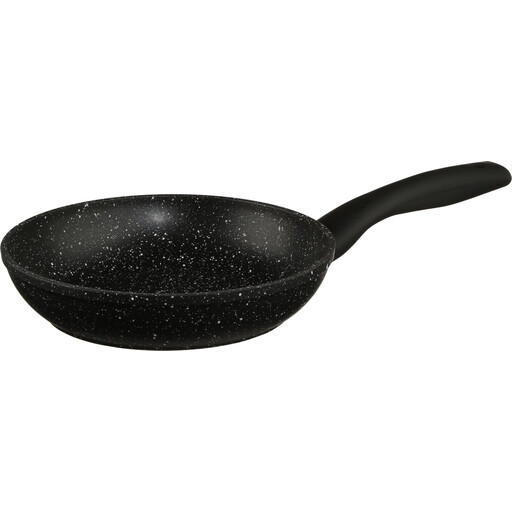
Why it suits this profile: The compact size and weight of around 490 grams make this pan practical for small portions, a first kitchen set-up or a student room.
The specifications state a diameter of 20 cm, two non-stick layers and suitability for gas, induction, ceramic and electric cooking.
Aluminium body, induction disc, two non-stick layers and dishwasher-safe construction according to the product information.
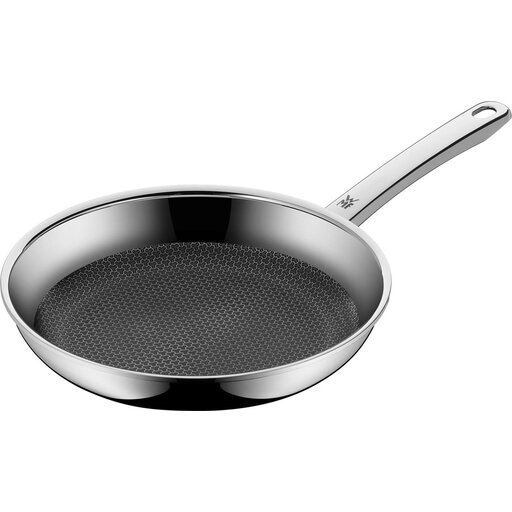
Why it suits this profile: This model is ideal for anyone looking for a 24 cm pan for everyday frying who values a multi-layer construction and a longer warranty period.
The product information states that it is suitable for induction and other heat sources. The pan is not dishwasher-safe, which is clearly indicated in advance.
Cromargan stainless steel with an aluminium core, honeycomb structure, PermaDur non-stick coating and a stated five-year warranty.
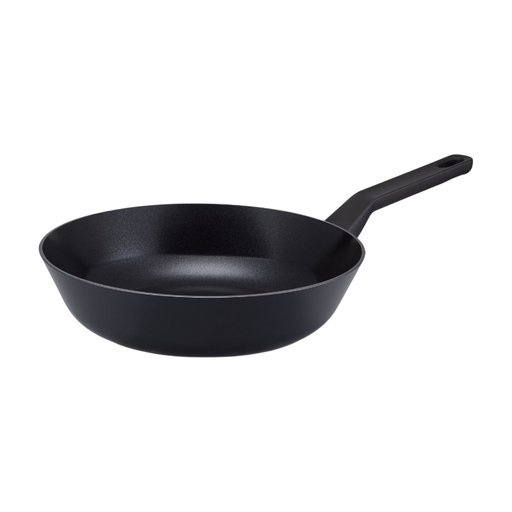
Why it suits this profile: The deep wok shape is designed for stir-frying vegetables, noodles and meat for several people. The pan is suitable for induction and the other heat sources listed.
The product information explicitly states that it has a PFAS-free ceramic coating, a maximum food load of 2 kg and a base diameter of 16 cm for the induction zone.
28 cm diameter, recycled aluminium, ceramic double non-stick coating and dishwasher-safe construction according to the product description.
We've put together a complete, up-to-date list of products that fully meet these strict selection criteria and the applicable European safety regulations.
For one person or small dishes, a 20 cm frying pan is practical. A 24 cm pan is suitable for everyday use for one or two people. Choose 28 cm when cooking larger portions or preparing several ingredients at the same time.
No. Ceramic refers to the type of coating, but does not automatically mean that a pan is PFAS-free. Check the product specifications. According to the product information, the Brabantia Onyx models mentioned explicitly state that the ceramic coating is 100% PFAS-free.
Not every pan is dishwasher-safe. According to the specifications, some models can be put in the dishwasher, while handwashing is recommended to help extend their service life. According to the product information, a model such as the WMF Profi Resist is not dishwasher-safe. Check this before buying and follow the manufacturer's care instructions.
