
Vandaag of morgen in huis

Kwaliteit gegarandeerd

Welkomstaanbiedingen ontgrendelen: GRATIS bezorging | Tot 80% korting | Gratis 30 dagen JoyPlus-proefperiode
Download de app
A frying pan may seem straightforward, but the differences between models can be significant. A pan may be suitable for induction and still be a poor fit for your cooking zone. A non-stick coating can make cooking easier, but often requires careful maintenance. And a large pan takes up more space than you might expect.
The most common unsuitable purchases result from three pitfalls:
The choice of material determines how quickly the frying pan heats up, how much it weighs and how it responds to changes in temperature.
An aluminium frying pan is generally lightweight and heats up quickly. This is practical for everyday frying, especially if you regularly lift the pan with one hand. Aluminium often needs a non-stick coating to reduce sticking and make cleaning easier.
Pay attention to the care instructions. When using a coated pan, wooden, silicone or plastic utensils are preferable. A metal spatula or abrasive sponge can damage the surface.
A stainless steel frying pan is suitable for higher cooking temperatures and searing meat or fish. The surface is usually not naturally non-stick. For good results, preheating the pan and using the right amount of oil are important.
According to the product description, the WMF Profi uses Cromargan 18/10 stainless steel and a TransTherm base. The description states that the pan is suitable for all heat sources, including induction, and is oven-safe up to 250 °C.
A ceramic frying pan may be worth considering if you are looking for a smooth cooking surface without a traditional PTFE coating. However, always check exactly what the manufacturer means by “ceramic”. Sometimes this refers to a ceramic coating on aluminium, rather than a pan made entirely from ceramic.
When choosing a PFAS-free frying pan, read the product information carefully. The product description for the Tefal Renew set states that it has a PFAS-free ceramic non-stick coating. For Naturepan, the product description refers to a PTFE/PFAS/PFOA-free ceramic coating. These are product claims made by the relevant brands or sellers, so check the current specifications and packaging when purchasing.
The most commonly used sizes are 20 cm frying pans, 24 cm frying pans and 28 cm frying pans.
With induction, the outer diameter is not the only important factor. Check the diameter of the magnetic base and compare it with the cooking zone. A wide pan with a small base may heat less efficiently.
A 24 cm frying pan is a useful compromise for many households. For someone living alone, 20 cm may be sufficient; a small family may get more use from a 24 or 28 cm pan. A frying pan set with 20, 24 and 28 cm pans means you do not have to use the same size for every meal.
A frying pan for induction must have a suitable magnetic base. Also check whether the pan is suitable for gas, ceramic and electric hobs. “All heat sources” should be stated in the official product specifications.
Oven suitability is a separate consideration. Check:
An oven-safe frying pan is practical for dishes that you sear first and then finish in the oven. A wooden or plastic handle is not always suitable for this.
“Dishwasher-safe” does not automatically mean that this is the best cleaning method. For some pans, hand washing is recommended to help preserve the coating or finish for longer. A dishwasher-safe frying pan can save time, but mild washing-up liquid and a soft sponge are often still the safer choice.
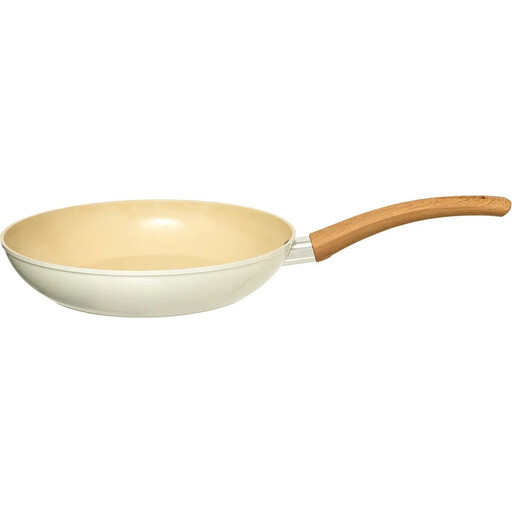
Why it suits this profile: The 24 cm pan is suitable for everyday cooking and weighs 440 grams according to the product details. This makes it practical for smaller households looking for a lightweight pan.
The specifications explicitly list gas, induction, ceramic and electric cooking. They also mention two non-stick coatings and dishwasher compatibility; hand washing is recommended for a longer lifespan.
Recycled aluminium, 24 cm diameter, 3.1-litre capacity and a handle with a soft-touch finish.
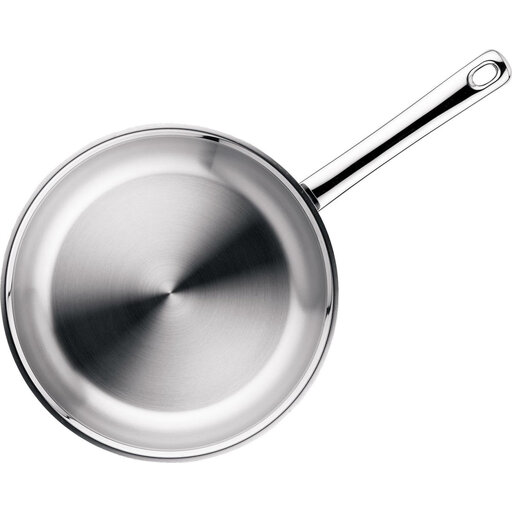
Why it suits this profile: This stainless steel frying pan is designed for people who want a pan without a traditional non-stick coating for searing and everyday cooking.
The product information clearly specifies the material, base technology, hob compatibility and maximum oven temperature. This means you do not have to rely solely on a general marketing term.
24 cm, suitable for induction and other heat sources, oven-safe up to 250 °C and dishwasher-safe according to the product description.
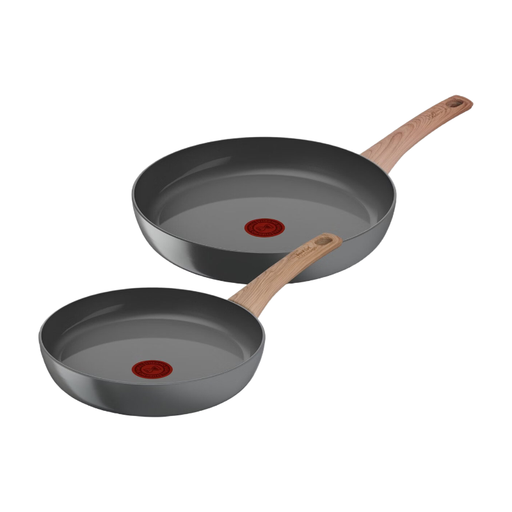
Why it suits this profile: The two sizes are useful for anyone who regularly prepares different portion sizes and is specifically looking for a PFAS-free ceramic coating.
The set specifies both diameters, induction compatibility, a PFAS-free ceramic coating according to the product description, and the recommendation to wash by hand.
Two pans made from 100% recycled aluminium, Thermo-Signal temperature indicator and compatibility with all the heat sources listed.
We have put together a complete, up-to-date list of products that fully meet these strict selection criteria and the applicable European safety regulations.
Choose a model whose product information explicitly mentions induction. Also check the base diameter and whether the pan sits flat on the cooking zone. Aluminium is only suitable for induction when a magnetic base or induction disc has been added.
This depends on the material, use and care. A non-stick frying pan will generally remain usable for longer if you avoid metal utensils, do not heat the empty pan to a high temperature and allow it to cool before washing. Replace the pan when the coating visibly starts to come away or becomes damaged.
Some models are, according to their product descriptions, but hand washing can help protect the coating and finish for longer. Always check the care instructions for the specific model and use a soft sponge.
