
Vandaag of morgen in huis

Kwaliteit gegarandeerd

Welkomstaanbiedingen ontgrendelen: GRATIS bezorging | Tot 80% korting | Gratis 30 dagen JoyPlus-proefperiode
Download de app
A frying pan may seem straightforward to choose, but small differences determine how much enjoyment you get from it. A pan that is unsuitable for your hob, a coating that is not maintained correctly or an impractical size can quickly result in a disappointing purchase.
Pay particular attention to these three common pitfalls:
“Suitable for all hobs” without checking the details
A pan may be suitable for gas, electric and ceramic hobs, but not induction. Always check the product specifications. A magnetic base or an explicit statement that the pan is induction-compatible is important.
Using a non-stick coating incorrectly
Even a non-stick frying pan can be damaged by metal utensils, steel wool, high temperatures or a sudden change from hot to cold water. Also check whether the pan is dishwasher-safe. “Easy to clean” does not automatically mean that the pan can go in the dishwasher.
Choosing a size without considering portion sizes
A 24 cm frying pan is practical for one or two people. For a family, a 28 cm or 32 cm frying pan is often more convenient, but a large pan takes up more space and may heat less evenly on a small hob zone.
The material affects the weight, heating time and the way the pan retains heat.
Even heat distribution helps when cooking eggs, pancakes and meat, but the result also depends on the hob, temperature and cooking method.
A ceramic frying pan uses a ceramic coating. For some models, the manufacturer states that the coating is free from certain substances. For example, the Brabantia Nocta is described as having a PFAS-free ceramic non-stick coating. This is a product specification, not a guarantee of any particular cooking or health outcome.
Other pans may be described as having a titanium or stone coating, for example. According to Tefal’s product information, the Easy Cook & Clean coating is free from PFOA, lead and cadmium. With any coating, wooden, silicone or plastic utensils are preferable. Also check the maximum oven temperature and cleaning instructions.
A dishwasher-safe frying pan is convenient, but hand-washing can help preserve the life of a coating. A pan that is not dishwasher-safe should be cleaned by hand with a soft sponge.
Check the following before buying:
An oven-safe frying pan is not automatically suitable for every oven temperature. According to the product information, the 28 cm Tefal Easy Cook & Clean is listed as oven-safe up to 250 °C, while the 32 cm variant is listed as suitable up to 175 °C. This difference shows why you should not look only at the product family.
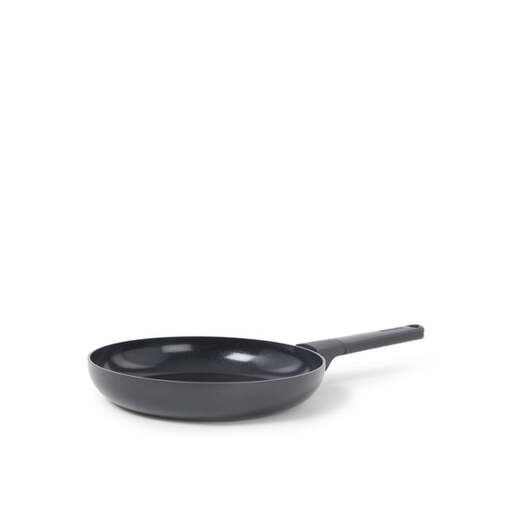
Why it suits this profile: The compact size is suitable for smaller households, single-person meals and everyday frying. According to the product information, the pan is suitable for gas, electric, ceramic and induction hobs.
The product specifications clearly state hob compatibility, diameter and dishwasher safety. This means you do not have to guess whether the pan will work on your hob.
24 cm, aluminium, ceramic coating, PFAS-free according to the product information and dishwasher-safe. The manufacturer states that it comes with a 3-year warranty.
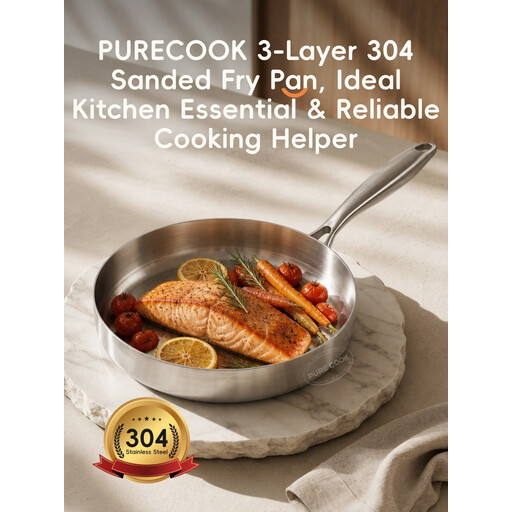
Why it suits this profile: This stainless steel frying pan with an aluminium core is aimed at those who value a multi-layer construction and cooking without a traditional non-stick coating.
The composition is clearly stated: 304 stainless steel, an aluminium core and a three-layer construction. Bear in mind that stainless steel cooks differently from a non-stick frying pan.
20 cm size, suitable for gas and induction according to the product information, with an aluminium core for heat conduction. No assembly required.
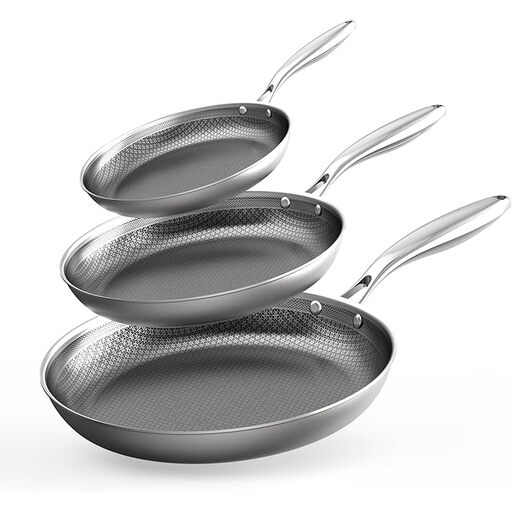
Why it suits this profile: A set of three frying pans in different sizes is useful when preparing different portions and dishes, from eggs to larger stir-fries.
The set lists three separate sizes and compatibility with all hobs. Before use, however, check the current instructions for oven use, dishwasher safety and the coating.
Three sizes: 8, 10 and 12 inches, with a non-stick coating according to the product name, plus stated dishwasher and oven safety.
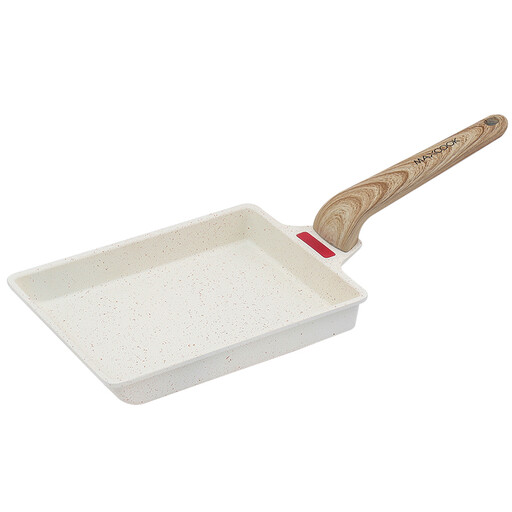
Why it suits this profile: The square shape is designed for Japanese omelettes, egg dishes and compact portions. It is a practical egg pan for anyone looking for something different from a round omelette pan.
The specific size and intended use are clearly described. This means you will not end up buying a standard pan for a dish where a square shape would be more practical.
Aluminium construction, 19 × 14 cm, non-stick coating according to the product information, and suitable for induction and open-flame cooking. Check the care instructions before buying.
We have put together a complete, up-to-date list of products that fully meet these strict selection criteria and the applicable European safety regulations.
For one person or small portions, a 20 or 24 cm frying pan is usually practical. A 28 cm frying pan is suitable for many everyday meals and two to four portions. Choose a 32 cm frying pan for larger quantities, but check that your hob zone and storage space are large enough.
Only choose a pan whose product specifications explicitly state that it is suitable for induction. An aluminium frying pan without a magnetic base will usually not work on an induction hob. Pans with a magnetic stainless steel base are generally designed for induction, but always check the information provided by the manufacturer or seller.
Its lifespan depends on use, temperature and care. Do not use metal utensils, do not heat the pan empty for extended periods and allow it to cool before washing it. If you notice visible damage, peeling coating or distortion, replacing the pan is the wiser option. A stainless steel frying pan without a coating may last for a different length of time with careful use, but it requires more technique when cooking.
