
Vandaag of morgen in huis

Kwaliteit gegarandeerd

Welkomstaanbiedingen ontgrendelen: GRATIS bezorging | Tot 80% korting | Gratis 30 dagen JoyPlus-proefperiode
Download de app
A frying pan might seem like a simple purchase, but differences in material, base and maintenance determine how enjoyable it is to cook with every day. A pan that looks suitable for everything on the packaging can, in practice, be too large for your cooking zone, not work on induction, or wear out more quickly if you use the wrong utensils.
So pay particular attention to these common pitfalls:
A stainless steel frying pan can withstand heavy use and has no classic non-stick coating on the inside. Stainless steel does require proper preheating and enough fat to prevent sticking. A multi-layer construction with aluminium interlayers can distribute heat more quickly and evenly.
The PURECOOK Tri-Ply 304 Stainless Steel Large Frying Pan uses, according to the product information, a construction of 304 stainless steel, aluminium and stainless steel. The pan has a diameter of 28 cm, a glass lid and is, according to the specifications, suitable for gas, induction, electric, ceramic, halogen and oven use up to 220 °F. Always check the temperature in the current product information, because 220 °F is approximately 104 °C and this is lower than some other oven-safe pans.
A non-stick frying pan is practical for eggs, pancakes, fish and dishes with little fat. Don’t just look at terms like “extra strong” or “durable”. According to the brands’ or sellers’ own information, coatings can have different properties, but the actual lifespan also depends on temperature, utensils and cleaning.
If you are consciously looking for a PFAS-free frying pan, you can choose a ceramic coating where this is explicitly stated in the product specifications. The Brabantia Dusk and Onyx models are described in the product information as PFAS-free and fitted with a ceramic coating. With such pans, it is best to use wooden, silicone or plastic utensils. A damaged or peeling coating is a reason to stop using the pan.
Also note the difference between:
For one person or a small side dish, a pan of 20 cm is often sufficient. A size of 24 cm suits many daily meals for one to three people. For larger portions, 28 to 32 cm or a deep sauté pan is more practical.
A frying pan with a lid is handy for simmering, reducing sauces and dishes where moisture needs to be retained. Check whether the lid is included and whether it is oven-safe. Also look at the diameter of the base. On an induction hob, the magnetic base needs to sit well over the cooking zone for even operation.
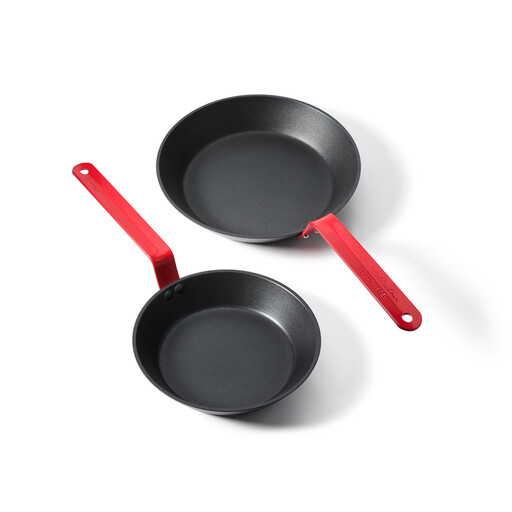
Why this fits the profile: According to the product information, the set contains pans of 20 and 25 cm, is suitable for induction and other hobs, and offers two sizes for everyday use.
The magnetic stainless steel base is, according to the product description, intended for induction. The specifications also mention PFOA- and PFOS-free; check the current packaging and product page for details.
Two sizes, oven-safe up to 450 °F according to the product information and dishwasher-safe. Hand washing is recommended to preserve the coating.
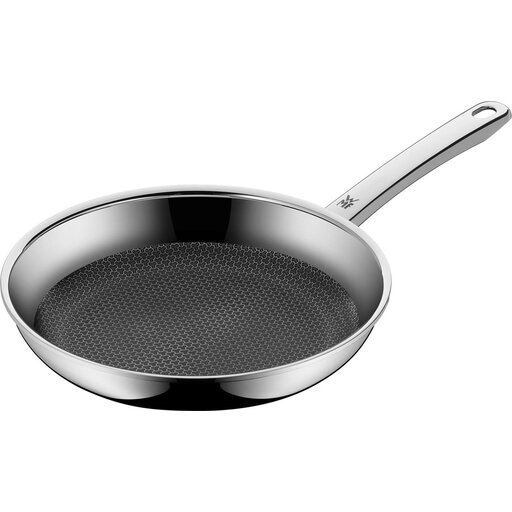
Why this fits the profile: According to the product information, this pan combines stainless steel, an aluminium core and a honeycomb structure with a non-stick coating for frying and searing.
The product specifications explicitly mention induction suitability and a temperature limit of 260 °C. The pan is not dishwasher-safe, so hand washing is part of the maintenance routine.
24 cm size, suitable for all heat sources and, according to the product information, comes with a five-year guarantee.

Why this fits the profile: The combination of 28 cm, a glass lid and a multi-layer stainless steel construction suits families and home cooks who want to fry, stir-fry and simmer in one pan.
The product information states compatibility with all common hobs and dishwasher safety. The inclusion of a lid is explicitly listed among the supplied parts.
304 stainless steel, aluminium core, 28 cm diameter and a glass lid. According to the description, the interior has no classic non-stick coating.

Why this fits the profile: The two sizes are practical for small and medium portions. According to the product information, the pan is made from 100% recycled forged aluminium.
The product specifications explicitly mention a PFAS-free ceramic coating, induction suitability and oven use up to 200 °C. Hand washing remains recommended for a longer lifespan.
Two sizes, RCS-certified recycled aluminium according to the product information, dishwasher-safe and suitable for all heat sources.
We have compiled a full, up-to-date list of products that fully meet these strict selection criteria and comply with current European safety regulations.
A pan of 20 cm is suitable for small portions, eggs and side dishes. A frying pan of 24 cm offers more space for daily meals for one to three people. For a family or large quantities, 28 cm or larger is more practical, provided your hob and storage space allow it.
No. Ceramic refers to the type of coating, but does not in itself mean the pan is PFAS-free. Look for an explicit PFAS-free product specification and check the information from the brand or seller.
No. An induction frying pan needs a magnetic base. Aluminium pans are only suitable when they have a magnetic layer or induction base. So always check for the mention “suitable for induction” and the recommended base diameter before ordering.
