
Vandaag of morgen in huis

Kwaliteit gegarandeerd

Welkomstaanbiedingen ontgrendelen: GRATIS bezorging | Tot 80% korting | Gratis 30 dagen JoyPlus-proefperiode
Download de app
A new frying pan might seem simple to choose, until you start paying attention to the non-stick coating, heat distribution, size and maintenance. A pan that feels light and versatile in the shop can turn out to be too small for a family meal, unsuitable for induction hobs, or quickly become less pleasant to cook with if the coating is used incorrectly.
Marketing terms can also be confusing. “Healthy”, “indestructible” and “suitable for all heat sources” only mean something once the underlying product specifications are clear. With these checkpoints, you can avoid a bad purchase and choose a pan that suits your cooking routine.
Not every pan works on induction. An aluminium pan without a magnetic base, for example, may be suitable for gas, electric and ceramic hobs, but not for induction. Always check whether induction is explicitly stated in the product information.
Also pay attention to the oven limit. A pan with a plastic or Bakelite handle may have a lower maximum oven temperature than an all-metal model.
A non-stick frying pan often makes cooking and cleaning easier, but the coating still depends on how you use it. High temperatures, an empty pan on the hob and metal spatulas can shorten its lifespan.
According to the product description of various ceramic models, these coatings are PFAS-free. Always check whether this is a clear product specification and what maintenance rules the manufacturer mentions. When in doubt, wooden or silicone kitchen tools are a practical choice.
A 24 cm frying pan is handy for an omelette, a couple of eggs or a meal for one to three people. A 28 cm frying pan offers more cooking surface, but also takes up more space and can be heavier. What’s more, the stated diameter is usually the outer measurement; the actual cooking surface can be smaller due to the sloped sides.
A ceramic frying pan typically has a smooth surface and is often chosen for easy cooking and cleaning. According to the product description from Redchef, the Starlight models feature a ceramic coating that is free from PTFE, PFOA and PFAS. With this type of pan, do not use sharp metal utensils and let the pan cool down before washing it.
A stainless steel frying pan has no traditional non-stick coating. The material is suitable for high temperatures and heavy use, but food can stick more easily if the pan is not preheated properly. For the Maxcook 304 wok, the product description recommends the “hot pan, cold oil” method and cooking on a medium to low heat to reduce sticking.
Tri-ply means that two layers of steel surround an aluminium core. This core is designed to spread heat more quickly and evenly. According to their product specifications, the PURECOOK models use 304 stainless steel with an aluminium core. 304 is a material designation; it is not a guarantee that every cooking property or lifespan will be the same for every user.
For an induction frying pan, check three things:
For gas, electric and ceramic hobs, the requirements are often less strict, but a flat base also helps with even heat distribution there. The products mentioned differ in this respect: some are suitable for all common hobs, while the Tefal Easy Cook & Clean, for example, should not be used on induction according to the product information.
A dishwasher-safe frying pan is practical, but dishwasher detergent and high temperatures can put extra strain on coatings and handles. For the Brabantia Dusk, dishwasher use is mentioned, while hand washing is recommended to preserve the ceramic coating for longer. The WMF Durado 24 cm and the WMF Durado grill pan are not suitable for the dishwasher according to the product information.
With stainless steel, white spots or rainbow-like discolouration can occur due to minerals and heating. The Maxcook product information recommends vinegar or lemon for this. These are maintenance-related effects, not a reason to write the pan off immediately.
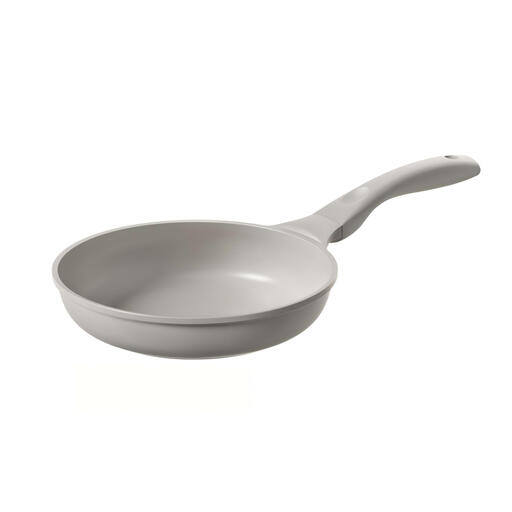
Why this fits the profile: The size is suitable for daily cooking for one to three people. According to the product description, this pan works on induction, gas and electric hobs and has a ceramic coating.
The hob compatibility is clearly stated. The manufacturer also mentions a PTFE-, PFOA- and PFAS-free ceramic coating; check the care instructions before use.
24 cm, ceramic non-stick coating, ergonomic handle and, according to the product information, dishwasher safe.
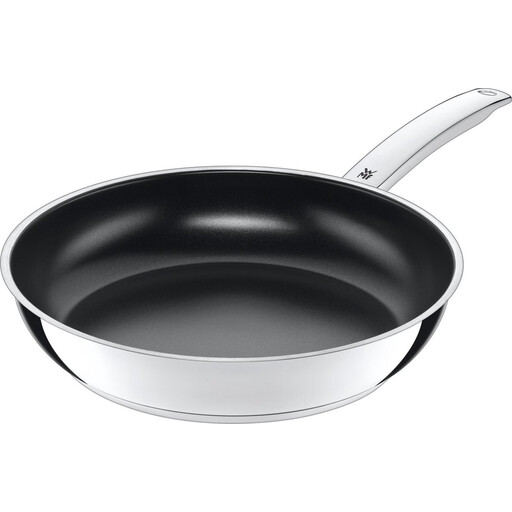
Why this fits the profile: This pan combines Cromargan 18/10 stainless steel with a ceramic coating and is, according to the product description, suitable for all heat sources, including induction.
The information clearly states that hand washing is required. This prevents the assumption that a ceramic coating is automatically dishwasher safe.
24 cm, induction compatible, ceramic coating, oven use up to the stated temperature and an ergonomic handle.
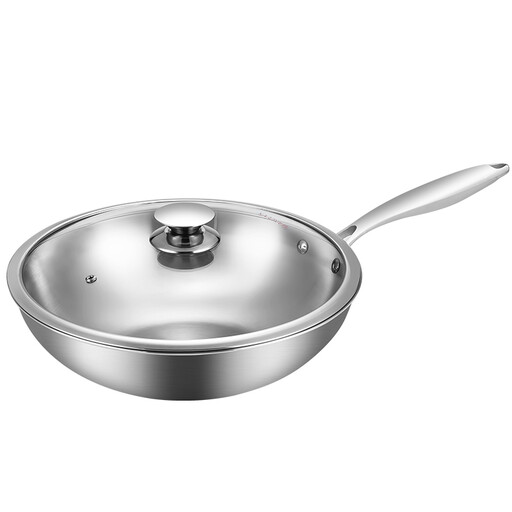
Why this fits the profile: The 28 cm capacity and tri-ply construction suit stir-frying, searing and larger portions. According to the product description, this wok is suitable for induction, gas, electric and ceramic hobs.
The product information explicitly states that there is no chemical non-stick coating. This means you know that preheating and the correct oil method are important.
304 stainless steel, aluminium core, 28 cm size and, according to the product specifications, dishwasher safe.
We have put together a full, up-to-date list of products that fully meet these strict selection criteria and comply with current European safety regulations.
For one or two people, 20 to 24 cm is often practical. A 28 cm frying pan offers more space for meat, vegetables or multiple portions. Check whether the diameter fits your cooking zone and whether you have enough storage space.
No. PFAS-free describes the coating or the material, not the hob compatibility. Check separately whether induction is explicitly mentioned. A pan can be PFAS-free and still only be suitable for gas, electric or ceramic hobs.
First let the pan cool down, then use warm water, mild washing-up liquid and a soft sponge. For limescale or heat stains, diluted vinegar can help, provided you rinse the pan thoroughly afterwards and dry it. Avoid steel wool and harsh abrasives to prevent unnecessary damage to the surface.
