
Vandaag of morgen in huis

Kwaliteit gegarandeerd

Welkomstaanbiedingen ontgrendelen: GRATIS bezorging | Tot 80% korting | Gratis 30 dagen JoyPlus-proefperiode
Download de app
A frying pan seems like a simple purchase – until you have to choose between aluminium, stainless steel, ceramic, a non-stick coating or a complete set. Terms such as “granite”, “titanium” and “PFAS-free” may sound appealing, but they don’t always tell the whole story.
The three most common pitfalls:
For everyday use in a Dutch household, these are useful guidelines:
Don’t just look at the diameter at the top. The base may be smaller. On an induction hob, the base needs to make sufficient contact with the cooking zone. A pan that’s too large for a small zone may not heat evenly.
Aluminium usually heats up quickly and is relatively lightweight. Aluminium pans often have a non-stick coating or a stainless steel induction base. For example, the 5five Forged Aluminium frying pans have an aluminium body, a stainless steel induction disc and two non-stick coatings. According to the product information, they’re suitable for gas, induction, ceramic and electric hobs.
Stainless steel usually has no synthetic non-stick coating. This makes it suitable for high temperatures and intensive use, but cooking technique is more important: preheat the pan gradually, add oil and don’t leave ingredients sitting in a cold pan. A stainless steel frying pan may take more care and practice to use.
Ceramic coating is often chosen by shoppers looking for a PFAS-free frying pan. Always check the exact product description. The manufacturer states that the Brabantia Onyx has a 100% PFAS-free ceramic coating. This is a product claim by Brabantia, not a general feature of every ceramic pan.
Terms such as “PFOA-free” also need to be considered carefully. According to the product information for various SENSARTE models, certain substances, including PFOA and PFOS, have not been intentionally added. That doesn’t automatically mean that every PFAS substance is excluded. If you have a specific requirement, look for an explicit PFAS statement.
An induction frying pan needs a magnetic base. Also check that the pan is suitable for your hob: gas, induction, electric and ceramic aren’t always all supported.
Also check:
A pan may be dishwasher-safe, but hand-washing may still be recommended to help the coating last longer. For non-stick pans, it’s best to use silicone, wooden or nylon utensils, and avoid heating an empty pan unnecessarily. If the coating is visibly damaged or starts to peel, it’s best to replace the pan.
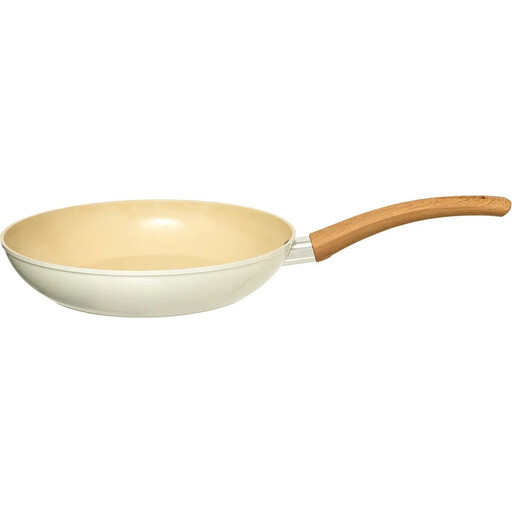
Why it suits this profile: The 24 cm size is manageable for everyday cooking and is suitable for gas, induction, ceramic and electric hobs.
The diameter, materials and compatible heat sources are clearly stated. Hand-washing is recommended to help the two non-stick coatings last longer.
Recycled aluminium, 24 cm diameter, soft-touch handle and a stainless steel induction disc.

Why it suits this profile: The 28 cm pan and lid give you room for larger portions, searing and dishes that need to finish cooking gently.
This isn’t a coated pan that can only be used with gentle utensils. The product information specifies a three-ply 304 steel construction and says the pan is dishwasher-safe.
304 stainless steel, aluminium core, suitable for all the hob types listed and supplied with a glass lid.
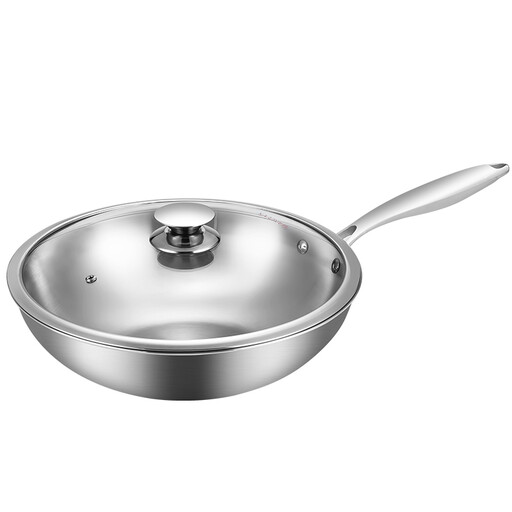
Why it suits this profile: This wok is designed for stir-frying, searing and everyday cooking without a synthetic non-stick coating.
The product information explicitly states that this pan has no non-stick coating. That means you know preheating and using the right amount of oil are part of getting the best results.
Three-ply 304 steel construction, suitable for induction, gas, electric and ceramic hobs, with a glass lid.
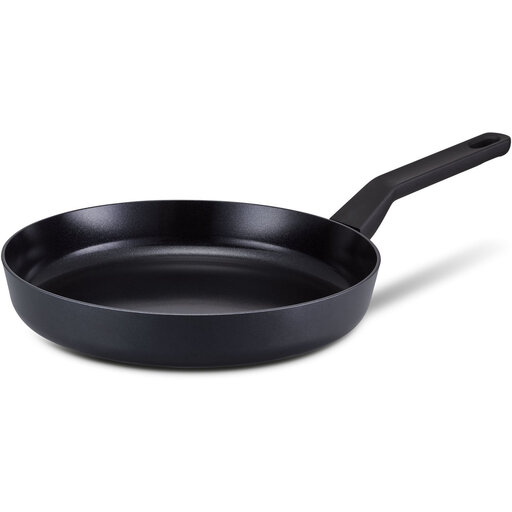
Why it suits this profile: Its compact size and the product’s explicit claim of a PFAS-free ceramic coating make it a good match for anyone looking for these specific features.
The coating, diameter, compatible heat sources and care instructions are clearly described. Hand-washing and using wooden or silicone utensils are recommended to help the pan last longer.
24 cm, recycled aluminium and a ceramic coating. Brabantia states that it’s suitable for induction, gas, electric, ceramic and halogen hobs.
We’ve put together a complete, up-to-date list of products that meet these strict selection criteria and comply with current European safety regulations.
Choose a pan with a magnetic induction base. The product information should explicitly state that the pan is suitable for induction. Also check that the base diameter matches your cooking zone. Many models in the range are also suitable for gas, electric and ceramic hobs.
Its lifespan depends on the temperature, cooking utensils and care. Don’t heat an empty pan for long, avoid metal spatulas and let the pan cool before washing it. A dishwasher can be convenient, but hand-washing with a soft sponge helps preserve the coating for longer, according to many product care instructions.
A frying pan with a lid is handy for simmering, reducing sauces and cooking dishes where you need to retain moisture. Check that the lid fits properly and that both the pan and lid are oven-safe. A lid is usually less important for pancakes or quick searing.
A set is handy if you need different sizes, such as a small pan for eggs and a larger one for family meals. An individual pan is a better choice if you already have cookware and are looking for one specific size, such as a 24 cm or 28 cm frying pan. Before you buy, always check the sizes included, handles, coatings and care instructions.
