
Vandaag of morgen in huis

Kwaliteit gegarandeerd

Welkomstaanbiedingen ontgrendelen: GRATIS bezorging | Tot 80% korting | Gratis 30 dagen JoyPlus-proefperiode
Download de app
A new frying pan may seem straightforward to choose—until you have to decide between aluminium, ceramic, stainless steel, a non-stick coating, 24 cm or 28 cm. Marketing copy often highlights terms such as “extra durable”, “healthy” or “suitable for everything”, while important details receive far less attention.
This buying guide compares the features that genuinely matter in a Dutch kitchen. That way, you can choose a pan suited to your hob, household and cooking style.
A pan may be suitable for gas, electric and ceramic hobs, but not for induction. This applies, for example, to some aluminium pans without a magnetic base. Always check whether induction is explicitly mentioned. Also consider the base diameter: a small base on a large induction zone will heat less efficiently.
“Non-stick” only describes how the cooking surface performs. It does not automatically tell you which type of coating has been used. If you are looking for a PFAS-free frying pan, check for an explicit statement such as “PFAS-free” in the product specifications. According to the product descriptions for the Brabantia Dusk, Brabantia Onyx and Tefal Renewal Ceramic, these pans feature a PFAS-free ceramic coating. Check the latest product information before placing your order.
A 28 cm frying pan does not necessarily have a 28 cm cooking surface. The effective base may be smaller. A 24 cm frying pan is practical for one to three portions, while a 28 cm frying pan provides more room for potatoes, vegetables or several pieces of meat. A 32 cm pan offers additional capacity, but requires more storage space and a suitably sized cooking zone.
Please note: claims regarding lifespan, scratch resistance or cooking performance come from the manufacturer’s or seller’s product information. Do not treat them as a guarantee for every household or cooking style.
A non-stick coating makes it easier to release eggs, pancakes and fish from the pan. However, improper handling can damage the coating. Check:
A dishwasher-safe frying pan is not always the easiest option to care for over the long term. Dishwasher use is listed for the Brabantia Dusk and Onyx, but hand washing is recommended to help preserve the ceramic coating for longer. According to its product description, the COOKER KING x B.DUCK pan is neither dishwasher-safe nor oven-safe.
For a frying pan suitable for all hobs, the product page should explicitly list gas, induction, electric, ceramic and halogen compatibility. Also check that the base is flat. A warped pan makes poorer contact with a ceramic or induction hob. Allow a hot pan to cool before washing it to reduce the risk of thermal shock.
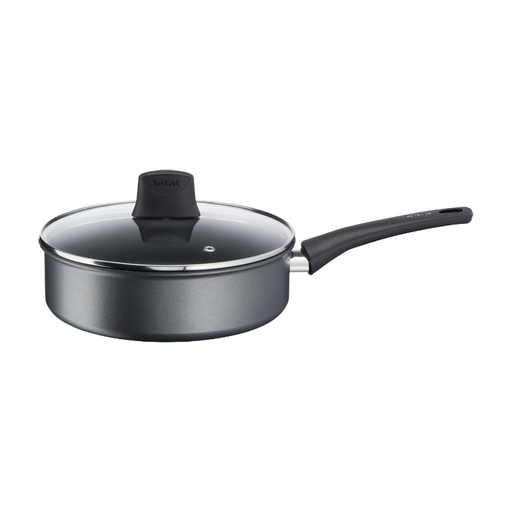
Why This Fits Their Persona: A compact pan for everyday cooking, complete with a glass lid and weighing 1.3 kg. According to the product description, it is suitable for induction, gas, electric, ceramic and halogen hobs.
Induction compatibility is stated explicitly. Avoid metal utensils to protect the non-stick coating.
24 cm size, glass lid, Thermo-Signal indicator and oven-safe up to 175 °C according to the product specifications.

Why This Fits Their Persona: A good fit for households that prioritise material selection, induction compatibility and straightforward care for portions serving up to around three people.
According to the product description, the ceramic coating is PFAS-free and the pan is suitable for induction. Hand washing is still recommended to extend its service life.
100% recycled forged aluminium according to the product specifications, a PFAS-free ceramic coating and oven-safe up to 200 °C.

Why This Fits Their Persona: A spacious choice for searing, sautéing and simmering in a household where a robust pan and lid are used regularly.
The product description lists 304 stainless steel, an aluminium core, dishwasher compatibility and compatibility with multiple hobs. Check the oven limit on the product page.
Tri-ply construction with an aluminium core, a 28 cm cooking surface and an included glass lid.
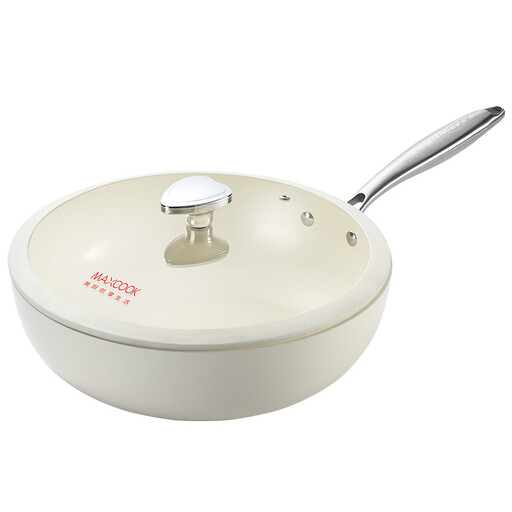
Why This Fits Their Persona: The 32 cm format provides ample room for larger quantities, stir-fries and family dinners. Check beforehand that the pan and cooking zone are a good fit for your cooker.
The product description lists a composite base suitable for induction, gas, electric and ceramic hobs. The coating is described as PFOA-free; PFAS-free status must be verified separately.
32 cm diameter, cast aluminium construction and a ceramic non-stick coating according to the product information.
Browse a current selection of products and compare sizes, coatings, materials and hob compatibility for your kitchen.
A pan is suitable for induction when this is explicitly stated in the product specifications. Also look for a flat, magnetic base that matches the cooking zone. According to their product descriptions, the Tefal Easy Chef, Brabantia Dusk and PURECOOK Tri-Ply are suitable for induction.
Its lifespan depends on temperature, utensils and maintenance. Heating the pan empty, using metal spatulas, abrasive sponges and cooling it down suddenly can damage the coating more quickly. Replace the pan when the coating visibly starts to peel, has deep scratches or the pan has become warped.
No. A 28 cm or 32 cm pan offers more space, but may be heavy and heat unevenly on a small cooking zone. Measure the cooking zone and check the pan’s weight. For a small household, a 24 cm frying pan is often the more practical choice.
