
Vandaag of morgen in huis

Kwaliteit gegarandeerd

Welkomstaanbiedingen ontgrendelen: GRATIS bezorging | Tot 80% korting | Gratis 30 dagen JoyPlus-proefperiode
Download de app
Choosing a new frying pan may seem simple, but there are big differences in materials, coatings, sizes and care requirements. A pan that works well on gas isn’t necessarily suitable for induction. Terms such as “extra strong”, “healthy” or “stone-effect” don’t tell you much without the technical specifications to back them up.
Look out for these three common pitfalls:
An aluminium frying pan usually heats up quickly and is relatively lightweight. This makes aluminium a good choice for everyday cooking and dishes where you often need to lift the pan. If you have an induction hob, check that the pan has a magnetic base or induction plate.
A stainless steel frying pan is durable and suitable for high temperatures. Stainless steel usually needs more care when preheating and adding oil or fat to help prevent food sticking. A multi-layer construction with an aluminium core can improve heat distribution.
For a pan that works on all hob types, the product information should explicitly list gas, electric, ceramic and induction. Don’t rely on a general term such as “universal”.
A non-stick frying pan is handy for eggs, pancakes and delicate fish. Use wooden, silicone or plastic utensils if recommended by the manufacturer. Damage, overheating and leaving an empty pan on high heat can shorten its lifespan.
A ceramic frying pan has a ceramic non-stick coating. Some brands state that their coating is free from certain substances. For example, Brabantia says its Onyx pan has a 100% PFAS-free ceramic coating. Other products may only be described as PFOA-free or as having “no intentionally added PFAS”. These are different claims and shouldn’t be used interchangeably.
According to Redchef, the coating on its Starlight pan is free from PTFE, PFOA and PFAS. This is a product claim made by the brand, so always check the latest product specifications and instructions for use.
Pay attention to the handle, too. According to product descriptions, Bakelite often stays cooler than metal, but any handle can become hot during prolonged use. Use an oven glove if needed, and check whether the pan is oven-safe.
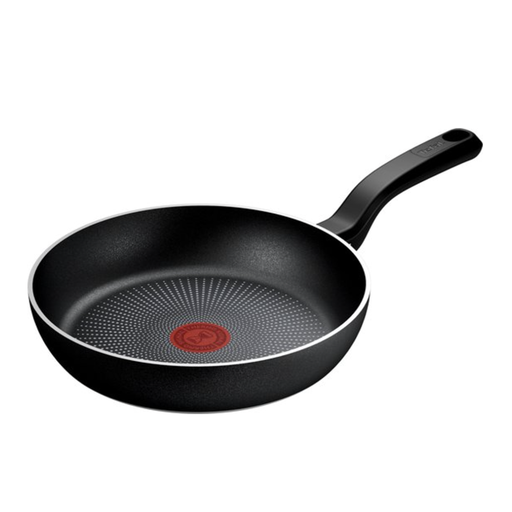
Why it suits this profile: The 24 cm size is easy to manage for everyday portions, and according to the product information, the pan is suitable for induction, gas, electric, glass-ceramic and ceramic hobs.
Compatibility with several hob types is clearly stated. According to the product description, the Thermo-Signal indicator shows when the pan has reached the right temperature.
Aluminium pan with a Titanium 2X non-stick coating; dishwasher-safe and oven-safe according to the stated product specifications.
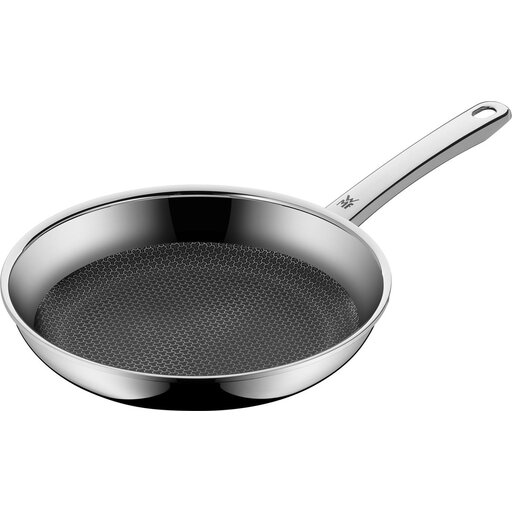
Why it suits this profile: This pan combines stainless steel with an aluminium core and a non-stick coating. It’s a good fit if high cooking temperatures and a sturdy construction are important to you.
The three-layer construction and TransTherm base are clearly described. This tells you which material helps conduct heat and which layer comes into contact with food.
28 cm diameter, suitable for induction and other hob types, heat-resistant up to 260 °C; hand-washing is required according to the product information.

Why it suits this profile: The combination of 304 stainless steel, an aluminium core and a glass lid makes this pan suitable for frying, sautéing and simmering.
The product information specifies the three-layer construction, hob compatibility and dishwasher-safe design. Be sure to check the recommended oven temperature before use.
304 stainless steel with an aluminium core, suitable for gas, induction and ceramic hobs; glass lid included.
We’ve put together a complete, up-to-date list of products that meet these strict selection criteria and the applicable European safety regulations.
A coating will generally last longer if you:
A dishwasher is convenient, but several product descriptions suggest that hand-washing can help a non-stick coating last longer. You can usually clean a stainless steel pan more vigorously, but always check the manufacturer’s instructions.
A 20 to 24 cm frying pan is often enough for one or two people. A 28 cm frying pan is suitable for several portions. Choose 30 cm when you’re cooking larger quantities, but check that the pan sits securely on your hob.
Choose a model that explicitly states induction compatibility. An aluminium pan will usually need a magnetic base or induction plate. Centre the pan on the hob zone for even heating.
Its lifespan depends on how it’s heated, the utensils you use, how it’s cleaned and how often you cook with it. Don’t continue using a pan if its coating is damaged or peeling. A stainless steel frying pan can last longer without a delicate non-stick coating, but it takes more technique to cook with.
