
Vandaag of morgen in huis

Kwaliteit gegarandeerd

Welkomstaanbiedingen ontgrendelen: GRATIS bezorging | Tot 80% korting | Gratis 30 dagen JoyPlus-proefperiode
Download de app
A frying pan may seem like a straightforward purchase, until you discover that the base does not work properly on an induction hob, the pan is too small for a family meal or the non-stick coating starts to deteriorate quickly. Terms such as “non-stick”, “stone coating” and “healthy cooking” may sound appealing, but they do not always tell the full story.
Pay particular attention to hob compatibility, size, coating, care requirements and intended use. This will help you avoid having to buy another pan after just a few months.
An aluminium frying pan can heat up quickly and evenly, but aluminium itself is not magnetic. Induction requires a suitable composite base. Always check that the product description explicitly states that the pan is suitable for induction. A pan that is only suitable for gas, electric or ceramic hobs will not automatically work on induction.
The 32 cm Tefal Easy Cook & Clean, for example, is suitable for gas, electric and ceramic cooking, but according to the product information it is not suitable for induction. This detail is more important than a general claim that a pan works on “all hobs”.
A ceramic frying pan or other non-stick frying pan can make it easier to release eggs, pancakes and fish. However, the coating remains sensitive to overheating, metal utensils and abrasive cleaning products.
“Dishwasher-safe” also does not mean that the coating will last indefinitely. Manufacturers often recommend hand washing to extend its lifespan. Check whether a pan can genuinely go in the dishwasher: according to their product information, the USELUCK pan and several WMF models are not dishwasher-safe.
A PFAS-free frying pan may appeal to anyone who pays close attention to the composition of a coating. However, check that the claim is actually included in the product specifications and whether it applies to the entire coating. Be cautious with brand claims about performance or durability.
According to Brabantia’s product information, the Onyx and Dusk models feature a PFAS-free ceramic coating. Redchef states that its ceramic coating is free from PTFE, PFOA and PFAS. These are product claims based on the information provided and should not be confused with medical or health claims.
The right size depends on your portions and hob.
A 24 cm frying pan is a useful mid-size option for many households. If you mainly want to simmer, make sauces or prepare one-pan meals, also consider a sauté pan with taller sides and a lid.
An aluminium frying pan generally heats up quickly and is relatively light. However, heat distribution also depends on the construction of the base. For induction cooking, a suitable composite or magnetic base is essential.
Stainless steel is durable and suitable for high temperatures, but a pan without a non-stick coating requires more care when preheating and adding oil. Ceramic coatings can help food release easily, but wooden, silicone or plastic spatulas are preferable.
A frying pan with a lid is useful for stewing, braising and keeping food warm. Pay attention to the handle material and the maximum oven temperature. The Brabantia Dusk is stated to be suitable for oven use up to 200 °C, while the Tefal Easy Chef with lid is oven-safe up to 175 °C according to the product information.
Also check whether the handle may become hot during use. A heat-resistant handle is not necessarily completely cool to the touch. Use oven gloves when removing the pan from the hob or oven.
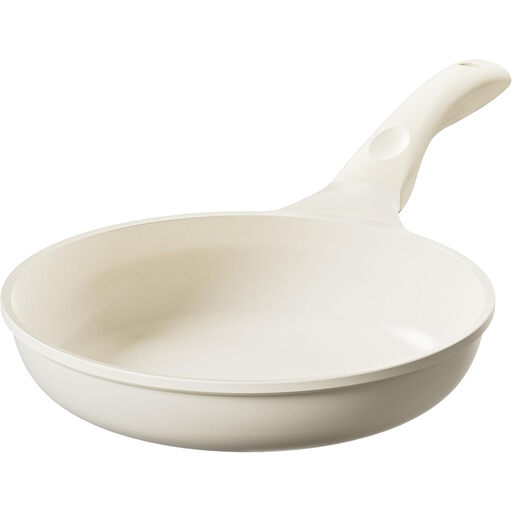
Why it suits this user profile: The size is well suited to everyday cooking for one or a few people. According to the manufacturer, the pan is suitable for induction, gas and electric hobs and has a ceramic coating free from PTFE, PFOA and PFAS.
Hob compatibility is clearly specified. The instructions also recommend avoiding metal utensils and abrasive products.
24 cm, ceramic non-stick coating and a handle that, according to the product information, is suitable for both left- and right-handed use.

Why it suits this user profile: This pan combines a 24 cm size with recycled forged aluminium, a PFAS-free ceramic coating and oven use up to 200 °C according to the product information.
The maximum oven temperature and care instructions are clearly specified. Although dishwasher use is mentioned, Brabantia recommends hand washing for a longer lifespan.
Suitable for induction, oven-safe up to 200 °C, dishwasher-safe according to the specifications and fitted with a riveted stainless steel handle.
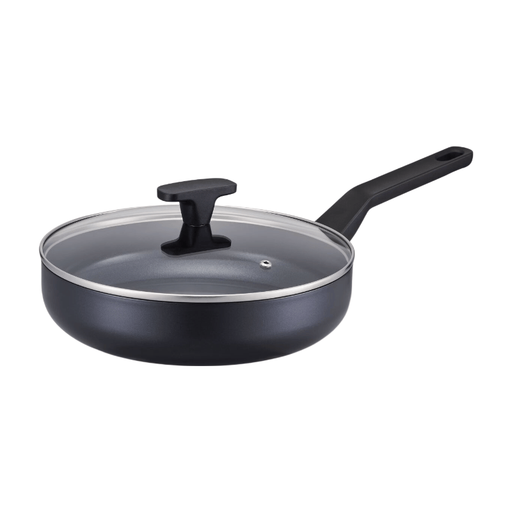
Why it suits this user profile: The taller sides and glass lid are practical for stews, sauces and meals for several people. According to the product information, the pan is suitable for all common types of hob.
This is not just a shallow frying pan: its capacity, lid and taller sides make it suitable for simmering and preparing larger portions.
26 cm, PFAS-free ceramic double non-stick coating, glass lid and dishwasher-safe according to the product description.
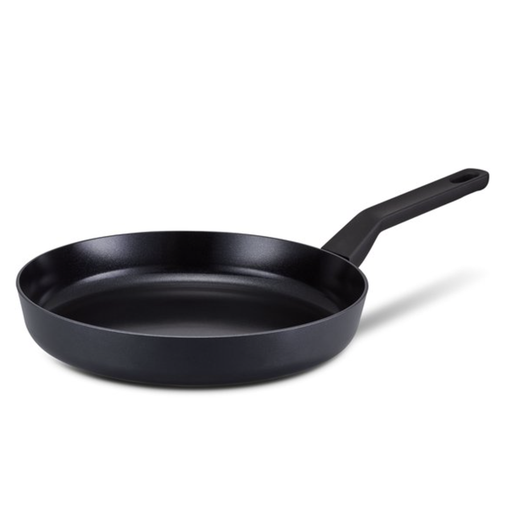
Why it suits this user profile: The compact size is suitable for one portion, eggs or a small meal. According to the product information, the aluminium pan is lightweight and suitable for induction, gas, electric, ceramic and halogen cooking.
You are not paying for a large pan that goes unused. The size is suited to small portions and requires less storage space.
20 cm, PFAS-free ceramic coating, recycled aluminium and dishwasher-safe according to the product specifications.
We have put together a complete, up-to-date list of products that fully meet these strict selection criteria and the applicable European safety regulations.
For one person, 20 cm is often sufficient. A 24 cm frying pan is suitable for everyday cooking for one to three people. For families or larger portions, 28 to 32 cm may be more practical. With larger pans, make sure you check the diameter of your cooking zone.
That depends on the specific model. “Ceramic” does not automatically mean that every pan is PFAS-free. Look for an explicit statement in the product specifications, as with the Brabantia, WMF and Redchef models mentioned above. Information provided by a brand about the composition remains a product claim made by the manufacturer.
Its lifespan depends on heat, utensils, cleaning and frequency of use. Hand washing, moderate temperatures and soft spatulas help protect the coating. Once the coating is visibly damaged or starts to peel, replacing the pan is advisable.
