
Vandaag of morgen in huis

Kwaliteit gegarandeerd

Welkomstaanbiedingen ontgrendelen: GRATIS bezorging | Tot 80% korting | Gratis 30 dagen JoyPlus-proefperiode
Download de app
A frying pan may seem like a simple kitchen essential, but small differences can have a big impact on how easy it is to use. A pan might appear suitable for induction but still heat poorly because its base is too small. A ceramic coating can make cooking easier, but it needs different care from stainless steel. And a large pan won’t always suit your hob zone or the amount of food you’re cooking.
Here are some common pitfalls to watch out for:
A ceramic frying pan usually has a smooth coating that helps prevent food from sticking. The product specifications for several of the models mentioned state that their coatings are PFAS-free, including the Brabantia Onyx and Dusk pans. Always check that this is explicitly stated in the product information. A brand claim is not a blanket guarantee for every pan in the same product range.
According to its product specifications, the Redchef set has a ceramic coating that is free from PFAS, PTFE and PFOA. With this type of pan, it’s best to use wooden, silicone or plastic utensils. Let the pan cool before washing it, and avoid abrasive cleaning products.
A stainless steel frying pan or stainless steel wok without a non-stick coating can last a long time and is less prone to scratches from everyday kitchen utensils. However, food may stick more easily. For the Maxcook 304 stainless steel wok, the advice is to heat the pan thoroughly first, then add oil and cook over a medium-low heat. This isn’t a non-stick frying pan, so it calls for a different cooking technique.
If you’re looking for an induction frying pan, it’s best to check three things:
According to their product specifications, the Brabantia Onyx frying pans in 20 and 24 cm are suitable for induction, gas, electric, ceramic and halogen hobs. The 24 cm Brabantia Dusk has the same wide compatibility and, according to the product information, can also be used in the oven up to 200 °C.
A pan that’s suitable only for gas, electric or ceramic hobs must not be used on induction. Always check the technical details rather than relying only on the product photo or title.
A frying pan with a lid is useful for simmering, making sauces and keeping dishes warm. A deep sauté pan offers more capacity than a shallow pan, making it an alternative to a wok. Bear in mind the weight, handle and space available in your kitchen cupboard.
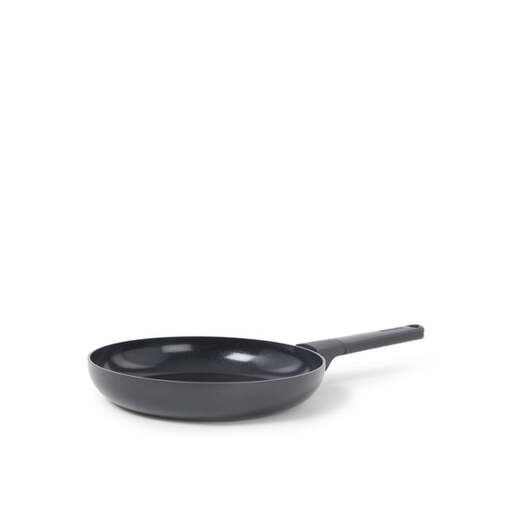
Why it suits this profile: A 24 cm pan is easy to handle for everyday cooking and, according to the product information, is suitable for electric, gas, induction and ceramic hobs.
Hob compatibility and the PFAS-free ceramic coating are listed in the product specifications. Check the care instructions before use, too.
24 cm diameter, ceramic coating, PFAS-free according to the product information, and dishwasher-safe.

Why it suits this profile: This pan is made for everyday use, with a sturdy construction, wide hob compatibility and oven suitability up to the stated temperature.
The product specifications explicitly state that it’s suitable for induction, has a PFAS-free ceramic coating and can be used in the oven up to 200 °C. This makes important usage limits clear from the outset.
24 cm, recycled aluminium according to the product information, dishwasher-safe and oven-safe up to 200 °C.
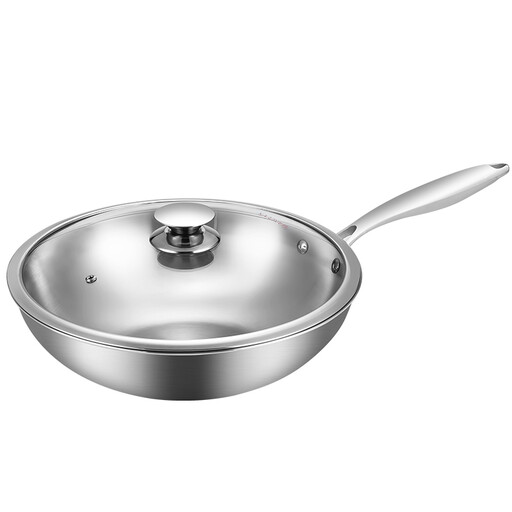
Why it suits this profile: This 28 cm wok is designed for stir-frying, searing and cooking larger portions. According to the product information, it works on induction, gas, electric and ceramic hobs.
There’s no chemical non-stick coating to be damaged by unsuitable utensils or high heat. However, you’ll need to use the right preheating and oiling technique to help prevent food from sticking.
304 stainless steel, three-layer construction, 28 cm diameter, glass lid and dishwasher-safe according to the product information.
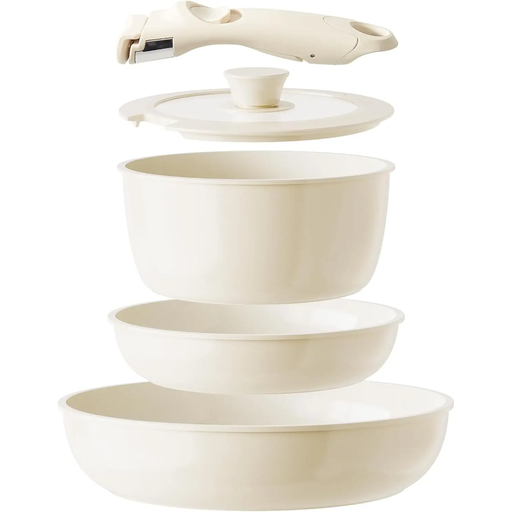
Why it suits this profile: The set includes two frying pans, a saucepan, a lid and a detachable handle. It’s a practical choice when cupboard space is limited.
The product information clearly lists the coating materials, dishwasher-safe design and detachable handle. Before using it in the oven, check whether the handle needs to be removed.
Free from PFAS, PTFE and PFOA according to the product information, stackable design and several pieces for everyday cooking.
We’ve put together a complete, up-to-date list of products that meet these strict selection criteria and current European safety regulations.
How long a frying pan lasts depends largely on how you use it. Follow these basic guidelines:
Choose only a model that explicitly lists induction as a suitable heat source. Also check that the flat base matches the diameter of your induction zone. A pan designed for gas and ceramic hobs isn’t automatically suitable for induction.
No. “PFAS-free” describes a property of the coating or product composition, while ceramic refers to the type of coating. Check the full product specifications and look at the materials listed. Some models also state separately that they’re free from PTFE or PFOA.
It depends on the material, how often you use it, the temperature and how well you care for it. A ceramic coating can wear more quickly if exposed to metal utensils, overheating or abrasive cleaning. A stainless steel pan without a coating may be less prone to scratches with normal use, but needs more attention while you’re cooking.
