
Vandaag of morgen in huis

Kwaliteit gegarandeerd

Welkomstaanbiedingen ontgrendelen: GRATIS bezorging | Tot 80% korting | Gratis 30 dagen JoyPlus-proefperiode
Download de app
Need a new frying pan? The search often feels like navigating a maze. One pan promises "lifelong" performance, while another claims to be "healthy" without a clear explanation. Many of these promises fall flat after just a few months. Before you make a choice, it's wise to understand the most common pitfalls that can unnecessarily drive up costs.
To avoid a bad purchase, it's better to focus on a few concrete specifications. These determine how the pan performs in practice and how long it will last.
The choice of material has the biggest impact on your cooking experience.
Non-stick frying pan: Ideal for those who want to cook with little fat and value convenience. Eggs, pancakes, and delicate fish slide right out. Within this category, there are important differences:
Stainless steel frying pan: The choice for those who love high-heat searing (think steak or vegetables). A stainless steel pan has no coating that can wear out and can handle extremely high temperatures. It requires a bit more technique and oil, but with proper care, it will last a lifetime.
A good frying pan has a thick, perfectly flat base. This ensures stable, even heat distribution and prevents your food from burning in the middle while the edges are still cold.
For an induction frying pan, a magnetisable base is an absolute must. You can easily test this yourself with a refrigerator magnet. If it sticks firmly to the bottom of the pan, the pan is suitable. A thick 'sandwich base' (for example, stainless steel-aluminium-stainless steel) often performs well on induction due to the combination of heat conduction and magnetism.
The size of the pan should match the dishes you make and the size of your household.
Based on these objective criteria, we have selected a number of pans that suit different cooking styles and households.
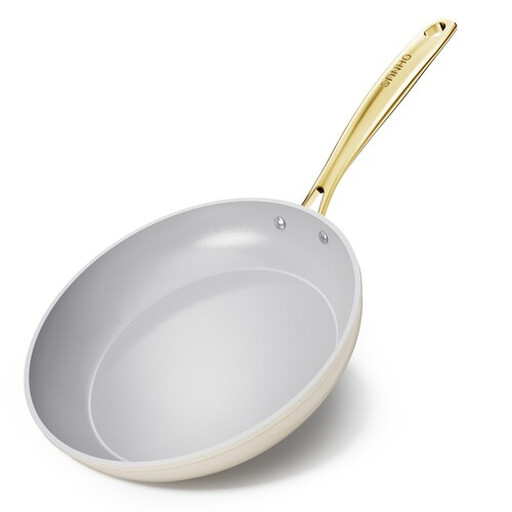
Why This Fits Their Persona: Perfect for those who cook consciously with minimal oil. The ceramic coating is guaranteed free of harmful substances, aligning with a healthy lifestyle. The 26 cm size is ideal for daily meals for small families.
This pan is explicitly free of PFAS, PFOA, and PTFE. No vague claims, but clear, verifiable specifications about the coating's composition.
According to the manufacturer, the patented diamond-titanium coating is more scratch-resistant than standard ceramic coatings. The pan is oven-safe up to 260°C.
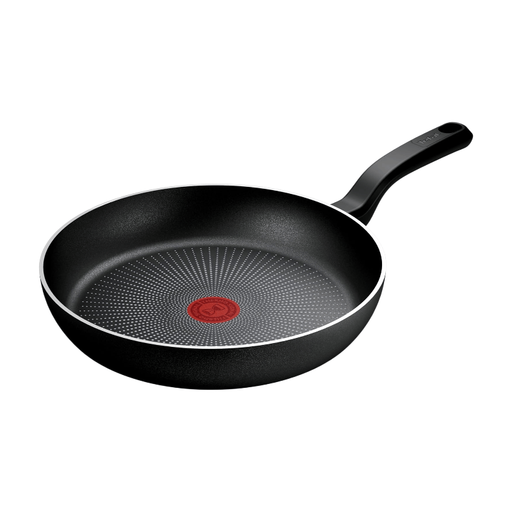
Why This Fits Their Persona: The 28 cm size is ideal for family meals. The pan is suitable for all heat sources, including efficient use on induction, and is designed for daily, intensive use.
The stable, thick base ensures good and efficient heat transfer on induction. This results in even cooking and no energy waste, unlike pans that are merely 'compatible'.
Tefal's Thermo-Signal technology indicates when the pan has reached the ideal cooking temperature. Furthermore, the pan is dishwasher-safe for extra convenience after cooking.
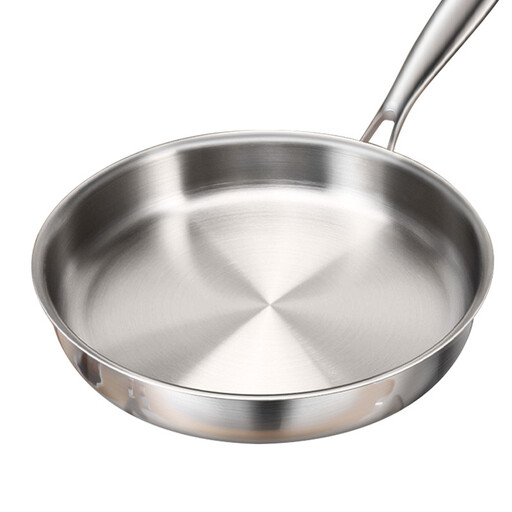
Why This Fits Their Persona: For the chef who wants control and seeks perfect searing results for meat, fish, and vegetables. No worries about a wearing coating, just pure and robust cookware.
This pan completely bypasses the pitfall of limited non-stick coating lifespans. This is a long-term investment, made for intensive use without performance degradation.
The three-layer (triple-ply) construction of stainless steel and aluminium ensures rapid and extremely even heat distribution, which is essential for perfectly cooking ingredients.
We have compiled a complete, up-to-date list of products that meet these selection criteria.
Here are answers to a few questions that often come up when purchasing a new frying pan.
The easiest test is with a magnet. If it sticks to the bottom of the pan, the pan is magnetic and suitable for induction. To be certain, always check the product information or the symbols on the bottom of the pan itself. A coil-shaped symbol indicates that the pan is suitable for induction.
A ceramic frying pan has a coating made from natural materials (based on sand/silicon) and is free of PFAS. A traditional non-stick coating is usually based on PTFE. Modern PTFE coatings are PFOA-free and safe for normal use, but can release substances if overheated (above 260°C). Ceramic coatings are often harder, but can be more brittle.
Preferably, wash the pan by hand with a soft sponge, even if it is dishwasher-safe; this significantly extends the life of the coating. Always use wooden, silicone, or plastic utensils to prevent scratches. Never heat the pan empty on high heat and let it cool completely before running it under cold water to prevent warping.
