
Vandaag of morgen in huis

Kwaliteit gegarandeerd

Welkomstaanbiedingen ontgrendelen: GRATIS bezorging | Tot 80% korting | Gratis 30 dagen JoyPlus-proefperiode
Download de app
A new frying pan. For the first few uses, your egg slides out like a dream. But after a few months? Everything sticks, the base has warped, and you're left wondering where your money went. Sound familiar? Many pans are sold with promises they can't keep. Before you purchase a new frying pan, it's wise to know what to look for. We'll cover the most common pitfalls to ensure your next purchase is a perfect match.
non-stick frying pan unusable in a short time.induction frying pan cooktop, but if the base isn't perfectly flat or lacks sufficient magnetic material, it will take forever to heat up and distribute warmth unevenly. The result: a burnt pancake in the center with a raw edge.PFAS-free frying pan is a concrete specification indicating that none of these substances were intentionally added to the coating.To avoid a bad purchase, it's essential to check three core features: the material, the base, and the size.
The material determines your pan's cooking performance, maintenance, and lifespan.
PFAS-free frying pan. These pans can often withstand higher temperatures, but their non-stick properties may diminish over time, especially with improper care.stainless steel frying pan can last a lifetime. It's perfect for searing meat at high temperatures. However, it requires a different cooking technique (using oil and the right temperature) to prevent sticking.For an induction frying pan, a ferromagnetic base is a requirement. This means the bottom must be magnetic. Additionally, the base must be perfectly flat for optimal contact with the cooktop. A thicker, multi-ply base (like those on some stainless steel pans) ensures better and more even heat distribution.
The size of the pan depends on your household and your cooking style.
24 cm frying pan is a versatile standard size.Below are some popular choices, matched to different cooking styles and needs.
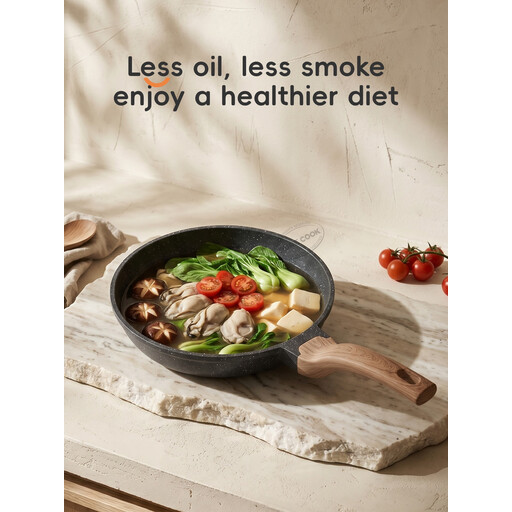
Why This Fits Their Persona: Perfect for quick, everyday meals. It's lightweight, heats up fast, and the non-stick coating makes cooking and cleanup effortless. The wooden handle stays cool to the touch, which is a nice user-friendly feature.
This pan addresses the pitfall of a fast-wearing coating by providing clear maintenance instructions. It's an affordable choice, setting realistic expectations for a pan with a traditional non-stick surface.
Fast and even heating due to its aluminium construction; very lightweight for easy handling. Suitable for induction, gas, and ceramic cooktops.
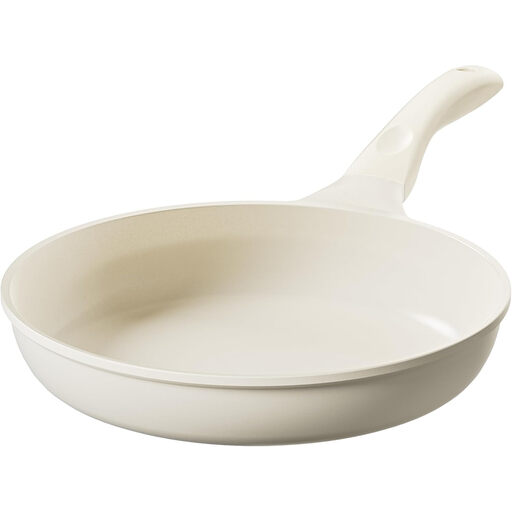
Why This Fits Their Persona: This pan is specifically designed for those who consciously choose to cook without certain chemicals. The spacious 28 cm frying pan is ideal for family meals, from scrambled eggs to a piece of fish.
Directly tackles the pitfall of vague 'healthy' claims. Redchef's product information states that the ceramic frying pan is made without PTFE, PFOA, and PFAS, which provides verifiable assurance.
Ceramic non-stick coating without intentionally added PFAS; suitable for all heat sources, including induction frying pan.
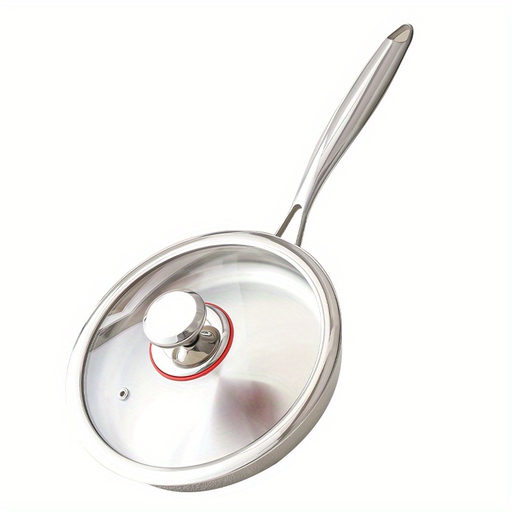
Why This Fits Their Persona: For those seeking durability and performance. Ideal for getting a perfect sear on meat and fish. This pan is a workhorse that will last a lifetime with proper care. The glass lid is useful for simmering.
This stainless steel frying pan has no fragile non-stick coating that can wear out. Its triple-ply construction provides superior, even heat distribution, preventing the 'hot spots' seen in cheaper induction pans.
Extremely durable and scratch-resistant (metal utensils are not a problem); superior heat distribution for professional-grade cooking results.
We have compiled a complete, up-to-date list of products that meet these strict selection criteria and current safety regulations.
Hold a magnet to the bottom. If it sticks firmly, the pan is sufficiently magnetic. Also, check that the base is perfectly flat and that its diameter matches the cooking zone on your cooktop for the most efficient heat transfer.
Wash the pan by hand with a soft sponge. Although many pans are labelled 'dishwasher-safe,' the harsh detergents can degrade the coating over time. Use wooden or silicone utensils and avoid overheating an empty pan.
It just requires a small adjustment in technique. The trick is to preheat the pan properly over medium-high heat first. Then, add your oil and wait until it shimmers slightly. After that, place your ingredients in the pan. They might stick for a moment, but as soon as a crust forms, they will release on their own.
