
Host with a full fridge
You need room for several covered dishes of fruit salad and other chilled food. You’re also making sure the fridge stays at around 4 °C and that food goes back in the fridge after serving.


Use your existing fridge if the covered dishes fit and you can keep the temperature around 4 °C; the Netherlands Nutrition Centre recommends this temperature for fridges. An extra fridge is worth considering if you often run short of space. Check the shelf space for your dishes, the space available for the appliance and its annual energy consumption, and don’t count freezer space as room for fruit salad.
You need room for several covered dishes of fruit salad and other chilled food. You’re also making sure the fridge stays at around 4 °C and that food goes back in the fridge after serving.
You often run short of space, but don’t have much room for another appliance. The dimensions and shelf layout matter more than the stated capacity alone.
You want more usable fridge space even after the gathering. That’s why you’re looking at the layout, external dimensions and annual energy consumption.
Measure your dishes and first check whether they’ll fit in your existing fridge alongside your other chilled food. Only consider another appliance if you often run short of space.
| What to consider | What to look for when buying | Who is this most relevant to? |
|---|---|---|
| Keep it chilled | The Netherlands Nutrition Centre recommends 4 °C. Keep the salad covered and return perishable food to the fridge as soon as possible after serving. | When I’m serving several dishes, I want to be able to keep them chilled and put them back in the fridge promptly after the meal. Around 34% of consumers put safe chilling first. |
| Room for dishes | Measure the width and height of your dishes and compare them with the available shelf space. For fridge-freezers, check the fridge capacity separately. | I want to fit the fruit salad in with the other food for the gathering, not just see a large total capacity on paper. Around 33% of consumers focus on having enough fridge space. |
| Compact extra fridge | Measure the available space, the doorway and your dishes. Compare the usable fridge space, not just the external dimensions. | If I often need extra fridge space but have little floor space, both the appliance and its shelf layout need to work for me. Around 20% of consumers prioritise limited space for an extra fridge. |
| Annual energy consumption | Compare the annual energy consumption in kWh of models that fit your needs for fridge space and dimensions. An energy label alone doesn’t tell you everything about a model’s actual consumption. | I want to keep using the fridge after the gathering without losing sight of its annual energy consumption. Around 13% of consumers prioritise long-term energy use. |
A fridge-freezer also has freezer space, and an awkward shelf layout can make it difficult to fit covered dishes inside. The Dutch Consumers’ Association points out that the stated capacity doesn’t always reflect what you can actually fit in a fridge.
Measure your dishes and compare them with the available shelves. For a fridge-freezer, check the fridge capacity separately.
If your dishes fit in your existing fridge and it stays at around 4 °C, an extra appliance won’t give you any extra fridge space you need for a one-off occasion.
First check the available shelf space and temperature. If you often run short of space, compare models’ annual energy consumption in kWh.
A second fridge uses electricity whenever it’s switched on; consumption depends on the appliance and how you use it.
A fridge may not work as you expect outside its suitable temperature range. According to the Dutch Consumers’ Association, not all appliances work properly at temperatures below 10 °C; the suitable ambient temperature varies by model.
Check the climate class and the instructions for your specific model before choosing a shed as its location.
The Beko TSE1285N is a freestanding table-top fridge for anyone looking for a little extra fridge space.
The Rd 4600 Pure is a freestanding fridge for anyone looking for more fridge space who already has enough freezer space.
The RB34C600ESA/EF is a fridge-freezer to consider if you need both fridge and freezer space.
The HSR3918EIPB is a side-by-side fridge-freezer for households looking for plenty of fridge and freezer space as a long-term solution.
These fridge-freezer models are for households that need freezer space as well as fridge space. Compare the usable fridge space and dimensions; the total capacity isn’t all available for fruit salad.
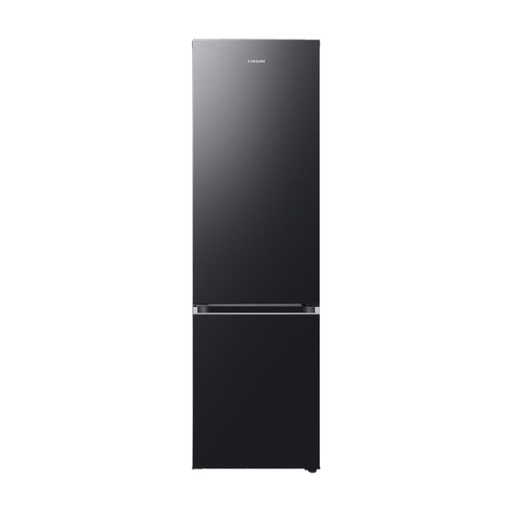 No image available
An option for households that regularly need both fridge and freezer space.
The product description lists a total capacity of 387 litres, energy class A and 108 kWh per year. The total capacity isn’t the same as the fridge space.
The freezer compartment doesn’t count as space for fruit salad.
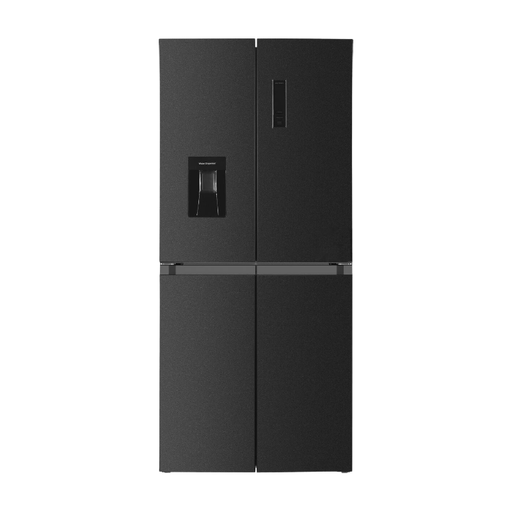 No image available
Worth considering if you’re looking for separate fridge and freezer compartments and have room for its wide external dimensions.
The product description lists 269 litres of fridge space, 150 litres of freezer space, 182 kWh per year and dimensions of 180 × 79 × 70 cm.
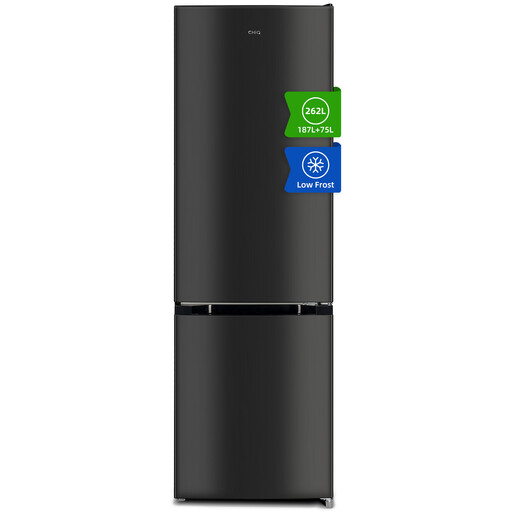 No image available
An option if you’re looking for a fridge-freezer with adjustable storage space.
The product information lists a total capacity of 262 litres, adjustable shelves and door racks, and a reversible door. The total capacity includes the freezer.
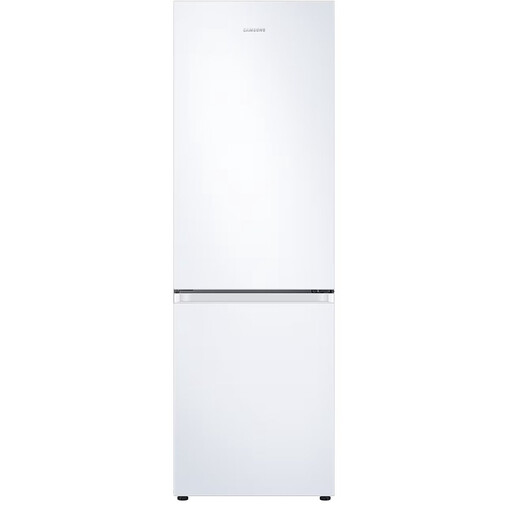 No image available
An option if you need both fridge and freezer space and the stated fridge capacity suits your dishes.
The product specifications list 230 litres of fridge space and 114 litres of freezer space. The product description mentions Power Cool.
 No image available
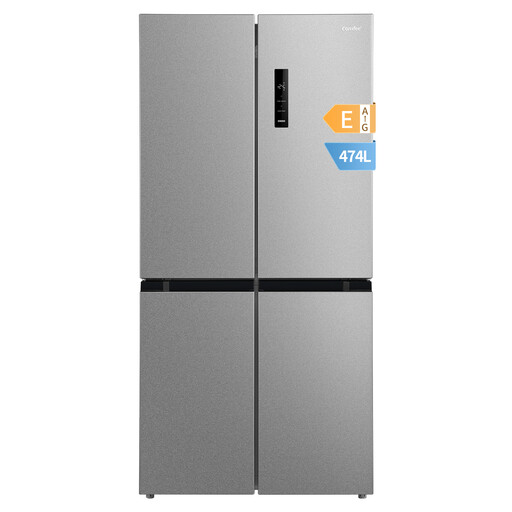
A four-door model to consider if you want several storage zones and have enough space for it.
The product description lists a total capacity of 474 litres and a vegetable drawer with three temperature settings. It doesn’t break down the total capacity into fridge and freezer space.
Keep the salad well covered in the fridge. The Netherlands Nutrition Centre recommends a fridge temperature of 4 °C and advises returning perishable food to the fridge as soon as possible. Don’t leave it out of the fridge for more than 2 hours; after that, throw it away.
Measure your dishes and compare their dimensions with the available shelf width and height. The Dutch Consumers’ Association warns that the stated capacity doesn’t always match what you can actually store. For a fridge-freezer, check the fridge space separately too.
Not without checking the ambient temperature and the model’s climate class. According to the Dutch Consumers’ Association, not all appliances work properly below 10 °C; check the instructions for the specific model.
Measure the space where it will go, the delivery route and the clearance needed to open the door. Compare these measurements with the external dimensions of your chosen model and check its installation instructions.
Not necessarily. Compare the annual energy consumption in kWh of models that meet your needs for fridge space and dimensions. The Dutch Consumers’ Association notes that a larger fridge can use more electricity overall than a smaller model, even if it has a high energy class.