
Seller looking for colour-accurate product photos
You photograph fruit arrangements regularly and want to keep colour and exposure consistent between shots.


Start by matching the lens to your subject: a suitable zoom is handy for capturing the full arrangement, while close-ups of small fruit details call for a lens with the right magnification. To keep colours looking true to life, adjust the white balance to suit your lights. If you see stripes or inconsistent brightness, also check the shutter speed and anti-flicker settings for the exact camera model. A camera body alone is not a complete solution, so consider the lens and lighting set-up too.
You photograph fruit arrangements regularly and want to keep colour and exposure consistent between shots.
You switch between overhead shots and angled full-scene images, so you mainly need a suitable angle of view and enough room to work.
You want to capture textures or small features in close-up. So look at the magnification of your chosen lens, not just the camera body.
Choose this if: you usually photograph the whole fruit arrangement or take an overhead shot, and want to adjust the framing.
Trade-off: a zoom is versatile for compositions, but it isn’t automatically suitable for capturing the finest texture details.
Choose this if: peel, droplets or cut surfaces are often the main subject.
Trade-off: a macro lens is a separate choice; also check that the working distance and angle of view suit the space available for a larger arrangement.
Choose this if: the framing and detail are already right, but the fruit looks too warm, flat or striped under your lights.
Trade-off: this won’t change the lens range or macro magnification; it focuses mainly on light and colour.
| What to consider | What to look for | Most important for |
|---|---|---|
| Colour under artificial light | Check whether you can adjust the white balance, and assess the colour under the lights you use. | I want fruit to look true to colour under my lights. Around 29% of consumers prioritise colour reproduction. |
| Fitting the whole arrangement in the frame | Check the angle of view of the exact lens, the distance available to you, and whether the offer is for a body or a kit with a lens. | I want to be able to frame an overhead shot or full-scene image to suit my needs. Around 22% of consumers prioritise the complete composition. |
| Small fruit details | Check the maximum magnification and mount of the exact lens; don’t rely on the word ‘macro’ alone. | I want to capture textures and small features clearly, not just the whole bowl. Around 21% of consumers prioritise detail. |
| Stripes or inconsistent brightness | Check your camera model’s manual and test with your own lights and shutter settings. Sony Netherlands notes that anti-flicker features can vary depending on the model and shutter setting. | I want to take predictable shots under lights that cause visible stripes or exposure differences. Around 14% of consumers prioritise controlling flicker. |
| A complete kit | Check whether a lens is included, exactly which lens it is, and what else you need for your set-up. | I want to know what a usable combination for my photos includes, not just which body is on offer. Around 14% of consumers prioritise a complete kit. |
A kit with a standard zoom and a separate macro lens aren’t the same when it comes to small details. You may need to buy a suitable lens separately.
Compare the exact kit contents and lens magnification before weighing up camera offers.
Canon specifies a maximum magnification of 1:2 for the RF 35mm F1.8 Macro; Nikon lists 1:1 magnification for the NIKKOR Z MC 50mm f/2.8.
Check the maximum magnification of the exact lens you want to use.
According to Sony Netherlands, measures to reduce flicker can vary depending on the light source, shutter speed, camera model and shutter setting.
Take test shots with your own lights and settings before deciding which camera feature you need.
The EOS R50 is an APS-C camera with an RF mount. Choose a lens separately or check which lens is included in the kit.
The Z50II is a DX camera with a Z mount. A 1:1 macro lens is a separate lens choice.
The ILCE-6700 is an APS-C camera with an E mount; check that your chosen lens and anti-flicker settings suit your set-up.
These cameras are options to consider for fruit photography; check that the configuration included with each version suits your preferred framing and artificial-light set-up.
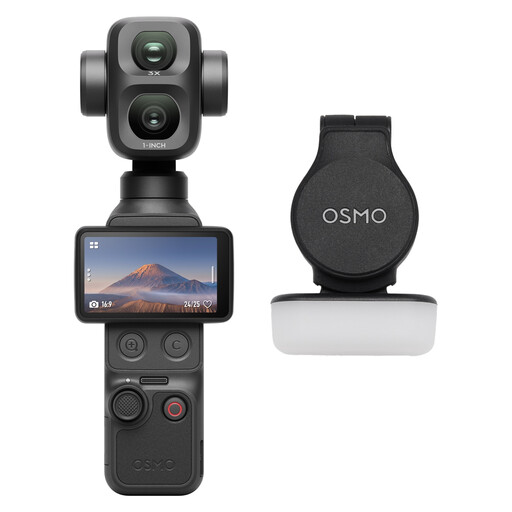 No image available
Check that the angle of view and included configuration suit the distance and framing of your fruit arrangement.
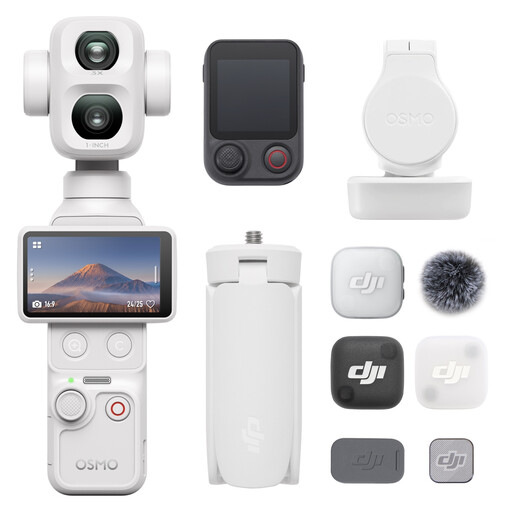 No image available
Check that this version suits the framing and lighting conditions in which you want to photograph fruit.
Start with a test shot and assess the colour of the fruit under your own lights. Sony Netherlands recommends adjusting the white balance; if you see stripes, you can also check the shutter speed and model-specific anti-flicker settings. This doesn’t guarantee a particular result.
No, not for a complete composition. First check the angle of view and the distance available; for small textures, the maximum magnification of the individual lens matters. Check which lens is actually included in the kit.
Test your own lights with a range of suitable shooting settings before choosing a camera to solve the problem. Sony Netherlands says anti-flicker features can vary depending on the camera model and shutter setting, so check the manual for the exact model.
According to ACM ConsuWijzer, you have a legal guarantee as well as any commercial warranty. If a fault isn’t caused by misuse and occurs sooner than you could reasonably expect, the seller must put it right free of charge. This isn’t a fixed legal guarantee period of exactly two years.
No, there are exceptions. The Dutch government says that, in many cases, distance sales come with a 14-day cooling-off period, but exceptions apply. Check whether your purchase falls under the distance-selling rules for purchases from a trader, and which terms and conditions apply.