
Vandaag of morgen in huis

Kwaliteit gegarandeerd

Welkomstaanbiedingen ontgrendelen: GRATIS bezorging | Tot 80% korting | Gratis 30 dagen JoyPlus-proefperiode
Download de app
Fruit jelly sweets are popular as a sweet treat, an on-the-go snack or an Asian jelly to enjoy at home. The choice ranges from jelly sticks and fruit jelly to konjac jelly, jelly drinks and large sharing packs. Yet a cheerful packet says little about the ingredients, portion size or suitability for children.
When you shop with purpose, you focus on the difference between fruit content, sugar content, texture and ease of use. That way, you avoid a product that only looks appealing thanks to marketing, but in reality doesn’t suit your family, your working day or your dietary choices.
A fruit flavour can come from juice, concentrate, flavouring or a combination of these. So always check the ingredients list and any mention of the fruit percentage. A product with lychee, grape or strawberry flavour doesn’t have to contain a large proportion of that fruit.
With the Strong CICI Jelly Drinks, for example, a fruit content of at least 15% is stated. The recipe also includes sugar, fructose-glucose syrup, thickeners and konjac powder. That makes it a fruity jelly drink, but not the same as a snack based on pure fruit juice.
A sugar-free jelly can contain sweeteners, such as erythritol. A product with few calories can still contain carbohydrates or sugars. So don’t just look at the front; compare the nutritional values per 100g and per pack.
The Hethstia Konjac Jelly Lychee 155g states 7 kcal per pouch and 0g sugar per 100g. The Strong CICI variants state around 59 to 61 kcal per 100g, but have a different recipe. Use these figures as a comparison point and always check the actual packaging.
Jelly sweets, jelly cups and drinkable fruit jellies have a smooth or elastic texture. Some packs therefore include a choking warning. The Want Want Rock Jelly Strawberry, for instance, states that the product is not suitable for children and should not be swallowed whole.
For young children, small bites, supervision and the usage instructions are important. Also read the allergen information, even when a product description says it contains no allergens. The information on the packaging is what counts.
Look for concrete information such as “fruit juice”, “fruit pulp” or a percentage of fruit juice. Also pay attention to the order of ingredients: what comes first usually makes up a larger part of the recipe. In fruit jellies, agar, pectin, carrageenan or konjac powder can create the gel structure.
If you want a pronounced fruit flavour, you can choose lychee jelly, grape jelly, strawberry jelly or orange jelly. For more variety, a jelly mix or a pack with several flavours is practical.
Compare at least:
A large pack isn’t automatically better value if you’re mainly looking for small portions. An individual jelly stick or pouch is much handier for taking with you and portioning.
For school, the office or travel, individually wrapped jelly sticks are convenient. The FRUIT 100% STICK JELLY 1.46kg consists, according to the product information, of separately wrapped sticks. The packaging also states 25 kcal and 5g sugar per stated portion; check the label to see exactly how that portion is defined.
A jelly drink in a pouch is ready to use and often tastes great chilled. A dessert pack, such as DOUBLE PANDA Black Grass Jelly 540g, is better suited to home use. According to the product description, this black grass jelly can be eaten chilled or added to desserts, milk tea and fruit drinks.
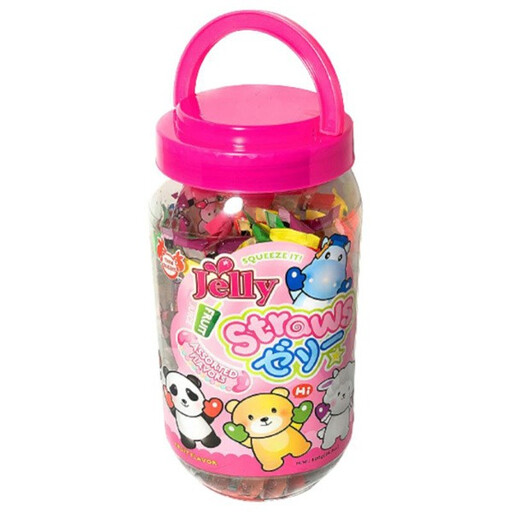
Why this fits the profile: The jar contains individually wrapped jelly sticks in different fruit flavours. That’s practical for sharing, a treat jar or a first introduction to Asian jelly.
The mix makes the flavour choice clear and the portions are individually wrapped. Do note the stated 20g sugar per 100g.
800g content, multiple fruit flavours and individually wrapped sticks.
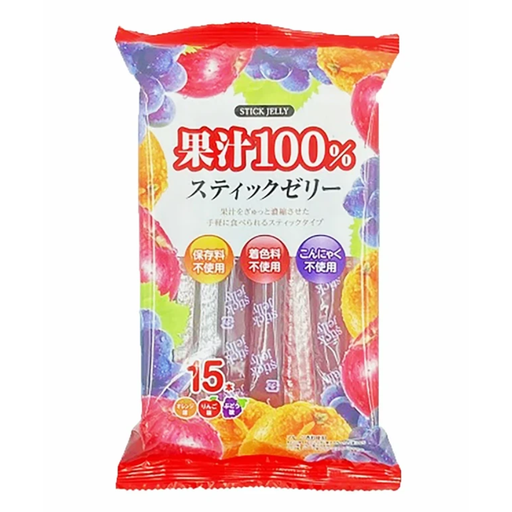
Why this fits the profile: According to the product description, this jelly is made with 100% fruit juice and no added sugar, artificial colours or preservatives.
The product information states the basis of the recipe and the individual packaging. Check the actual ingredients list and nutritional values on the packaging you receive.
1.46kg total weight, sticks for on the go and a stated portion value of 25 kcal.
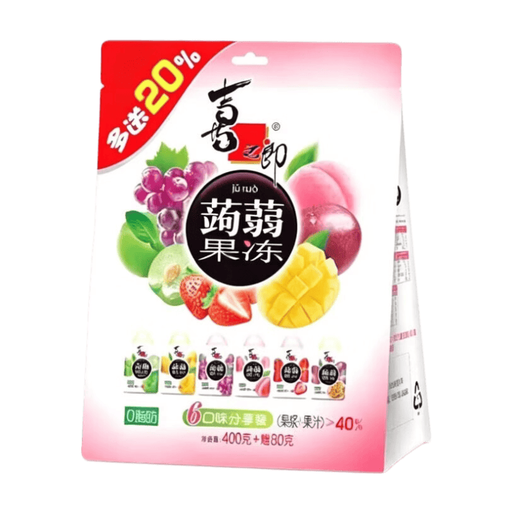
Why this fits the profile: The 480g total content and six stated flavours are suitable for households, gatherings or enthusiasts who like to vary regularly.
The fruit content of at least 40% is stated in the product information. The nutritional value ranges from around 107 to 111 kcal per 100g, depending on the flavour.
Six flavours, konjac powder, at least 40% fruit content according to the description and a sharing pack.
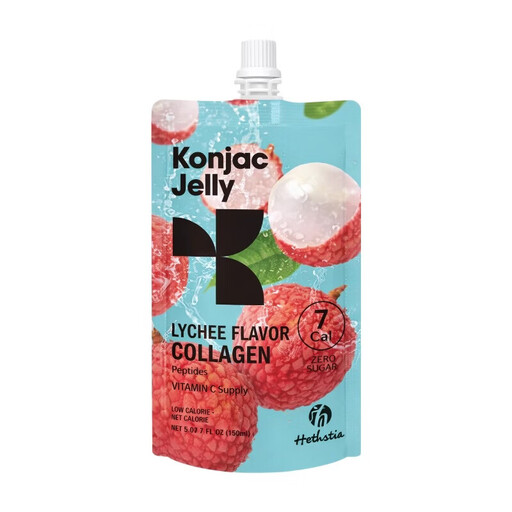
Why this fits the profile: This individual pouch is light to take to the office, college or on the go. According to the product information, one pouch contains 7 kcal and 0g sugar per 100g.
The nutritional value and ingredients are clearly stated. The pouch does contain sweetener and thickeners; so read the label if you want to avoid those.
Lychee flavour, squeezable pouch, 150g content and according to the product information 7 kcal per pouch.
We’ve put together a full, up-to-date list of products that fully meet these strict selection criteria and comply with current European safety regulations.
Yes, especially individually wrapped jelly sticks and squeezable pouches are suitable for school, work, travel or a break on the go. Store opened products according to the label. Some pouches need to be chilled after opening and consumed within a short time.
The shelf life is stated on the packaging. Unopened jelly can usually be stored outside the fridge when the product information indicates that. Avoid direct sunlight, heat and moisture. Do not use a pack if the seal is damaged. After opening, different storage rules often apply.
No. Konjac refers to an ingredient that creates the gel structure, not automatically to the nutritional value. Some konjac jelly products contain sugar or syrup. So compare the ingredients and nutritional values per 100g. That way you can see whether a product suits your preference for a sugar-free jelly or low-calorie snack.
