
Vandaag of morgen in huis

Kwaliteit gegarandeerd

Welkomstaanbiedingen ontgrendelen: GRATIS bezorging | Tot 80% korting | Gratis 30 dagen JoyPlus-proefperiode
Download de app
A fruit jelly might seem like a simple snack at first glance. But jelly snacks vary widely in ingredients, sugar content, portion size and ease of use. If you only go by an attractive packet or a flavour name, you could end up buying a product that doesn’t suit the occasion you have in mind.
This is especially true if you’re looking for konjac jelly, sugar-free jelly, drinkable jelly or handy jelly sticks for on the go. The points below will help you compare products based on verifiable information rather than marketing claims.
A fruit name on the packet doesn’t tell you how much fruit juice or fruit concentrate the product actually contains. For example, COZZO Fruit Jelly Sticks list a fruit juice percentage of around 0.50 to 1.00% per flavour. The rest is made up of water, sugar, gelling agent, acidity regulators and flavourings.
Other products, by contrast, state a higher fruit content. Strong Konjac Jelly, for instance, indicates a fruit content of at least 40% according to the product information, but it also contains sugars, thickeners and preservative. So always check the ingredients list rather than just the front of the packet.
In sugar-free jelly, sugar is often replaced by sweeteners such as erythritol, sucralose or acesulfame-K. That might suit someone looking to reduce their sugar intake, but it changes the taste and composition of the product.
So compare the values per 100 grams or 100 millilitres. A 150 ml portion might be low in calories, while a larger bag of traditional fruit jelly could contain significantly more sugar per 100 grams. Also pay attention to the difference between carbohydrates and of which sugars.
A jelly pouch is easy to take with you, but once opened, some products need to be kept refrigerated and consumed within a certain time. With sticks, individually wrapped means practical – it doesn’t automatically mean sugar-free or low in calories.
Extra care is needed with young children. Some jelly products have a compact, slippery texture. Always follow the warnings on the packet and never leave children unsupervised while eating. The product information for certain drinkable jellies also includes an age warning due to the risk of choking.
Start with the first ingredients. If water, sugar or fructose-glucose syrup appear at the top, fruit may only make up a small part of the product. If you’re after a distinct fruit flavour, compare the stated percentage of juice, purée or fruit concentrate.
Also look at the gelling agent used, such as konjac powder, agar, pectin, carrageenan or other thickeners. Konjac jelly typically has an elastic, soft texture. Classic fruit jelly and jelly sweets are often sweeter and firmer.
Always compare products on the same basis:
The Hethstia Konjac Jelly variants are listed in the product information as having around 3 to 7 kcal per 100 grams/ml, depending on the flavour. Jelly B Konjac Jelly Lychee states 0 grams of sugar per 100 ml. That makes these products interesting if you’re looking for a low-calorie snack or a sugar-free option, but always check the current packet before ordering.
For school, the office or travel, individually wrapped jelly sticks are handy. The COZZO pack contains 12 sticks of 20 grams each. That makes portions easy to divide, but the nutritional values do show 26 grams of sugar per 100 grams.
A pouch of 150 or 155 grams is suitable for a larger snack moment. These drinkable jellies can be used straight from the packet. Hethstia states that the product must be refrigerated after opening and consumed within two days. Also check the best-before date, storage instructions and the condition of the seal.
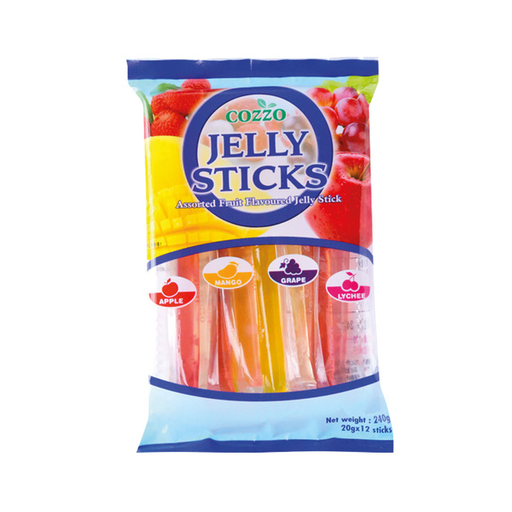
Why this fits the profile: A straightforward introduction to Asian snacks, thanks to 12 individually wrapped sticks and several fruit flavours.
The portions are clearly defined. However, check the sugar content of 26 grams per 100 grams before choosing this as a low-calorie snack.
240 grams total, 12 sticks of 20 grams each and four stated fruit flavours.
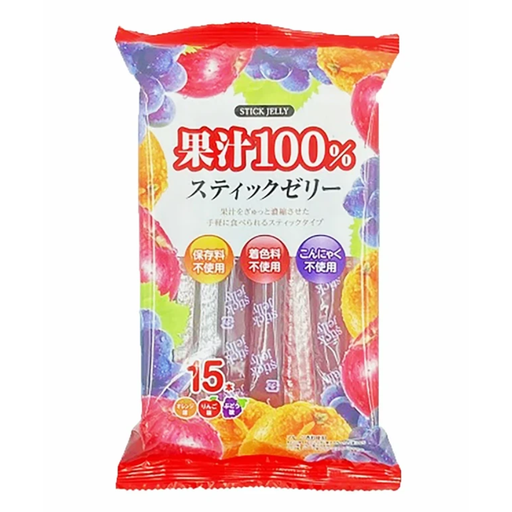
Why this fits the profile: A bulk pack for households, treats or anyone who regularly serves fruit jelly in stick form.
The individual wrapping helps with taking it on the go and portion control. The stated 25 kcal and 5 grams of sugar should be checked against the actual packet for the correct reference amount.
1.46 kg total weight, stick format and, according to the description, no added sugar, artificial colours or preservatives.
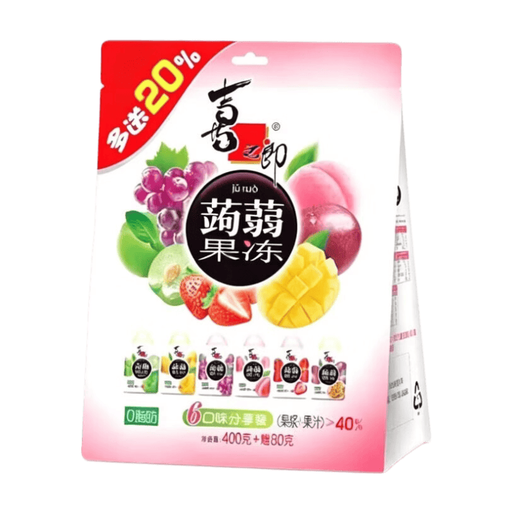
Why this fits the profile: For anyone who wants to alternate between several flavours or needs a larger stock for home and visitors.
The fruit percentage and six flavours are stated, so you can compare more accurately than by relying on the flavour name alone.
400 grams plus an extra 80 grams, at least 40% fruit according to the product information, and flavours including mango, peach, strawberry and passion fruit.
We’ve put together a full, up-to-date list of products that fully meet these strict selection criteria and comply with current European safety regulations.
Not always. Some varieties contain sugar, while others use erythritol and sweeteners. Check the of which sugars line and the full ingredients list per 100 grams or millilitres.
It varies by product. Some pouches need to be refrigerated after opening and used within two days. Always follow the instructions on the packet and don’t consume a product with a damaged seal.
That depends on the age, texture and warnings on the product. Jelly can be slippery and compact. So check the packet and supervise children, especially young ones.
