
Vandaag of morgen in huis

Kwaliteit gegarandeerd

Welkomstaanbiedingen ontgrendelen: GRATIS bezorging | Tot 80% korting | Gratis 30 dagen JoyPlus-proefperiode
Download de app
A fruit jelly is convenient for on-the-go snacking, lunchboxes, parties or a short snack break. Yet many packages look similar, while differences in sugar content, serving size, texture and intended use can be substantial. A jelly pouch, for example, may be marketed as a light snack while containing relatively high levels of sugar per 100 grams. Likewise, the word “fruit” on the front does not automatically mean that the product contains a large amount of fruit juice.
With this buying guide from the Joybuy Product Recommendation Officer, you can compare konjac jelly, fruit jelly, drinkable jelly and fruit jelly sticks based on verifiable product information.
Always check the ingredients list. According to the product information, Yuki & Love Litchi Flavoured Jellies contains, among other ingredients, water, fructose, sugar, 2.8% lychee juice and apple juice. This provides a lychee flavour, but it is not the same as a product with a high fruit content.
Strong Konjac Jelly Squeeze Pack, by contrast, specifies a fruit content of at least 40%. That is a more concrete product specification. Also check the order of the ingredients: those listed first are generally present in the largest quantities.
A sugar-free jelly may contain sweeteners such as erythritol, sucralose or acesulfame-K. A low-calorie product therefore does not necessarily have the same flavour or ingredients as a fruit jelly containing sugar.
Always compare nutritional values per 100 grams or 100 millilitres and per serving. According to the product information, Orihiro Purunto Jelly Golden Pineapple contains 14 kcal per 20-gram serving, while Orion Lychee Kernels Jelly contains 70 kcal per 67-gram pack and lists 15 grams of sugar. Both are small snacks, but the serving sizes are not equivalent.
Jelly products with a firm or elastic texture may present a choking hazard. The product information for Want Want Vidor Jelly Drink states that it is not suitable for children under four and that adult supervision is required. Always follow the warning on the packaging and make sure children sit calmly while eating or drinking.
Choose packaging that suits the occasion:
Check whether a box shown in the product image is actually included. Several Hethstia products specify that the box shown is for illustrative packaging purposes only and that you will receive one pouch.
Use the nutrition table as your starting point, rather than relying solely on claims on the front of the pack. Examples from the product information include:
“Low-calorie snack” is therefore primarily a comparison within the range. It does not mean that a product replaces a meal or supports a specific nutritional objective.
Check the complete EU ingredients list, particularly when buying for children or managing allergies or specific dietary preferences. According to the product information, COZZO Fruit Jelly Sticks contains, among other ingredients, the colourings E102 and E129. The label also warns that these colourings may affect activity and attention in children.
Konjac, carrageenan and gellan gum are often used to create the characteristic elastic texture. A drinkable jelly may additionally contain fruit pieces, nata de coco or coconut jelly. According to the product information, Want Want Vidor Jelly Drink contains coconut and should therefore not be considered an allergen-free product.
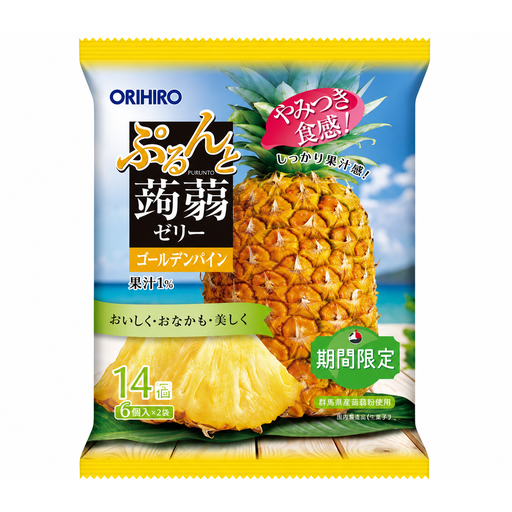
Why it is a good fit: Six 20-gram portions are easy to manage for anyone trying Asian jelly for the first time or looking for compact snacks to take along.
The nutritional value is given per small serving: 14 kcal per 20 grams. This helps you avoid comparing it with larger pouches without recalculating.
Konjac powder, six individual portions and a stated energy value of 14 kcal per serving.
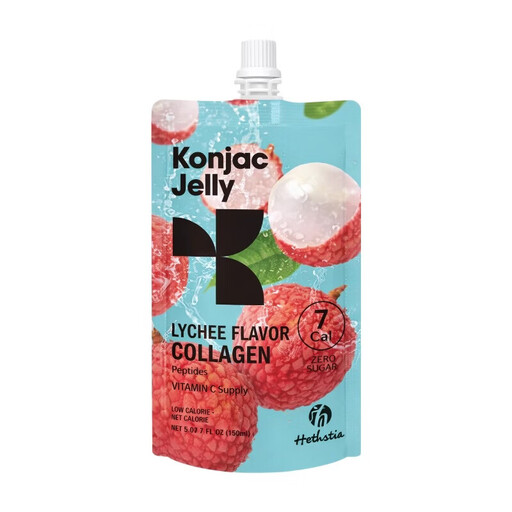
Why it is a good fit: A squeezable lychee jelly pouch for the office, on the go or as a chilled snack at home.
The product information lists 0 grams of sugar and 7 kcal per 100 grams/ml. Check the current packaging before purchasing.
Individual pouch, 155 grams of product and ingredients based on lychee concentrate, erythritol and konjac flour.
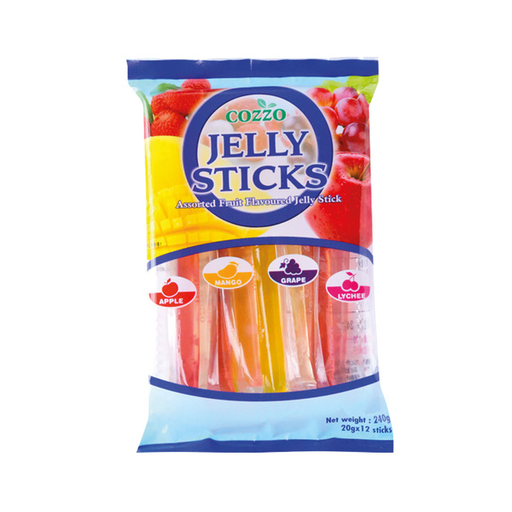
Why it is a good fit: Twelve individually wrapped 20-gram sticks are easy to portion into a lunchbox or hand out at a party.
The packaging lists four flavours, but also contains the colourings E102 and E129. Read the warning when serving to children.
20 grams per stick, individual wrapping and several fruit varieties, including mango, lychee, apple and grape.
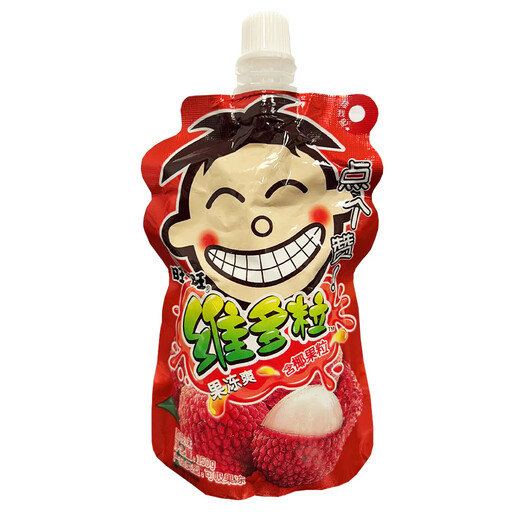
Why it is a good fit: The pouch is designed to be enjoyed straight away and contains lychee juice and coconut jelly for added texture, according to the product information.
This is not a sugar-free jelly: the table lists 15 grams of sugar per 100 grams. The product also contains coconut, an allergen.
150 grams of product, a convenient pouch format and a nutritional value of 61 kcal per 100 grams according to the product information.
Browse the current fruit jelly range and compare flavours, serving sizes, ingredients and nutritional values before placing your order.
Not exactly. Konjac jelly uses konjac powder as a gelling agent and often has a soft, elastic texture. Fruit jelly may also contain agar, pectin or other thickeners. Always check the ingredients list and the texture described on the packaging.
Store an opened product according to the label. According to the product information for Hethstia Konjac Jelly, the pouch should be refrigerated and consumed within two days. Unopened products should generally be stored in a cool, dry place away from direct sunlight. The packaging remains the definitive source of information.
Choose an individually wrapped jelly snack that does not require refrigeration and check that the pouch is securely sealed. Fruit jelly sticks are convenient for sharing, while a squeezable pouch is more practical when you want to eat or drink it immediately. When serving children, always check the age warning and choking-risk information on the label.
