
Vandaag of morgen in huis

Kwaliteit gegarandeerd

Welkomstaanbiedingen ontgrendelen: GRATIS bezorging | Tot 80% korting | Gratis 30 dagen JoyPlus-proefperiode
Download de app
Fruit gummies come in all sorts of shapes and flavours, from classic strawberry- or grape-flavoured gummy sweets to lychee or mango jelly sweets, and those with a soft fruit filling. The packaging often gives you a quick idea of how fun a product looks, but not always what you’re actually buying. If you focus only on flavour or shape, you could end up with a bag that doesn’t suit your allergies, how you plan to enjoy it or your preferred texture.
That’s why the Joybuy Product Recommendation Officer has picked out the most important product information. This helps you compare fruit gummies by flavour, weight, ingredients, allergens, nutritional information and packaging, rather than relying on eye-catching marketing claims alone.
The name strawberry, mango or grape mainly tells you what flavour to expect. The proportion of concentrated fruit juice varies from product to product. For example, the product information for Amos Peelerz Lychee lists 9.3% concentrated fruit juice, while other sweets list a lower proportion or don’t specify one.
So, check the ingredients list. See where fruit juice or fruit concentrate appears in the list and whether a percentage is given. A fruit flavour can also come from flavourings, alongside a small amount of juice.
Not all soft sweets are the same. Some gummies are stretchy and chewy, while others are more jelly-like and give way more easily. Peelable gummies add an outer layer and a filling to the mix. This makes them more fun to eat, but different from standard chewy sweets.
Look out for terms such as soft and chewy, jelly, peelable and juicy filling. If you’re buying sweets to share, a bag of individual pieces with a larger net weight is usually a good choice. For a more unusual snacking experience, a smaller bag with several layers might be more appealing.
Gelatine is often used in fruit gummies. It can come from beef or pork. Other potential allergens to look out for include milk, soya, sulphites, apple and peach. Always check the current packaging, especially if someone in your household has an allergy or avoids certain animal-derived ingredients.
Some products with colourings also carry an additional warning. According to the product information, WANT WANT QQ Strawberry and several other varieties contain E129. The label warns that this colouring may have an adverse effect on children’s activity and attention. This isn’t a medical assessment, but it is useful information to consider when you’re buying.
Start by choosing a flavour that suits the occasion:
The shape can also affect the experience. 4D gummies, fish shapes and peelable gummies make for a more playful treat. Classic soft sweets are easier to portion and share.
A 60 to 80 g bag is handy for an individual snack or for taking with you. For a family, party or film night, packs of 150 to 300 g are more practical. Examples include Cozzo Lychee Jelly Beans 160 g, Cozzo Fruit Jelly Mix 300 g and Cokoc Mega Trophy Gummies 150 g.
Don’t just compare the price of each bag; check the price per 100 g too. This helps you avoid assuming that a smaller pack is better value when a larger bag may cost less per gram.
Fruit gummies are generally high in carbohydrates and sugars. The amounts vary from product to product. For example, WANT WANT QQ Strawberry lists 51.9 grams of sugars per 100 grams, while Nerds Gummy Clusters lists 70 grams of sugars per 100 grams. These are objective product details; they don’t mean a product is suitable for unlimited consumption.
Store gummies according to the label, in a cool, dry place away from heat and moisture. Seal the pack well after opening and eat the sweets within the stated shelf life. Check age warnings for young children and encourage them to chew their sweets slowly.
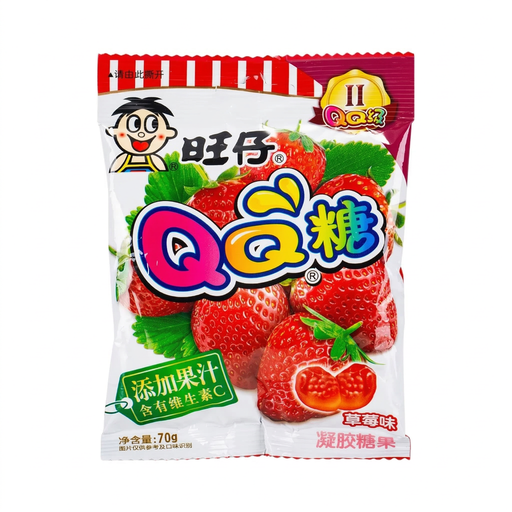
Why it suits this shopper: A handy 70 g pack with a familiar strawberry flavour and a soft, chewy texture. A great introduction to Asian gummy sweets.
The weight, ingredients and nutritional information are clearly listed. Before buying, check the E129 warning on the product packaging.
70 g net weight, 310 kcal and 51.9 g of sugars per 100 g according to the product information; no allergens are listed.
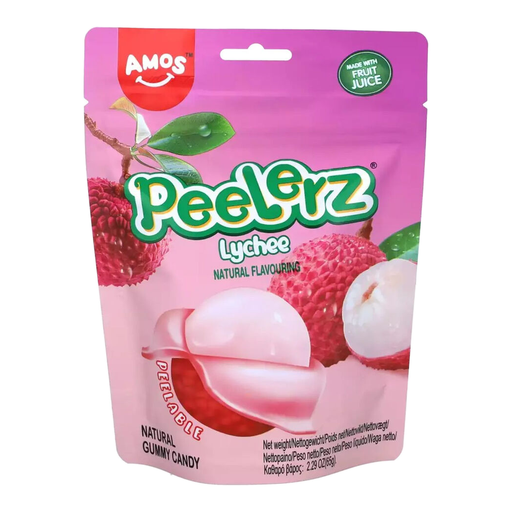
Why it suits this shopper: For anyone after more than a standard chewy sweet, the outer layer peels away to reveal a soft, lychee-flavoured fruit filling.
The product description lists 9.3% concentrated fruit juice and specifies beef gelatine. This makes it easier to assess the flavour and ingredients.
65 g pack, peelable texture and 321 kcal with 55 g of sugars per 100 g according to the label.
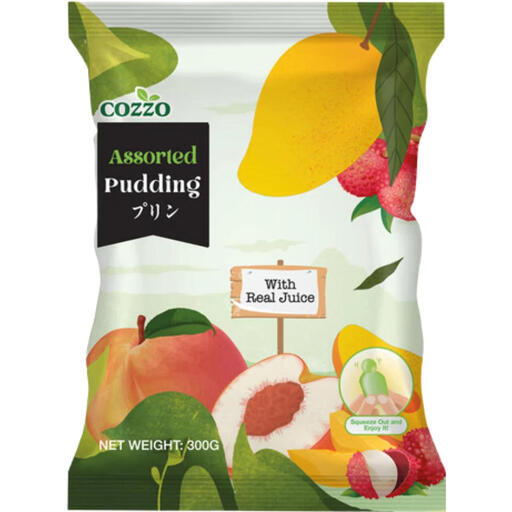
Why it suits this shopper: The large bag is handy for birthdays, film nights or sharing. The mix includes mango, lychee, peach and apple flavours.
The pack is clearly designed for sharing and lists the individual fruit juices. Do check for the milk allergen and seal the bag well after opening.
300 g net weight, several fruit flavours and, according to the product information, 120 kcal and 30 g of sugars per 100 g.
We’ve put together a complete, up-to-date list of products that meet these strict selection criteria and the applicable European safety regulations.
It depends on the age guidance, shape and ingredients. Some products aren’t suitable for young children. Also check for warnings about colourings such as E129, E110 or E102. Encourage children to chew sweets slowly and bear any potential allergens in mind.
Keep fruit gummies in a cool, dry place, out of direct sunlight. Seal the pack well to limit drying out and moisture absorption. Several products advise keeping them sealed after opening and consuming them soon afterwards.
Check the net weight and number of flavours. A 150 to 300 g bag, such as Cozzo Fruit Jelly Mix or Cokoc Mega Trophy Gummies, is more practical for sharing than a 60 to 70 g bag. Also compare the ingredients and allergens before ordering several packs.
