
Freezing a portion now and then
You want to store a few containers of crumble and first check whether your existing freezer space is big enough and can reach the right temperature.


For a few small portions, you don’t necessarily need a separate freezer. First, use your existing freezer space if the containers fit and the appliance can be set to at least −18 °C. If you regularly need more space, a table-top model could suit a compact spot; for a larger stock of food, you could also consider an upright freezer or chest freezer. Compare the freezing capacity, annual energy consumption and how easy it is to reach your portions.
You want to store a few containers of crumble and first check whether your existing freezer space is big enough and can reach the right temperature.
You make small batches more often and want extra, well-organised freezer space that fits the room you have available.
As well as crumble, you freeze other dishes or groceries and want to choose the capacity and freezing power to suit your larger stock of food.
Choose this if: your containers fit and the freezer can be set to at least −18 °C.
Bear in mind: according to Voedingscentrum, freezer compartments with one or two stars may not reach this temperature.
Choose this if: you regularly need extra space for separate containers but have little room for an appliance.
Bear in mind: measure the space and check the doorway, drawer height and installation instructions for the model.
Choose this if: you want to store a larger stock of food regularly, as well as crumble, and keep it well organised.
Bear in mind: the extra capacity may be unnecessary if you only have a few containers; compare the energy consumption of models that suit your needs.
Choose this if: you also need to store large quantities or items with unusual shapes.
Bear in mind: small portions are generally less accessible in deeper storage than they are in drawers.
First, check whether your current freezer space is enough. If you need an extra appliance, choose the type according to the space available and how much food you want to store alongside the crumble.
| Consideration | What to look for | Who is this most relevant to? |
|---|---|---|
| Suitable capacity and batch size | Check that the temperature can be set to at least −18 °C, that your containers fit and how many kilograms the model can freeze in 24 hours. | I want to know whether my containers will fit and how much I can freeze at once. Around 36% of consumers give suitable capacity and batch size top priority. |
| Dimensions and accessibility | Measure the space and the clearance needed to open the door or lid; compare the size of your containers with the drawers or storage space. | My kitchen has limited space and I want to be able to grab individual containers easily. For around 29% of consumers, fitting the appliance in and accessing its contents are top priorities. |
| Annual energy consumption | For models that meet your needs, compare the energy label and the stated consumption in kWh per year. Milieu Centraal points out that annual energy consumption is also an important factor when choosing. | I don’t want to choose an extra appliance without knowing its annual energy consumption. For around 21% of consumers, energy consumption is their main buying concern. |
| Defrosting and maintenance | Check whether the exact model has NoFrost, a frost-reducing system or static cooling, and read the maintenance instructions. | I want to minimise manual defrosting, so I’m looking at the maintenance system. Easy defrosting is the main priority for around 14% of consumers. |
Voedingscentrum recommends a freezer temperature of at least −18 °C. Freezer compartments with one or two stars cannot be set to this temperature.
Before using your freezer compartment, check its star rating and adjustable temperature.
Capacity tells you how much space there is; the stated freezing capacity in kilograms per 24 hours tells you how much food the appliance can freeze in that time.
Compare the space available for containers separately from the freezing capacity, and consider the largest batch you want to freeze at once.
An extra appliance uses energy continuously. The energy label shows the stated consumption in kWh per year; the energy class alone doesn’t tell you which suitable model uses the least energy.
First check whether your existing freezer space is enough. If it isn’t, compare the annual energy consumption of models that meet your space requirements.
Liebherr describes SmartFrost as a system that reduces frost build-up. For the FNe 1404, the manufacturer says NoFrost removes the need to manually defrost the freezer compartment.
Read the maintenance instructions for the exact model; don’t assume what care it needs based only on the name of a technology.
The VR550 is a freestanding table-top model with drawers, for anyone who wants to store small portions separately.
The FS166020 is a narrower table-top model to consider if width is limited.
The GTV15NWEB is a table-top model to compare in terms of capacity, stated freezing capacity and features.
The FNe 1404 table-top model with NoFrost and the Fe 1404 with SmartFrost offer different approaches to defrosting.
The BREMEN132-040BW is a table-top model to compare if the energy label and temperature setting are important to you.
This selection features compact freestanding freezers and table-top models that provide extra space for small portions. For each model, check whether it can be set to at least −18 °C for long-term storage.
 No image available
A freestanding table-top model for anyone looking for extra freezer space; check that it fits where you plan to put it.
No-Frost; energy class D.
Check whether this model can be set to at least −18 °C for long-term storage.
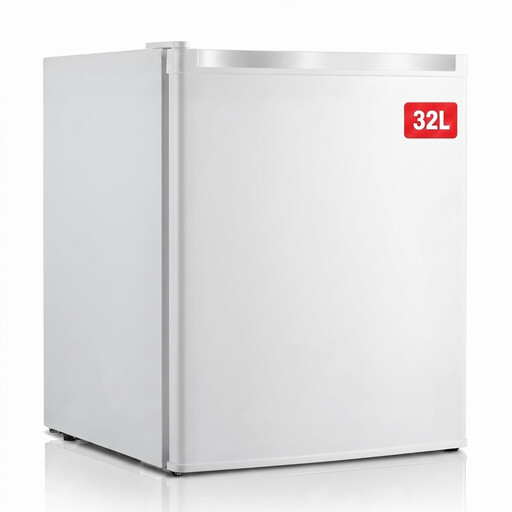 No image available
A compact freestanding option if you have limited space and need a small capacity.
Capacity: 32 L; 7 temperature settings; 43 dB; reversible door.
Check whether this model can be set to at least −18 °C for long-term storage.
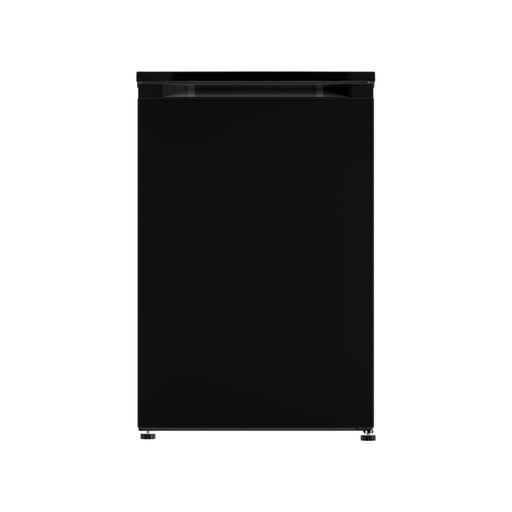 No image available
A table-top model to consider if you’re looking for extra freezer space and it fits in your kitchen.
Capacity: 85 L; energy class C; colour: black.
Check whether this model can be set to at least −18 °C for long-term storage.
 No image available
A table-top model for anyone looking for extra space for containers; check the dimensions of the appliance and the space you have available.
Capacity: 87 L; energy class B; colour: black.
Check whether this model can be set to at least −18 °C for long-term storage.
 No image available
A freestanding under-counter model to consider if it suits the layout of your kitchen.
Capacity: 60 L; colour: white.
Check whether this model can be set to at least −18 °C for long-term storage.
Yes. Voedingscentrum recommends letting cooked leftovers cool within 2 hours and putting them in a sealed container in the fridge or freezer. Divide the crumble into small portions and don’t leave them out of the fridge for long.
Use 3 months as a general guideline for cooked leftovers, not as a guarantee for every crumble recipe. Voedingscentrum gives this timeframe for leftovers; the ingredients and storage quality of your own recipe may also be relevant.
Compare the stated consumption in kWh per year on the energy labels of models that meet your space requirements. To estimate your personal costs, multiply this figure by your own electricity price per kWh.
Yes. According to the Dutch Government, freezers are among the appliances that must have an energy label. For the specific model, check both the energy class and the stated consumption.
No. The Dutch Government distinguishes between a manufacturer’s guarantee and the statutory guarantee: you are entitled to a product that is fit for purpose, and if there’s a problem, the retailer must provide a solution. In the Netherlands, there is no fixed statutory guarantee period of exactly two years.