For whole fruit arrangements, choose a camera that lets you adjust exposure, white balance and framing. A macro lens is mainly important when you want to capture small details in close-up. A compact camera keeps your kit simple, while a mirrorless camera gives you more choice of lenses, so you’ll need to find the right lens and consider your complete setup.
Who is this guide for?
Creating consistent product photos
You regularly photograph fruit arrangements for an online shop or portfolio and want the framing, white background and fruit colours to match from one shot to the next. A fixed setup and control over the light and white balance can help. Canon Netherlands explains how a tripod helps you create consistent product compositions, while Nikon Netherlands highlights the importance of even lighting and a suitable white balance.
Capturing fruit details
You want to capture small textures or cut surfaces in close-up, as well as the whole arrangement. Check the magnification and mount of the specific lens, rather than relying on the word ‘macro’ in a product name. For example, Nikon Netherlands specifies a reproduction ratio of 0.67× for the NIKKOR Z DX MC 35mm f/1.7.
Occasional home photographer
You want to photograph a fruit arrangement now and then, without a complicated setup. Consumentenbond explains the practical difference between a compact camera with a fixed lens and a mirrorless camera with interchangeable lenses: consider whether simplicity or having more lens choices later matters more to you.
What should you look for when choosing?
Start with what you want to photograph: the whole arrangement, repeatable product shots or small details. Then check that the camera, lens and way you work are a good match.
| What to consider |
What should you check? |
Who is this important for? |
| White background and fruit colour |
Check the white balance and exposure controls. If needed, review test shots using a histogram, including the individual colour channels. |
If I want a white background and recognisable fruit colours, I look for control over exposure and white balance. Around 33% of consumers put colour and background first. |
| Sharpness and framing |
Check whether you can adjust the aperture and focus, and whether the lens can frame the entire setup from your shooting distance. |
For a series with the same composition, I want to be able to repeat the framing and sharpness. Around 27% of consumers put this first. |
| Small details |
Compare the reproduction ratio of the specific lens, the working distance in front of the lens and compatibility with the camera mount. |
If, for example, I want to capture the texture of a peel or a cut surface in close-up, I look at the lens, not just the camera body. Around 20% of consumers put small details first. |
| Complete kit |
Check whether the version includes a body or a lens kit, which lens is included and which parts you already own. |
If I want to get started without an unexpected extra lens purchase, I check exactly what’s included. Around 20% of consumers put keeping their kit simple first. |
Common buying mistakes
-
Comparing camera bodies only
A body isn’t automatically a complete kit for taking photos. Panasonic states that the DC-G97 body does not include a lens.
Compare the exact version, the included lens and the equipment you already own.
A suitable lens and, if needed, a tripod are separate parts of your setup.
-
Assuming all macro lenses offer the same magnification
Magnification figures vary by lens. Canon Netherlands specifies 0.5× for the RF 85mm F2 Macro; Nikon Netherlands gives a real reproduction ratio of 0.67× on DX for the Z DX MC 35mm f/1.7. Nikon’s 1:1 figure refers to a full-frame equivalent.
Compare the actual reproduction ratio of the specific lens with the detail you want to photograph.
If the magnification isn’t right for your close-up shots, you may need a different lens.
-
Increasing exposure to brighten a white background
A histogram that cuts off abruptly on the right may indicate lost highlight detail. With brightly coloured fruit, an individual colour channel may also be clipped.
Review both the background and the fruit in a test shot, and check the luminance and RGB histograms if needed.
Brands and relevant lens options
Canon
The EOS R50 is an APS-C mirrorless camera with an RF mount. Different lens options are worth considering for whole compositions and close-ups.
- Canon Netherlands lists the EOS R50 as having 24.2 megapixels and being compatible with RF and RF-S lenses.
- According to Canon, the RF-S 18-45mm has a maximum magnification of 0.14× to 0.26×, depending on focal length and focusing mode. The separate RF 85mm F2 Macro has a maximum magnification of 0.5×.
- Check which lens is included with the version you’re buying. The camera body alone won’t tell you whether you can capture small details at a sufficient size.
Nikon
The Z50II uses Z lenses; the DX MC 35mm f/1.7 is a separate option for close-ups.
- Nikon Netherlands specifies a real reproduction ratio of 0.67× on DX for the Z DX MC 35mm f/1.7.
- Nikon gives a working distance of 7.2 cm from the front of the lens at the minimum focusing distance. Allow space for the light and fruit when shooting close-ups.
- The close-up lens isn’t automatically included with a Z50II kit, so check what comes with the version you choose.
Sony
The ZV-E10 II is an E-mount camera for anyone looking to combine photography and video and choose their own lens.
- Sony lists an APS-C sensor with approximately 26.0 megapixels, RAW photos and an E-mount.
- Sony offers a body-only version and a kit with the E PZ 16-50mm OSS II. The lens kit name alone doesn’t tell you whether its close-up capabilities will suit your setup.
Panasonic
The LUMIX DC-G97 is a Micro Four Thirds option for anyone choosing a suitable lens and wanting to use the screen to frame their shots.
- Panasonic Netherlands lists a 20.3-megapixel sensor and a free-angle screen.
- The body-only version mentioned is supplied without a lens. Check which lens you need for your desired angle of view and shooting distance.
Cameras at Joybuy
This selection of Joybuy products includes compact and mirrorless cameras for photography. Check which lens and features are included with each version and whether they suit your fruit setup.
 No image available
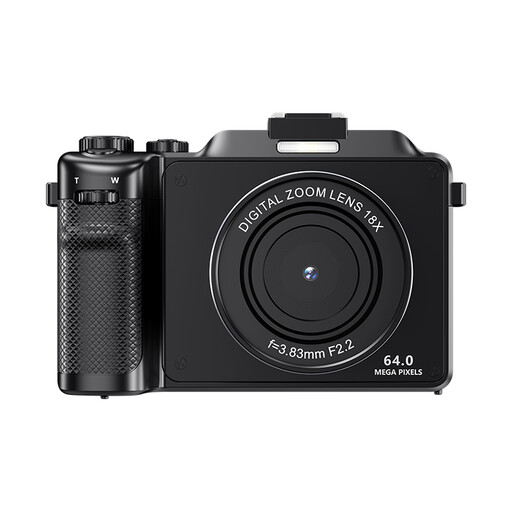
KOMERY X9 4K 64MP camera
The product title mentions autofocus. Check that the focusing system and shooting distance suit your fruit arrangement.
The product title lists 18× digital zoom. The product description warns that digital zoom can reduce image quality.
View at Joybuy
 No image available
KOMERY W6 4K camera with 12× optical zoom
The product title lists 12× optical zoom. Check that the lens can frame your composition suitably from the available shooting distance.
The product description lists an APS-C CMOS sensor. Also check which settings you need for white balance and exposure.
View at Joybuy
 No image available
Sony ZV-E10 with 16-50mm zoom lens, black
This version is listed in the product title with a 16-50mm zoom lens. Check that the lens suits your desired angle of view and shooting distance.
The product description mentions a feature that shifts focus from a face to an object. Check that it suits the way you take photos.
View at Joybuy
 No image available
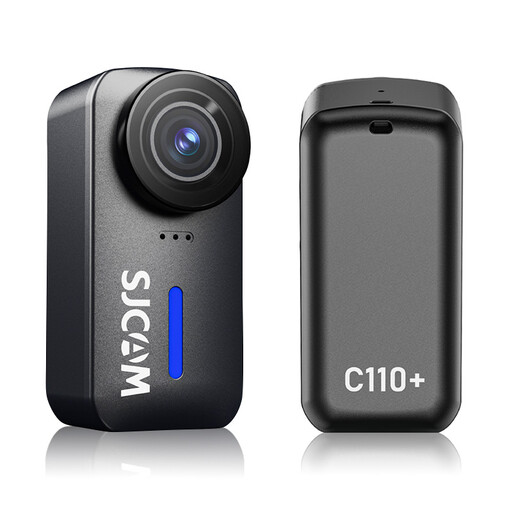
SJCAM C110+ 4K action camera
The product title lists 20MP photos and a 170° field of view. Check whether that field of view suits the framing you want for your fruit arrangement.
The product description mentions white balance presets and ±2EV exposure compensation. Review test shots to see how the settings work with your white background.
View at Joybuy
 No image available
Sony Alpha A6100 with 16-50mm f/3.5-5.6 OSS II
The product title lists a 16-50mm lens. Check whether the included lens can frame your composition from your shooting distance.
Also check which white balance settings are available with this version and how you can review test shots.
View at Joybuy
Frequently asked questions
How can you stop a white background looking grey without losing detail in light-coloured fruit?
Adjust the exposure if needed and review the test shot using a histogram. Automatic metering can make a bright scene look too dark; also keep an eye on the individual colour channels when photographing brightly coloured fruit.
Do you need a macro lens for a whole fruit arrangement?
Not just because you’re photographing fruit: for the whole composition, the angle of view and shooting distance matter most. A lens with suitable close-up magnification is mainly useful when you want to capture small details individually in close-up.
How can you keep a series of product photos consistent and your camera clean?
Use a stable setup and keep the lighting as consistent as possible. Adjust the white balance again if the light changes. Carefully remove dust from the camera and lens, and prevent dirt from getting inside when changing lenses.
What are your rights when buying a camera online in the Netherlands?
If you buy from a business as a consumer at a distance, you’ll often have a 14-day cooling-off period, according to the Dutch government. You’re also entitled to a product that is fit for purpose. The Netherlands has no fixed statutory two-year guarantee period, and if something is wrong, the seller is your point of contact. Different terms may apply if you buy as a business or from a private seller.


