
Same-day & Next-day Delivery

Quality Guaranteed

Unlock Your Welcome Offers: FREE Delivery | Up to 80% OFF | Free 30-day JoyPlus trial
Download the APP
Frozen pork dumplings are a convenient option for a quick meal, but the differences between packs are greater than product photos often suggest. Looking for Chinese pork dumplings, pork gyoza or Asian frozen dumplings? Don’t just focus on the price or phrases such as “traditional” and “handmade”. The ingredients, weight and cooking method have a much greater bearing on whether a product suits your household.
A 600 g bag may seem appealing for a family, but check the price per 100 grams first. A smaller 360 g or 400 g pack may be more practical if you live alone or mainly serve dumplings as a side dish. Also check whether the pack contains one flavour or combines several varieties.
Check the quantitative ingredients declaration. Among the products available, for example, the stated pork content ranges from 19% in Ajinomoto Gyoza Pork Dumplings to 35% in KUNG FU Soup Dumplings Classic Pork. The rest of the filling may consist of cabbage, chives, celery, mushrooms, prawns, oil or soya protein.
Brands may use terms such as “generous filling” or “premium ingredients”. According to the brand’s own information or the product description, this is a positioning statement rather than an independently established judgement. So compare the ingredients list above all else.
Some dumplings are intended for boiling, while others can also be steamed or pan-fried. A thin wrapper can work well when steaming, but requires enough moisture and a suitable cooking time when pan-frying. Always check the instructions on the packaging and cook the product thoroughly. Frozen dumplings contain raw dough and a filling that still needs to be heated through.
The filling defines the character of the dumpling:
If you have allergies, check the entire pack. Many products contain wheat and gluten, soya and sometimes sesame. Dumplings with prawns also contain crustaceans. Freshasia Pork, Shiitake Mushroom & Black Fungus Dumplings, for example, also lists dried prawns as an ingredient.
A pack of 600 g dumplings is suitable when you are eating with several people or want to keep a supply for multiple meals. Packs of 360 g and 400 g are more convenient for a smaller meal or for trying different flavours side by side.
Don’t just look at the net weight, but also check the number of pieces. Ajinomoto states 30 pieces, while many other products mainly specify the weight. The number of dumplings per person depends on their size, your appetite and whether you are serving vegetables, rice or noodles.
Most products are cooked straight from the freezer. Thawing can make the dough sticky or cause it to tear. Store dumplings at -18 °C or below, follow the use-by or best-before date on the packaging and do not refreeze a product once it has thawed.
When boiling, dumplings often float when they are nearly cooked, but also check that the filling is piping hot throughout. When pan-frying, you can brown the underside first and then finish cooking with water and a lid. Steaming produces a softer exterior. Some products are also suitable for deep-frying, such as Kungfu Dumplings Pork and Corn 400g; follow the stated timings and safety instructions.
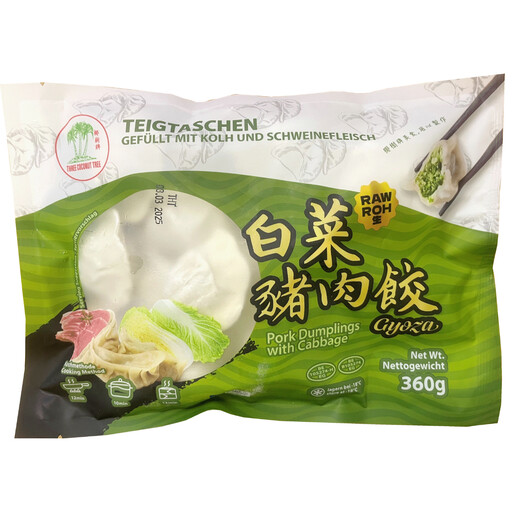
Why it suits this profile: The 360g pack keeps your first purchase manageable. The product description lists pork, cabbage and a thin wrapper; according to the instructions, boiling from frozen takes 5–6 minutes.
The flavour profile and cooking method are clearly stated, so you do not have to rely solely on general marketing terms.
360 g pack; pork and cabbage as the main elements of the stated filling; suitable for boiling.
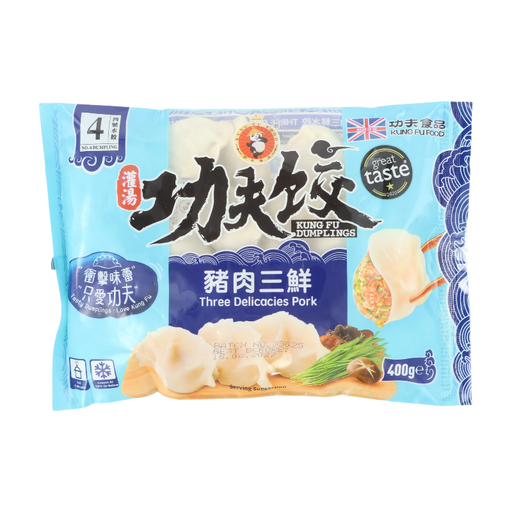
Why it suits this profile: According to the product information, these dumplings have a filling of pork, prawns, black fungus and shiitake, and are suitable for anyone who wants to try several cooking methods. The dumplings are suitable for boiling, steaming and frying.
The ingredients are listed with percentages: 22% pork, 3% black fungus and 2% shiitake. This makes comparisons easier.
400 g; several cooking methods; contains prawns, soya, wheat and sesame, all clearly relevant when checking for allergens.
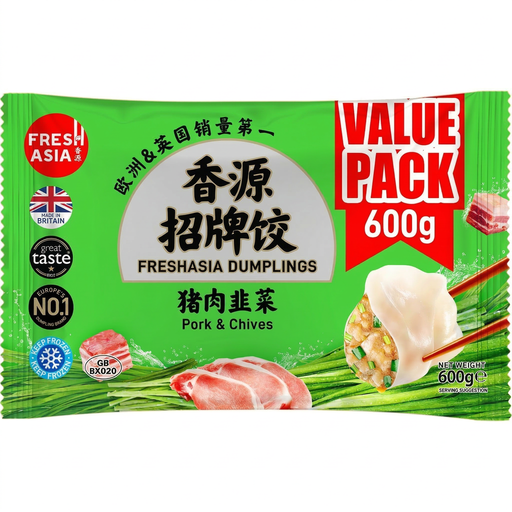
Why it suits this profile: A larger pack is well suited to families, regular dumpling eaters and anyone who likes to keep a supply in the freezer. The product listing states 25% pork and 15% chives.
The serving size is clear and the instructions specify boiling without thawing first. This helps to reduce waste and prevent the dough from tearing.
600 g family pack; stated ratio of pork and chives; store at -18 °C or below.
We have put together a complete, up-to-date list of products that fully meet these strict selection criteria and the applicable European safety regulations.
Serve with soya sauce, rice vinegar, sesame oil or a homemade chilli dip. If you are sensitive to soya or sesame, check both the dumplings and the dipping sauce.
Yes, many products are intended to be cooked directly from frozen. Check the specific packaging. Examples in this range state that the dumplings should be boiled for around 5–8 minutes, until they float and the filling is cooked through.
Store them at -18 °C or below and follow the date on the packaging. According to the instructions provided, products must not be refrozen after thawing. Once opened, seal the bag as airtight as possible to help prevent drying out and freezer burn.
The terms overlap, but the shape, filling and cooking method can differ. Gyoza are often pan-fried and then steamed. Chinese dumplings come in various shapes and can be boiled, steamed or fried. So check the cooking instructions rather than relying on the name alone.
